This edition of News You Can Use brings together practical updates, funding calls, training opportunities and useful notices shared by colleagues across Bioengineering and Imperial.
Explore what is available, take advantage of opportunities that support your work or studies, and stay informed about important developments for our community.
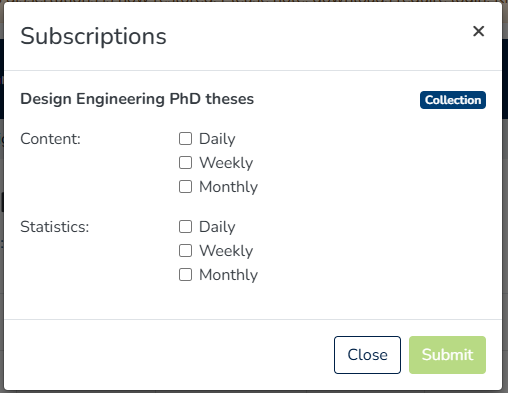
Stay updated: Get alerts for new theses in Spiral
Did you know that most Imperial PhD theses are freely available online?
The majority are open access in Spiral, Imperial’s digital repository, while a small number are restricted to Imperial users only.
Want to be notified when new Imperial PhD theses are added? Or celebrate a student’s achievement when they complete their doctorate?
With Spiral, you can subscribe to collections and receive email alerts straight to your inbox whenever new theses are published.
For Imperial users:
- Go to Spiral. https://spiral.imperial.ac.uk
- Log in via MySpiral using your university credentials.
- Open the collection you want to follow (e.g., Physics PhD theses).
- Click Subscribe and select your preferred frequency.
- Manage your subscriptions here.
More information about the theses we hold:
The majority of Imperial PhD theses are available on open access in Spiral. Some are restricted to Imperial users only.
Imperial students and staff also have access to some Imperial Master’s dissertations.
https://www.imperial.ac.uk/admin-services/library/find-books-articles-and-more/theses/
Societal Engagement Seed Fund
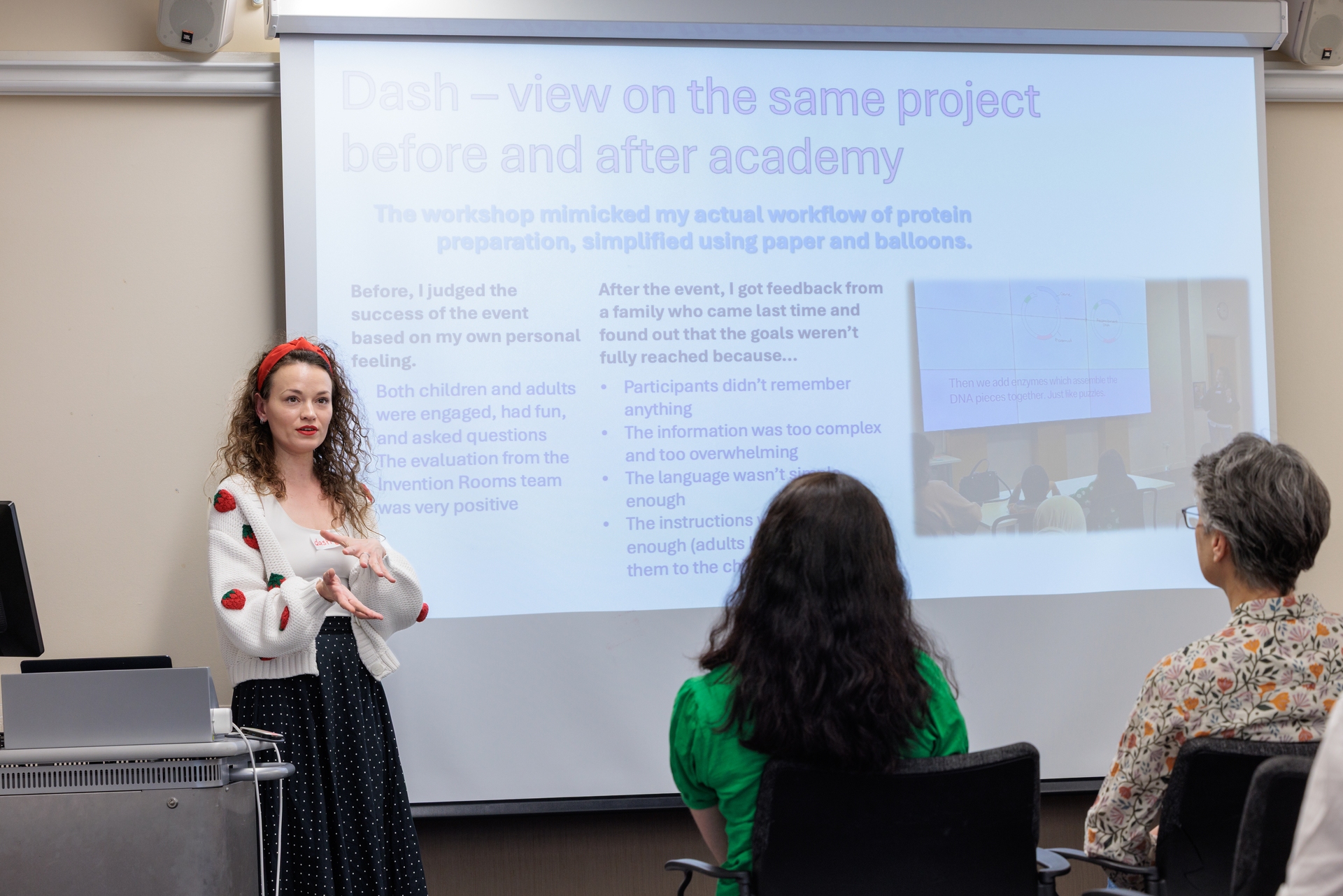
The Societal Engagement Seed Fund is open for applications. The fund aims to support Imperial staff in engaging the wider public with their research. We currently have funds available for engaging public, community, and school audiences. Full details and an application form are available on the Societal Engagement Seed Fund webpage.
If you have any queries or would like to discuss a funding idea, please contact the Public and Community Engagement team. We hope the fund will remain open and available throughout the year, but funding is limited, so we encourage interested applicants to apply as soon as they’re ready.
Funding opportunity open to ALL STAFF for collaborations with West Africa, India, Singapore and the USA

Apply now for up to £8,000 to kick-start research, education or innovation projects with partners in regions represented by Imperial’s global hubs!
- Supporting interdisciplinary research consortia
- Developing innovation and enterprise activities
- Enhancing education and student experience
New one-stop shop for International Opportunities for Staff and Students
-
£8,000 grants available to all staff to kickstart collaborations with any of our four global hubs
-
a funded two-day workshop opportunity in Viet Nam (details also below)
-
A networking and workshop opportunity in sub-Saharan Africa for PhD students
-
A seed fund to collaborate with Turkey’s leading university
-
PhD opportunities with CNRS in France
Applications are open for 5050: a free company-creation programme for scientists and engineers
- Backed by the UK’s Advanced Research and Invention Agency (ARIA)
- Designer for researchers, build for those who are curious about entrepreneurship or already building (pre-venture fundraising)
- 100 startups founded through the programme
- 96% raise success rate for alumni who’ve gone on to fundraise
- No equity taken. No fees. No hidden clauses
- Designed to help you decide what to build, how to be a great founder, and how to raise your first round
- UK cohort applications open until 15 Feb here
5050 is run by Fifty Years, a venture firm that’s backed 135+ deep-tech startups raising over $4.5B. The programme is part of Fifty Years’ commitment to seeding what the world needs: more founders building companies to tackle the world’s biggest challenges.
PhD Studentship Available – King’s College London – UK Home Student – Must start in June!
If you are, or know of, a potential PhD student interested in combining computational modelling and experimental work on mechanisms of tissue elongation using gastruloids and embryonic explants, then contact Jeremy Green (jeremy.green@kcl.ac.uk), about a King’s College London-funded PhD studentship that has just become available. The student must hold UK Home Student status and be able to enrol on 1st June 2026, i.e., very soon.
The project will use both Xenopus and mammalian gastruloids and mouse embryos to test mechanisms for convergent extension – tissue elongation by cell intercalation movements. We are building on our existing computational model of the process and exploring single-cell behaviours that organise and regulate it, including mechanisms for differential adhesion, nematic order by Planar Cell Polarity signals and mechanically induced bipolarity.
Good computational skills essential; lab experience in developmental or cell biology desirable.