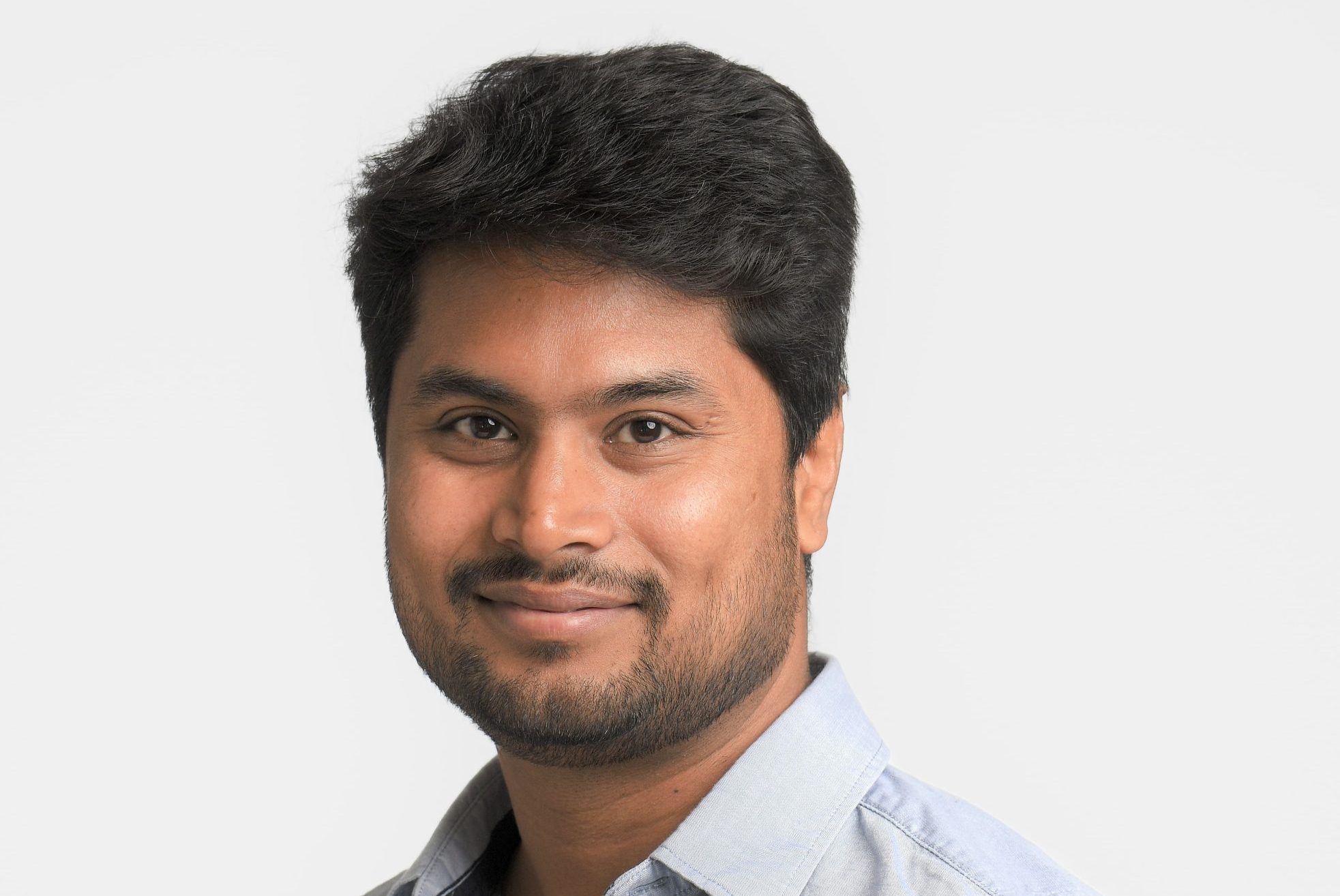
As part of our staff series, we spoke to Dr Srinivasan Rengachari, our new Lecturer in the Section of Structural and Synthetic Biology. Here, he discusses his career before joining Imperial and what his latest research programs will focus on.
Introduce yourself – who are you and what do you do?
I’m Vasan, and I’m a Lecturer in Structural Biology with over 17 years of experience in the field. I joined Imperial in August 2025. Previously, I was based at the Max Planck Institute for Multidisciplinary Sciences in Göttingen, Germany. Before that, I was trained in France and Austria. I was born and educated in India.
What were you doing before you joined Imperial?
I was a postdoctoral researcher working to understand the mechanism behind the regulation of RNA polymerase II (Pol II) transcription in eukaryotes
All cells in our body contain the same genetic information. But for each cell to divide, differentiate, survive, and tackle pathogen response, you need to turn on and turn off certain genes in a timely manner. That is always done through the regulation of Pol II transcription. In essence, the idea is to understand how gene expression is regulated – how a gene is recognized, how RNA (which contains the message for protein synthesis) is made from DNA, and how the molecular players involved regulate this process.
We used electron microscopy to study these systems by reconstituting Pol II with the rest of the transcription machinery and imaging it under cryogenic conditions to understand its structure and relate it to function. Before I came here, I was mainly working on the mechanism underlying Pol II transcription initiation and termination.
What will you work on at Imperial?
I will continue to use structural biology tools to dissect further aspects of Pol II transcription, but also combine it with understanding co-transcriptional RNA processing. We will also study how viral infection interferes with the transcription machinery to hijack host mechanisms, and how transcription regulation is dysregulated in diseases like neurodegenerative disorders and cancer.
I firmly believe that understanding the basic functions in these processes will allow us to improve how we tackle their dysregulation in diseases.
You’ve worked in India, Austria, France and Germany – was it a deliberate decision to move to these countries and what have you learned from these international experiences?
Science is probably one of those few things where, if you learn the basic principles, you can do it anywhere and still get the same conclusions. It wasn’t planned that I wanted to be in a certain country or at certain centres of excellence – I had interests and goals, and I reached out to places where I could achieve them.
It turned out these were melting pots of international students, like EMBL and Max Planck Institute. At EMBL, I worked with about 100 people from 40 different countries. It taught me how great it is to work with people from different cultures. We all bring different perspectives to the same problem, and when our collective hands and minds work together, there’s a high chance of success.
That’s also why I was attracted to Imperial – the international profile and diversity.
What excites you most about joining Imperial?
The fascination is to be at the forefront of understanding how life works. What I discover may just be a grain of sand on the knowledge beach, but to be that grain on one of the biggest beaches is what fascinates me about Imperial.
Imperial offers the support and liberty to go after ambitious questions, and the infrastructure is built for that. Most of all, I value the opportunity to keep playing the game more than winning. Being at Imperial is the continuation of my 17-year journey, and I am excited to keep playing for as long as I can.
What’s next for you – building a lab?
Yes, structurally I am now the principal investigator or group leader of our new team. We are recruiting people at all levels. Immediately, we’re looking for a PhD student and bringing in master’s students from the MSc programmes. Soon after, we will be hiring at all levels – more PhDs, postdocs and research technicians. The ambition is to build a thriving lab answering important questions in basic biology. At the same time to work with young bright minds from all over the world in a supportive and encouraging environment which pushes the limit of their talents.
Outside of science, do you have any hobbies or interests?
At the moment, the traditional hobbies have taken a backseat because we are new parents – we have a 16-month-old at home. In a way science is the current hobby, and the full-time job is being a parent!
Outside of that, I have always enjoyed reading non-fiction, travelling, absorbing different cultures, and cooking. Sports-wise, I played a lot of competitive cricket growing up and a big tennis enthusiast.