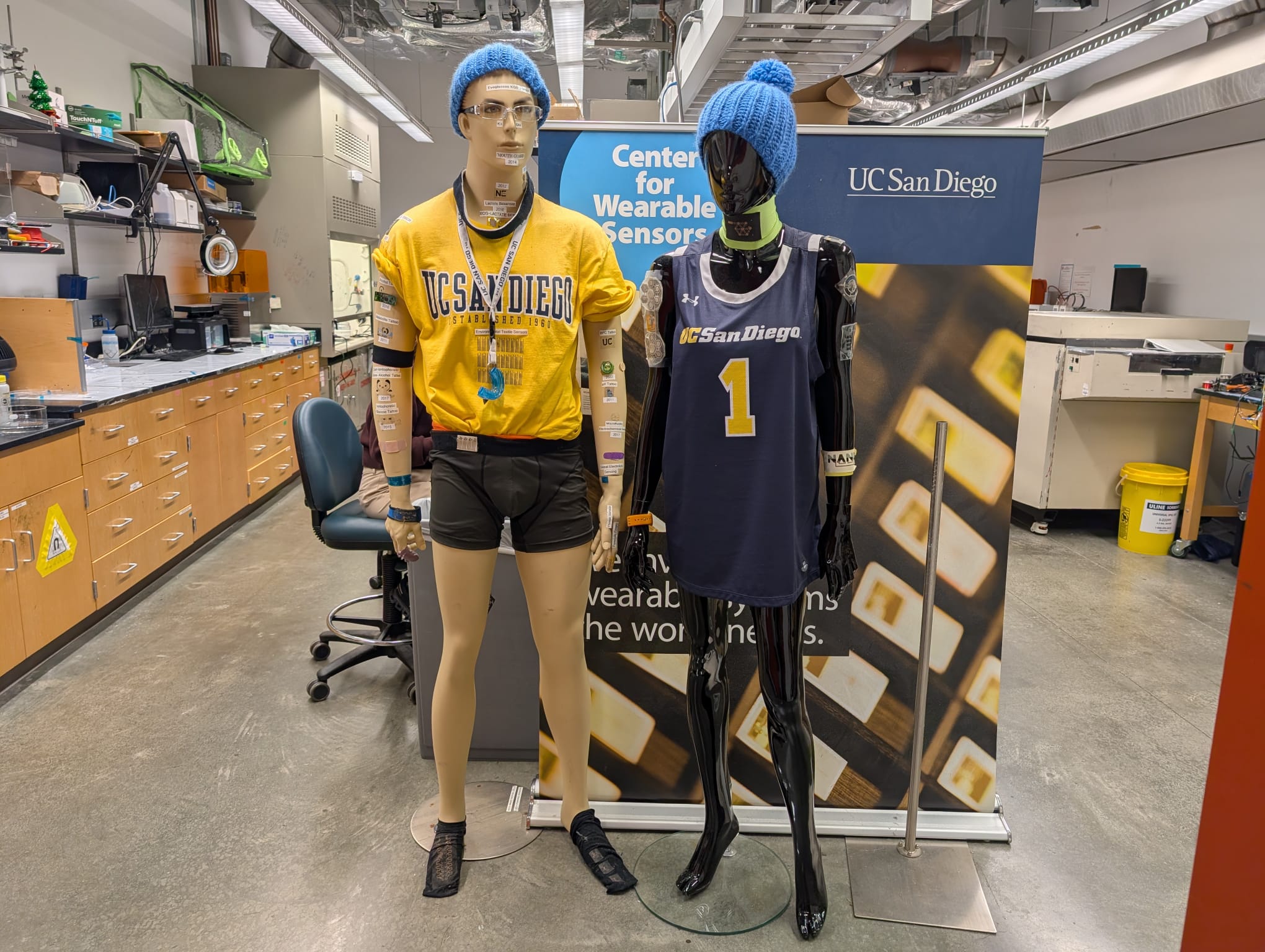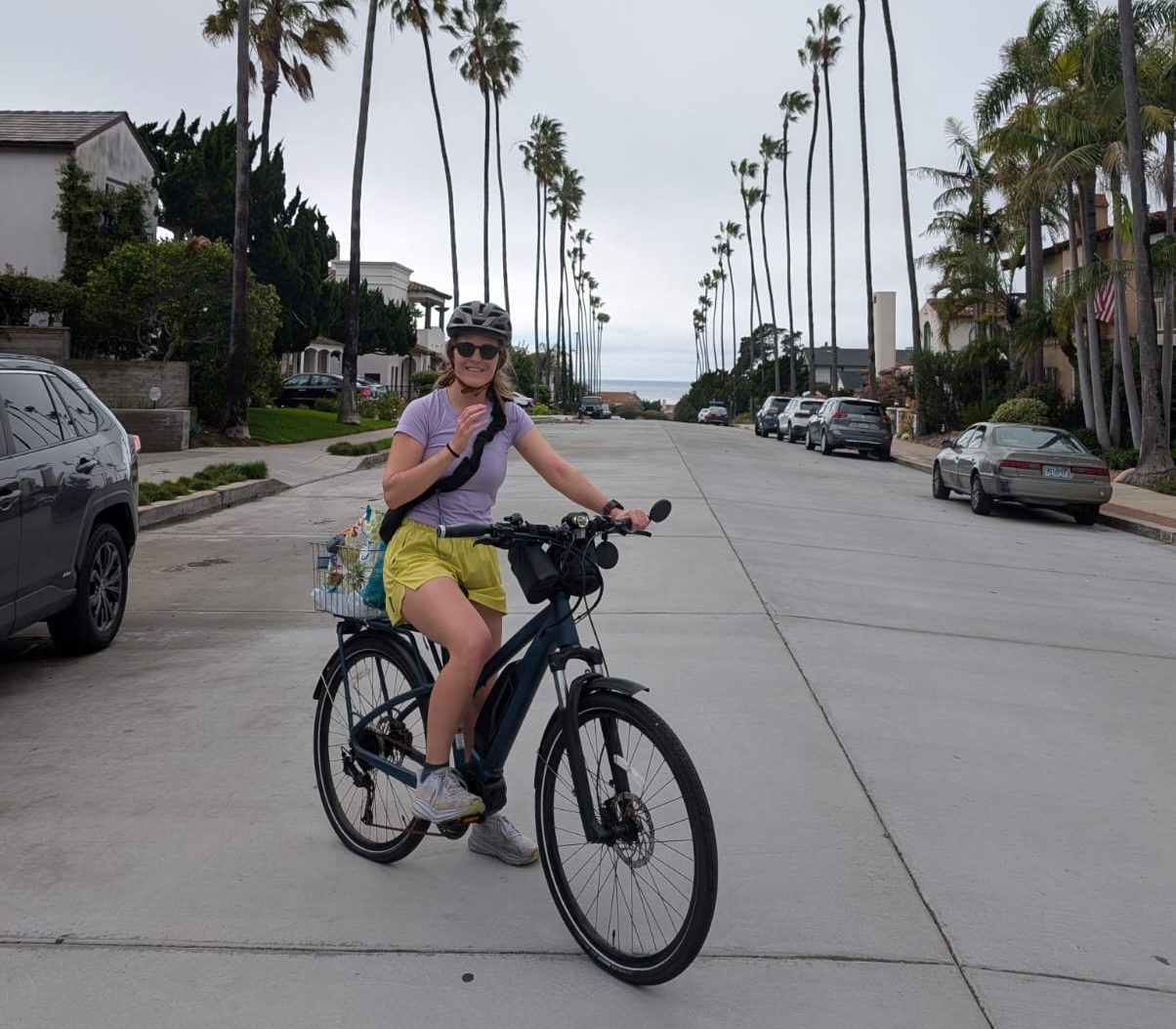
As a Fulbright Scholar, Ellen Stadler is expanding her PhD research on electrochemical biosensors through a collaboration with Professor Joseph Wang’s renowned wearable-sensing group at UC San Diego. Building on her work for her PhD in point‑of‑care diagnostics for infection monitoring, she is now exploring the challenges and possibilities of continuous, real‑time health sensing in one of the world’s leading nanoengineering environments.
Tell us about your research project – why did you choose to collaborate with Professor Joseph Wang in the Department of Nanoengineering at UCSD?
During my PhD, I developed point-of-care electrochemical biosensors for infection monitoring and personalised treatment in urinary tract infections. There is a huge opportunity for wearable and continuous sensing to improve our understanding of health and disease. Electrochemical sensors must be sensitive, selective and stable, and achieving this in continuous use brings different challenges than in point of care settings. Professor Joseph Wang and his group in the Centre for Wearable Sensors have broad expertise in exactly these challenges, so UC San Diego and Professor Wangs group was a natural place for me to build on my work. I am doing my PhD supervised by Timothy Rawson (Department of Infectious Disease, Faculty of Medicine) and Danny O’Hare (Department of Bioengineering, Faculty of Engineering) who both were hugely supportive in this process!
What was the Fulbright application process like? What were the biggest challenges, and what helped you succeed?
The process started early, with a submission deadline in August 2024 for a start in 2026. Getting documents issued and mailed to Switzerland took time. About three months later, I had an interview in person at the Swiss Embassy in Bern. The process required careful preparation and patience; the Fulbright team at the embassy were very supportive and quick to help whenever I had questions. The biggest challenge actually came after receiving the acceptance letter, when there was uncertainty about placements because of funding cuts in the United States, so there was a period of waiting for clarity.
What are you most looking forward to, and what do you expect from this collaboration?
Most of my research experience has been in Europe and the UK, and I was keen to experience the dynamics of a much larger research environment. Professor Wang’s group, with around 55 researchers, offers a different structure in terms of how projects are scoped and delivered compared to smaller teams. The strong application focus of the group aligns well with my interests, and I expect this experience to help refine my research direction as I complete my PhD this year. I am also enjoying immersing myself in Southern Californian life and culture, and a month in, I can already say that I have met the most welcoming, nice and supportive people.
What have been the most striking differences in research culture between the UK and the US in your experience so far (if any)?
I think in highly international research environments, the culture of the research group often matters more than the national context. Compared with my work in London, Joseph Wang’s group has a focus on the integration of multiple wearable sensing technologies and pushing them toward proof-of-concept systems. Projects often involve larger teams that combine methods and expertise, which gives a different structure to the work that I did at Imperial.
What advice would you give to other doctoral students considering applying for international research scholarships?
An international research scholarship takes real planning and comes with uncertainty. The application is time consuming, and moving country, housing, sorting visas and finances, and building a new community can feel daunting alongside a PhD. Even with careful planning, the experience will be different from what you expect. What matters is that the effort pays off in ways you only see once you are there. Mentors, friends and networks that shape your thinking, open doors and build confidence. I feel fortunate to work in a field that aligns with my interests and strengths, supported by mentors who genuinely care about my development. The connections I built during placements and internships have played a significant role in enabling me to pursue this path. Hard work and persistence matter, but so do the people around you. They create opportunities and help you grow, personally and professionally. If you are considering an international placement, go for it!