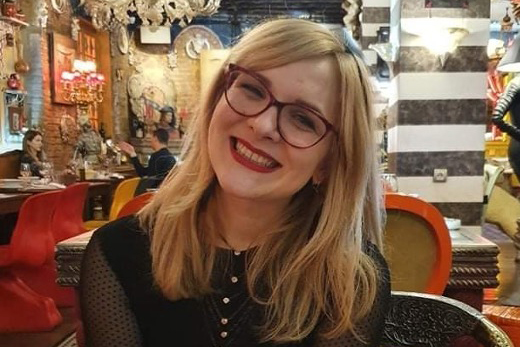
In this blog post, Dora Vrkic shares her journey from academic research to building a career in research operations at Imperial. She discusses the importance of supporting researchers behind the scenes, settling into the department, and the hobbies that keep her busy outside of work.
Tell us a little about yourself and your role at Imperial.
I’m the Section Manager for the Centre for Inflammatory Disease within the Department of Immunology and Inflammation. Essentially, my job is to help academics focus on their work and research by taking care of the operational processes and administrative systems around them. I also work closely with other professional services colleagues to ensure best practice is consistently followed and that we work collaboratively in supporting the department’s objectives. I oversee a wide range of activities, including pre-award costings and proposal submissions, grants management, and other HR and administrative tasks.
What was your career path before joining Imperial?
Before Imperial, I was doing a PhD at the University of Southampton. My thesis examined British foreign policy towards East Central Europe during the interwar period.
During my PhD, I realised academia wasn’t for me, but I really enjoyed working in higher education. In 2023, during the final year of my PhD, I joined the Grantham Institute at South Kensington as a Research and Project Administrator.
I was doing similar work to what I do now, but on a smaller scale. I was also the Project Manager for the World Weather Attribution, a consortium who conducts climate change research. I really enjoyed being embedded in research, without doing the research myself, and from there I decided to build a career in professional research operations.
Your PhD sounds fascinating. Could you tell us a bit more about it?
My PhD focused on British foreign policy between 1918 and 1939. Throughout the period, Whitehall was concerned with maintaining peace and order on the Continent. Appeasing disputes, even if entirely domestic, was an important element of British foreign policy between the two wars. As such, the volatile internal situation in two successor states – Czechoslovakia and Yugoslavia – could not escape the attention of British policymakers.
My thesis analysed the Foreign Office’s approach to Czechoslovak and Yugoslav constitutional disputes that centred around the dichotomy between centralisation and federalisation, highlighting a variety of factors which determined when federalism was seen as a viable state-building tool with regard to its potential to further consolidate the two successor states and therefore make them less susceptible to disintegration. It was interesting to situate these debates alongside Britain’s own internal discussions surrounding the Irish Home Rule at the time. Quite different to the research we conduct at Imperial!
Has your academic background helped you in your current role?
I think it certainly helps, especially when working with early career researchers. It gives me a good understanding of some of the challenges they’re facing because they often are the same challenges that made me realise academia wasn’t the right path for me.
I put myself in their position and think about where they might need support. Senior academics who’ve been in academia for a long time may find funding applications second nature, but if you’ve never done it before, the language of higher education finance and proposal development can be overwhelming and almost mysterious.
Knowing where I needed extra assistance allows me to bring that understanding into the conversations I have with researchers.
What have you enjoyed most since joining the department?
Getting my head around the breadth of research that goes on here.
Before applying, I read the department webpages and news stories, but it’s only when you start speaking to people that you realise the extent to which they’re leading their fields. It’s fascinating to learn how they’re discovering new research areas that need to be explored.
I also enjoy understanding how people ended up in academia, what motivated them to pursue their careers, and where they see their fields heading. It’s interesting to learn more about the direction of STEM research.
What do you enjoy doing outside of work?
The thing I probably spend most of my time on is the metal music scene. I do quite a lot of work with grassroots bands and support independent metal music projects, whether that’s helping with merchandise or other activities.
I also have two dogs, so I’m always happy spending time outdoors with them. I recently moved out of London, so I’ve really been enjoying having more access to the outdoors and going hiking whenever I can.
I’m also an avid pole dancer and have been doing it for several years.
Is there anything you would like colleagues to know?
I joined the Centre in March, and before I arrived many things were being supported by my line manager, Rena. I’d like people to know that my door is always open and they’re very welcome to come to me in the first instance.
Even if I don’t immediately know the answer, or I can’t help straight away, I’m always happy to find the right person, point people in the right direction or help escalate an issue where needed.
People shouldn’t hesitate to reach out just because I haven’t been here very long. I’m always happy to help!