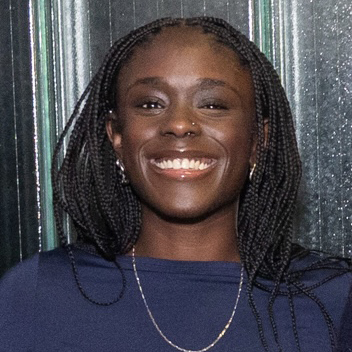
Martina is the one of the recipients of the 2025 MSc Immunology Scholarship for Students of Black Heritage by the Department of Immunology and Inflammation.
Tell us about yourself and what inspired you to pursue an MSc in Immunology at Imperial.
During my undergraduate degree, I really enjoyed my second-year module in immunology, which is what pushed me to apply to carry out my placement year at the United Kingdom Health Security Agency. During my placement year, my love for research and laboratory science grew massively! I knew I loved the lab and wanted to get into research, but my placement was mainly microbiology, and my passion was Immunology. I left university not sure how to pivot into the field, so a master’s degree seemed like the perfect way to get my foot in the door.
What motivated you to apply for the students of Black heritages Scholarship?
I had done some research and knew I specifically wanted to do the MSc Immunology course at Imperial; I liked the 6-month split of lectures and research project. I wouldn’t be able to afford a master’s degree, so applying for the scholarship was the difference between attending or not, so it was a no-brainer. I was nervous applying, but I always try to think with applications; it’s always better to just apply and see what happens!
Can you describe your experience of the scholarship application process? What would you say to someone who was considering applying?
It was fairly straightforward; you submit an application form and attend an interview. The interview was with three senior members of staff and was a lot less stressful than I was expecting. They ask you questions about yourself and your experience. The advice I would give is to be open about your experience; they were interested in what I had done and what I’d learnt, so it’s very good to be introspective. Try not to shy away from mentioning anything that’s impacted your learning, as that can provide a lot of context to your experience. I would also say – don’t forget to give yourself a lot of time for the personal statement; you need a strong application independently of the scholarship, and this can take some time. Do some research about the labs at Imperial, the course, and get people to read your personal statement if you can.
How did you feel when you found out you had been awarded the scholarship?
I was very overwhelmed! My heart was really set on this course, so I was really excited to start. That excitement has honestly carried me through the year, especially after having a year out of education – I was really looking forward to learning and being in a scientific community again. I was very grateful for the opportunity, as postgraduate education was not something I had ever considered before I saw the scholarship, and without funding, I wouldn’t have been able to attend.
What impact has the scholarship had on your academic journey and personal development so far?
It has been an extremely pivotal experience for me. The course is very challenging, but it forces you to grow. I learnt so much in such a short amount of time. I think it was the best preparation I could’ve done for a future career in academia. It’s also facilitated my personal growth through the countless amazing people I’ve met since I’ve been here. I’ve had so much good advice and mentorship from academics, which has already proved very useful. I’ve also been lucky to meet friends who I’m sure I’ll know for many more years to come!
What has been the highlight of your MSc Immunology experience at Imperial?
I really enjoyed the BSI conference! It was really fun to be able to get a taste of what is happening in the general field of Immunology. There is such a vast range of research being presented across the week that it really allowed me to explore my interests. You also get the chance to speak directly with academics outside of Imperial about their work and network.
The research project was also a major highlight. I really enjoyed being part of a lab and carrying out real research. It was very rewarding being part of a group that was carrying out work with the goal of better understanding a disease impacting millions of people! My supervisors were really helpful, and I learnt so many practical skills as part of my project too, which has opened me up to pursuing a broader range of future projects.
What do you value most about studying at Imperial and being part of its community?
In my experience, everyone in the department was really friendly and willing to help. My cohort was quite small, and I really felt like the course leads knew everyone and made an effort to make us feel welcome. I also really enjoyed the wealth of Black-centred events and networks Imperial has. I was part of the Outreach Black Student Advisory Board, a panel of Black students tasked with providing feedback to the university about our experience and helping to allocate funding to new black outreach projects. This was definitely a highlight, and I would encourage anyone interested to apply. Imperial also has the Black Doctoral Network, ACS, and the Black Inclusivity activist, all of which hold events throughout the year. I was also very lucky to receive funding with one of my coursemates to carry out a new outreach project part-funded by the department.
What are your future career aspirations, and how has the scholarship helped you move close to achieving them?
My goal is to pursue a PhD. I have a particular interest in translational immunology, and I have a growing passion for women’s health and endometriosis, so I would love to pursue a PhD researching that!