by Abby Sanderson, Move
Our bodies are incredible systems; they cope with so much on a day-to-day basis to keep us well and functioning. Sometimes we can take them for granted and forget to listen to what our body is trying to tell us. On the one hand, while student life can be busy, fast-paced and enjoyable, it can also be stressful at times, and this can manifest itself in the body as pain, fatigue or illness. On the other hand, we can experience periods of boredom or feel like we lack motivation. All of these feelings are normal, but try asking yourself this:
What would happen if we slowed down, took a minute, and really tried to listen to what our body is telling us…?
Stress Performance Curve
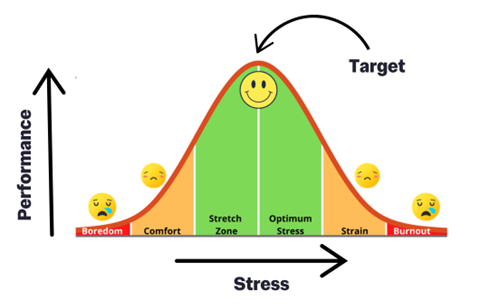
As individuals, we all experience and respond to stress differently – and that’s fine, we’re all unique individuals, after all! The stress performance curve (Yerkes-Dodson Law, 1908) illustrates the relationship between optimum stress levels/arousal and performance. The theory suggests that there is an optimum level or arousal/stress for peak performance. Too little or too much stress can both be counterproductive to our studies, albeit in very different ways. Read on to find out more…
Struggling to find motivation?
If you don’t feel aroused enough, this could result in you feeling tired, bored and unfocused. Often, this can lead to procrastination, short attention span and a reduction in performance. When you’re feeling like this, it’s important to try and raise arousal levels in the body – movement can be a great way of doing this!
Movement and exercise positively affect the brain by stimulating the prefrontal cortex, which is the primary function in decision-making and supports focus and attention. When you exercise, the hippocampus is also stimulated which is important when studying as it supports the retrieval of memories and stored information. When we move our body, we also experience an increase in the following neurotransmitters: serotonin; dopamine; and norepinephrine (Erdoğan et al., 2025). These neurotransmitters work together to support emotional wellbeing and cognitive function. In other words, being active helps you think clearer, remember more, and feel better.
What movement can I easily fit into my day? Why not try out some of the following:
- Break up extended periods of study with a quick walk
- Use a standing desk, if possible, e.g. look out for them in different study spaces
- Try some simple deskercise exercises (as demonstrated by Move’s Active Lifestyle Instructors)
- Schedule in regular movement breaks on long study days (setting an alarm can be a useful reminder)
- Try an online exercise class on Move Online (with full access to the Les Mills virtual fitness and wellbeing classes, you can follow along at a time and in a place that works for you)
- Attend a free in-person Just Move session – available across Imperial’s campuses (no pre-booking required – just turn up!)
Too much? Dial it back!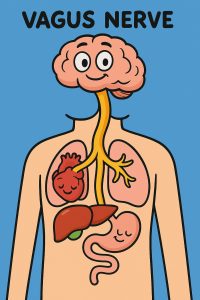
If our body becomes too aroused/stressed this can have adverse effects on our ability to study and could lead to anxiety, impaired cognitive function and, eventually, burnout. When you’re feeling like this, it’s important to try and reduce stress levels in the body – understanding the Polyvagal Theory (Porges, 2022) could be a useful strategy.
The vagus nerve is the longest cranial nerve connecting the brain to major organs in the body. It helps to activate the parasympathetic nervous system and balance the body’s response to stress by calming the ‘fight or flight response’. By stimulating the vagus nerve, this promotes relaxation and a sense of calm in the body. If we regularly stimulate the vagus nerve, like a muscle, it will improve vagal tone over time which in turn will help us to better manage stress.
How can I stimulate the vagus nerve? Why not try out some of the following to find what works for you…
- Yoga
- Breathing exercises
- Mindfulness/meditation
- Singing
- A splash of cold water on your face! (yes, it really can help!)
In summary…
As we mentioned at the beginning, we’re all unique individuals, so it’s important not to compare yourself to others but to try and tune into your body to understand how it’s feeling. A great exercise to check in with the body is a Body Scan Meditation. Over time, you’ll recognise how your body is feeling and be able to respond accordingly.
Remember, managing stress is not a one-size-fits-all approach, so try out the different strategies mentioned in this article and find what works for you!
Abby Sanderson is the Wellbeing Manager at Move (the home of sport, activity and physical wellbeing at Imperial). Abby’s role focuses on using physical activity as the catalyst to enhance overall wellbeing and improve the student experience.
References & Useful Resources:
Erdoğan, R., Yildirak, A. & Yilmaz, E. (2025) Effect of Exercise on Neurotransmitters: A Systematic Review. Journal of Physical Education Sports Health and Effort. 4(3), 29-38.
Porges, S. W. (2022) Polyvagal Theory: A Science of Safety. Frontiers in Integrative Neuroscience. 16, 871227.
Yerkes, R. M., & Dodson, J. D. (1908) The relation of strength of stimulus to rapidity of habit-formation. Journal of Comparative Neurology & Psychology. 18, 459–482.
 ALSO: Why not check out the resources page on the Imperial Learning Well Project website – here, you can find a range of materials that can support and enhance your study strategies while also maintaining positive wellbeing. These have been co-created with Imperial students for Imperial students, based on empirical data exploring the lived experiences and tried-and-tested practices of your fellow students at this university.