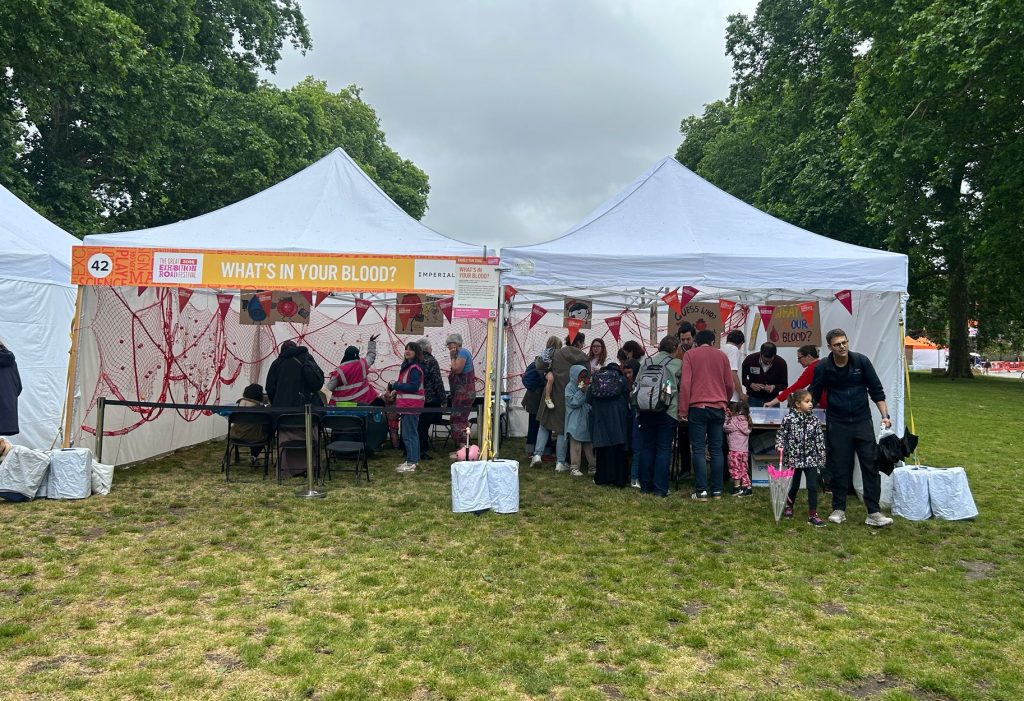
In this blog, MRes Experimental Biomolecular Sciences student Laura Lysaght shares her experience of the Great Exhibition Road Festival, including its fascinating history and her time volunteering on the ‘What’s in your blood?’ stand, developed by members of the Centre for Haematology in the Department of Immunology and Inflammation.
This year marked the 175th anniversary of the ‘Great Exhibition of the Works of Industry of All Nations’ (or the ‘Great Exhibition’). This historic moment was celebrated with exhibits teaching about culture and industry, just as the original exhibition did in 1851.
Great Exhibition: A fascinating venture for inspiring the public
Regarded as one of the grandest events in London’s history, the Great Exhibition was a huge leap towards showcasing the world’s different cultures and industries to the public. Six million people attended, which was around a third of Britain’s population at the time, and it generated a profit of £186,000 (approximately £40 million in today’s money). The estate where it took place and the surplus funds left over were used to develop three major museums: the Science Museum, the Victoria and Albert Museum, and the Natural History Museum (my favourite museum in London), as well as helping to establish what would become Imperial College London.
What’s In Your Blood?: Using art and science to teach about blood
Over the two-day event, thousands of people visited the festival, and, of course, Imperial students and staff were there to showcase the wonders of science. Of the many exhibits lining the roads of South Kensington and Hyde Park, the Imperial College Centre for Haematology joined in on the fun with the ‘What’s in your Blood?’ stand. Their main goals were to firstly, educate children about blood, secondly, engage in patient and public involvement (PPI) outreach, and finally, spread the fun!
I was one of the volunteers who helped on Saturday. My role involved teaching children about blood cells and helping them understand their functions as we decorated a massive blood-vessel artwork that covered the walls of the tent. The kids got stuck in kitting Winn the white blood cell, Robin the red blood cell, and Perry the platelet with stickers and colourful designs before we placed them onto the vessel network. By the end of my shift, I had been given original artwork by a young aspiring artist and even had a few kids proudly show me Perry’s work at scabbing their cuts (great battle wounds from playground activities). It was hugely rewarding to educate them and their families about the science that keeps their bodies going, and the final artwork looked incredible!
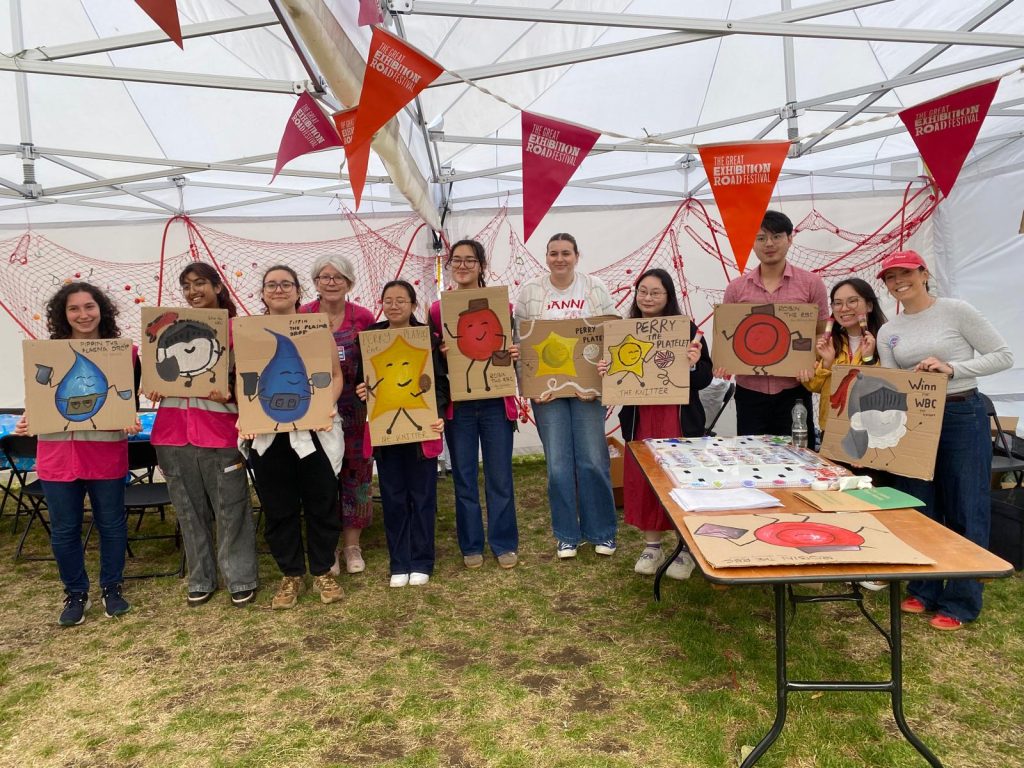
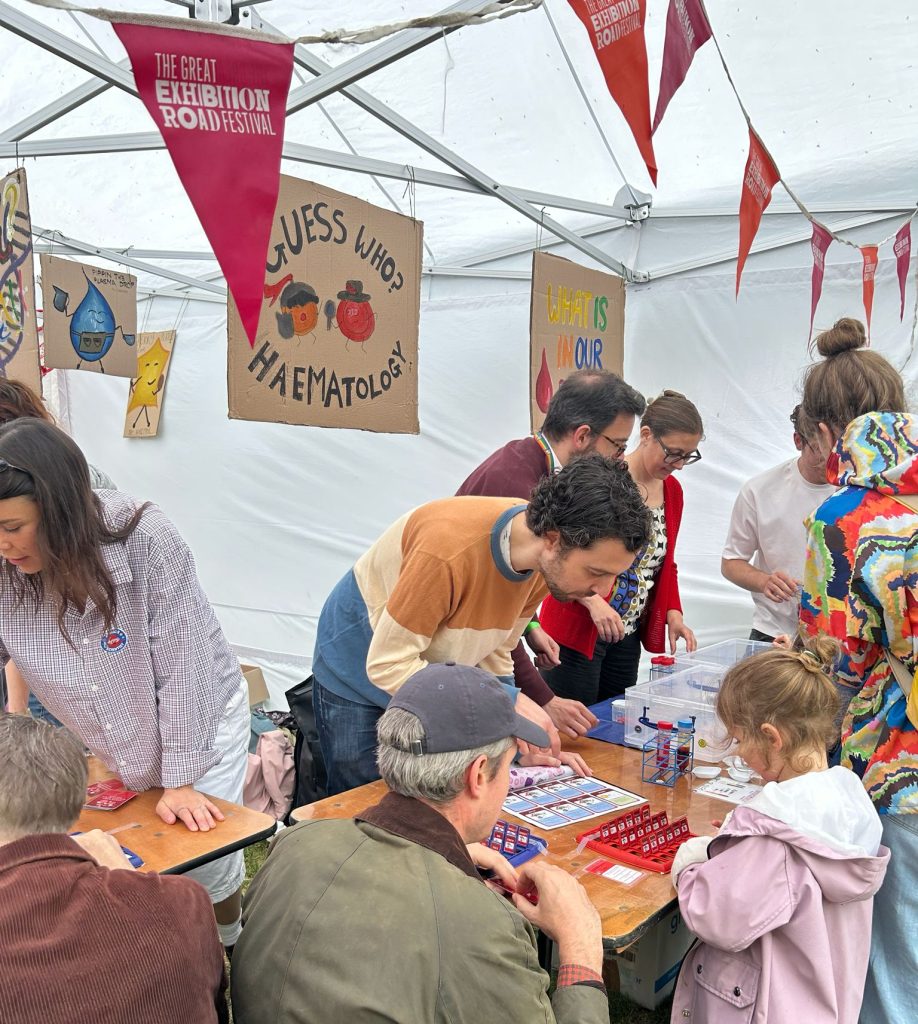
In addition to my activity area, the stand featured ‘Blood Myth or Fact?’, ‘Guess Who: Blood Edition’, and ‘Blood Components’. These activities were typically completed before visitors reached my section, and it was great chatting with families as they sat down to make their cells, hearing all about the cool things they had learned. It was wonderful to see how fascinated everyone was about blood.
Further fun: Making the most of the festivities
Once my friends and I finished with volunteering, we went off to enjoy the festivities ourselves. We danced (a lot, maybe too much), sang (definitely too much), and took full advantage of all the activities on offer. We competed against a robot to see who could pipette faster, but when we saw how slow it was, we turned the competition on each other (that poor stand). We did CPR to Tate McRae’s ‘Sports Car’, ate lots of food, and even got to meet (cardboard) Tracy, Scotland’s very own transgenically modified sheep! Additionally, I had a spiritual moment with a giant puppet bird (don’t ask).
Final Thoughts: Inspiring the Public, Then and Now
When I arrived home that evening, I was buzzing from the events of the day. The joy from everyone at the festival was palpable, even though it rained the entire time. It was lovely to see so many people from Imperial take part and demonstrate the incredible ways science can shape our world. Volunteering gave me an insight into the level of effort that went into organising the festival. Everything that made the weekend so enjoyable was possible because people dedicated their time and energy to bringing it all together.
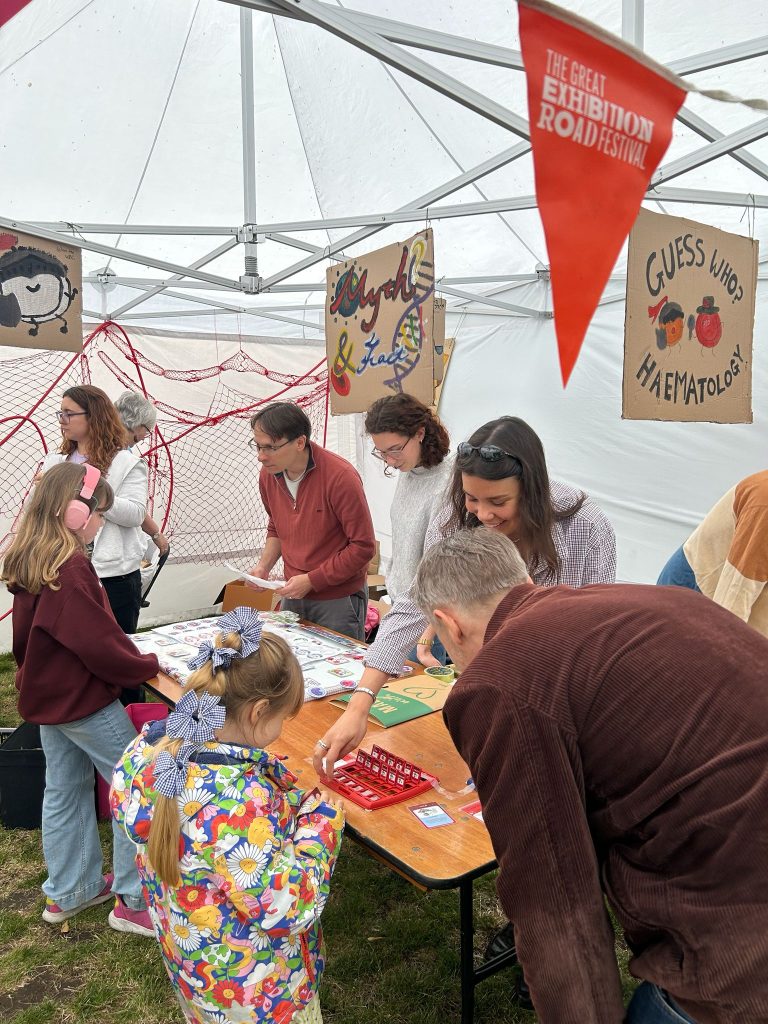
My greatest takeaway from the Great Exhibition Road Festival was that the scientific community is as vibrant as ever and that, just as in 1851, we can inspire the public when we come together and share our passion.
I would like to thank the team behind ‘What’s in Your Blood?’ for all the work they put into creating such a fantastic stand and for allowing me to be a part of it. It was a truly enjoyable experience.