Author: Tom Rozier-Hope

Concerns and Compliments Form

by Dr Jo Harris

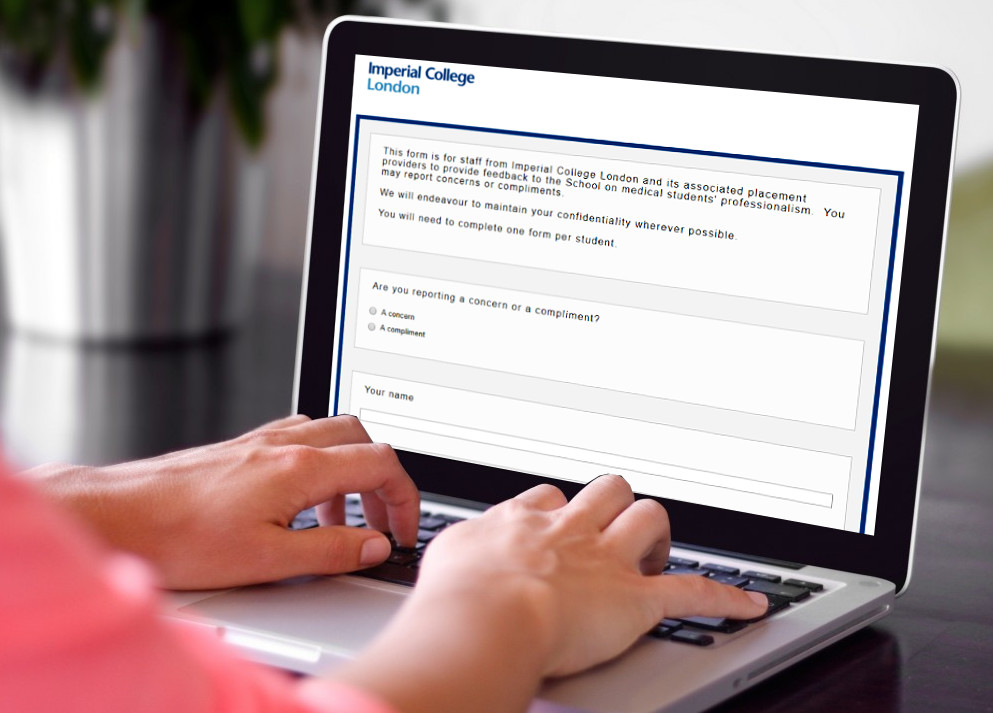
I would like to update our community GPs on the new School of Medicine reporting form. This form known as the ‘concerns and compliments’ form was introduced as an optional addition to the end of year sign-off form, completed after every placement, in the academic year 2017/18. The launch has been successful and it is particularly good to see that our GPs have engaged well with this form.

Overall, we received 68 compliments and 14 concerns across all our sites for the whole School in 17/18. The forms are not meant to be completed for every student, but for those who either impress or who cause concern especially in terms of their professional behaviour.
The range of roles of those who have submitted forms so far is shown in the table below: –

Table 1: Concerns and compliments 2017/18 by role of submitter

Reported by:- Compliments Concerns
Faculty 7 0
Consultant 15 3
GP 14 1
Junior doctor 9 0
Teaching fellow 9 9
Nurse 4 0
Teaching coordinator 10 1
TOTAL 68 14


Students told us the sign-off form provided little feedback on their achievements or professionalism, especially when they had done something in excess of Imperial expectations. We wanted to ensure that excellence was being recognised and that the students knew there was oversight of their performance even on placements further afield.

Teachers are sometimes unwilling to write negative comments or fail to sign-off students as there is a worry this would affect their progression on the course. This means that low–level concerns – such as attendance issues or timekeeping – can often go unreported, and students could have similar issues in more than one attachment. We are keen to know about these low-level concerns since there is often an underlying welfare issue that can be addressed to support the student before this becomes a major issue. The GMC have also highlighted that Schools should identify cases where student behaviour may flag a need for extra support in the new GMC professionalism guidance, Professional behaviours and fitness to practice (GMC, 2016).

Students who are complimented receive a letter detailing the teacher’s comments, together with congratulations from Mr Martin Lupton, Head of Undergraduate Medicine. A copy is saved on the student’s file. The form does not affect progression or ranking and cannot be used as part of the FPAS application. Although students are encouraged to keep forms of this nature as part of their portfolio, you should only complete a compliment form if you feel the student has excelled in some way, and not because the student has suggested it will assist their progress.

The response to the submission of a concern form varies dependent on the issue. Forms go to the Head of Year, year administrator and Deputy Head of Undergraduate Medicine for consideration.

We are always very happy for unprofessional behaviour to be addressed at practices by the teacher (or GP) in question, but it is useful for the School to know about the extent of unprofessional behaviour. It may be that issues such as attendance are recurrent in a student and they require more support from the School, so we encourage you to let us know any issues even if you consider them dealt with.

This is particularly important in the GPPHC course in Year 5, where we are piloting clinical encounter forms in the place of sign-off forms. Although students will get more feedback about their knowledge and skills with the clinical encounter forms, without an end-of-firm sign-off we need you to tell us if anything has been particularly good, or particularly concerning about that student, which can be submitted through the concerns and compliments form system.

GPs who are signing off students will get a link in the confirmatory email they receive from the FEO. The form can always be found here:

https://imperial.eu.qualtrics.com/jfe/form/SV_8CijnFiEtk8UNq5

We also hope to make it available on the College website for easier access in future. Any staff who receive the termly ‘Teaching Bulletin’ will also have access to the standard link.

Thank you again for helping our students and your involvement with this new form.


Dr Joanne Harris

Deputy Head of Undergraduate Medicine
Undergraduate Primary Care Team takes home coveted CATE Award

by Murray MacKay

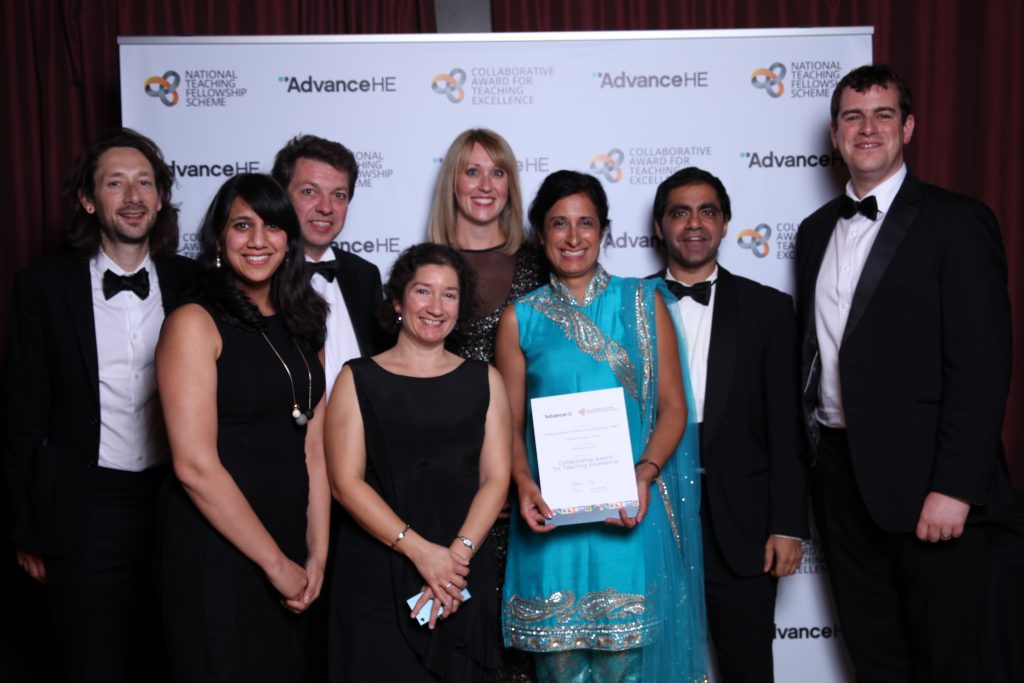
The Collaborative Award for Teaching Excellence (CATE) recognises and rewards collaborative work that has had an impact on teaching and learning. Introduced in 2016, the Award, established by the Higher Education Academy, which is itself part of Universities UK, is open to all providers of higher education across the four nations of the UK.

Since 2016, 30 teams have been recognised, with 12 of them being awarded funding to continue their collaborative projects and further their impact.

Dr Kumar said: “The Undergraduate Primary Care Team’s story begins with a vision for medical education to become truly inclusive, making a transformational and sustainable difference to the health and wellbeing of patients, their families and communities.

“It is this that has directed our attention, energy and drive as the team has grown beyond expectations over the past five y

ears. Maximising the energy and talents of the full team, we all work to embrace our guiding principles of creativity, community, collaboration and evidence-based education in new exciting unpredictable ways.

“The team has created a multitude of courses and projects that are transformational to medical students and accountabl

e to society, with education creating a powerful space in which an exciting symbiosis is starting to emerge with students learning their curriculum meaningfully, acting as agents of change within our local community.

“Winning the CATE is a momentous occasion for all of us in the team, receiving such an accolade and national acknowledgement for our work will serve as a potent catalyst for us to now evolve even further, sharing our vision and way of working with others.”

Working with students

One of the highlights of the teaching team’s efforts has been the development of ‘Community Action Projects’ (CAP) alongside a student steering group.

3rd Year Medicine students are now encouraged to complete an authentic, peer-assessed experiential project during their 10-week community medicine attachment. In this CAP, students identify a real-world problem within their local community and they engage with community stakeholders, patient and charity groups to design an intervention to address the challenge identified.

Examples of CAP projects include a pair of students who recognised the ethnic diversity of their local population, which meant that local patients were unable to understand any health-related literature which was being provided by the doctors due to their limited English language skills. After engaging the local clinical commissioning group and patient groups, they developed an online website where patient condition leaflets were translated into variety of languages.

The initiative has been so successful, neighbouring areas are interested in the students working with their communities. In another example, one pair of students identified a lack of uptake of the cervical smear screening program in their local GP practice population. After discussing this with patients, they identified a lack of awareness amongst the patients as a key driver. They approached a local women’s cancer charity, and a Gynaecology Consultant from the local hospital to deliver an educational evening where local patients were invited to attend and learn about gynaecological malignancies and how they can be prevented.

Anonymous student feedback showed the value of this kind of active teaching:

  • “Personally, I was happy I was able to do something that really helped patients. It was heartening to hear patients’ positive feedback for our project…I learnt that patients have a lot of healthcare needs and this is an eye-opener for me”
  • “[I am] more aware of the needs of local populations and the need to think critically about how to influence people positively and in a sustainable way”
  • “For the first time I felt I was able to do something as a student and not feel like I was at university just waiting to become a doctor”

The Director of Imperial’s Centre for Higher Education Scholarship and Research (CHERS), Professor Martyn Kingsbury, said: “The remarkable aspect of the Undergraduate Primary Care Education Team’s work is how they have embraced established educational expertise, whilst also developing their own innovations. They have used this to great effect in a variety of authentic and truly transformative learning experiences.

“Their practice and enthusiasm is exemplary. Their work is increasingly influential and they are a key part of our mission to transform teaching and learning at Imperial.”