In our regular Take 5 series, Dr Jennifer Wallis, Senior Teaching Fellow in Medical Humanities, recommends five books for thinking about life, death, and effective writing. Jennifer teaches the history of medicine and psychiatry on the BSc in Humanities, Philosophy & Law.
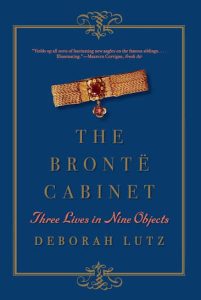
The Brontë Cabinet: Three Lives in Nine Objects by Deborah Lutz (2015) is a brilliant example of how individual objects can be used to inform and craft historical narratives. One might question how much more can possibly be known about the Brontës, so extensive is the scholarship surrounding the bookish family, but Lutz’s book shows the utility of a novel approach to a topic. Using objects belonging to the Brontës, from dog collars to walking sticks, Lutz’s ‘micro histories’ provide glimpses into everyday life in the nineteenth century – not just that of the Brontës, but of Victorian life (and death) more broadly. It is the type of history that makes me want to experiment with my own research process and writing style, something that – for me – is always the sign of a great history book.
I Heard the Owl Call My Name by Margaret Craven (1967) is a book that seems to have always been with me. There was a copy on the bookshelves of my childhood home that I read in my early teens; although the key messages were lost on me at that age, I fell in love with Craven’s descriptions of the British Columbia coastline and forest. Re-reading the book as an adult, it is a startlingly effective exploration of life and death. Its central character is a priest who, unbeknownst to him, does not have long to live and is sent by his bishop to live among a First Nations community. A fairly short novel, it covers vanishing ways of life, personal struggles, grief, and the importance of community in a way that never feels overly moralizing or prescriptive and leaves it to the reader to take away their own message.
The Great Victorian Collection by Brain Moore (1975) is perhaps an obvious choice for someone who’s worked on Victorian history for many years. It is a period I will never tire of reading about and researching, and reading this book felt a little like one of my own historian fantasies had been put down in print. In this novel, assistant professor of history Anthony Maloney drives from San Francisco to California to attend a seminar, and on the way stops off at a motel for the night. Upon waking, he looks outside to see the motel parking lot filled with exhibits from the 1851 Great Exhibition: furniture, toys, musical instruments… It is a Victorian historian’s dream, but one that turns into a fateful obsession for Maloney. It is both a neat encapsulation of the fevered excitement that surrounded the real 1851 Exhibition, and a cautionary tale, perhaps, about every researcher’s work-life balance!
The Little Stranger by Sarah Waters (2009) is a must-read for any fans of Gothic fiction. It evokes the tone of fin-de-siècle Gothic novels so well that one could be forgiven for thinking it was written 100 years earlier. Set after World War Two, the story is narrated by local GP Dr Faraday who is the reader’s guide to the goings-on at Hundreds Hall, home to the once-wealthy Ayres family. The whole novel is a collection of hauntings: memories of the once-grand Hundreds Hall vie with the now dilapidated, ivy-covered structure that has fallen into disrepair; ex-soldiers are haunted by their experiences of combat, both physically and mentally, and almost all of the key players are struggling with some form of ghost from their past. The book was made into a very effective film in 2018, but it can’t compete with the sense of slowly creeping dread that Waters crafts in her writing.
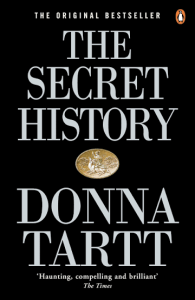
The Secret History by Donna Tartt (1992) was a chance purchase in a train station on my way to deal with a family crisis. It proved the perfect choice as, from the moment I started reading it, I couldn’t put it down; it provided ample distraction from everything else going on around me. The novel follows a group of students at an elite American college, all of whom are coming to terms with their part in the death of their mutual friend, Bunny. All students of Classics, the friends and their eccentric professor each have crucial roles in unravelling the mystery of this modern twist on a Greek tragedy – but you don’t need any knowledge of Classics to be swept along by Tartt’s intricately woven characters and their gradual downfall into alcoholism, jealousy, and drug addiction.

Dr Jennifer Wallis is a Senior Teaching Fellow in the Faculty of Medicine at Imperial. Her main interests are in the history of psychiatry and pathology in the 19th to early 20th century.