Author: Angela Pinot de Moira

Sharing research and lived experiences of London’s Ultra Low Emission Zone (ULEZ)

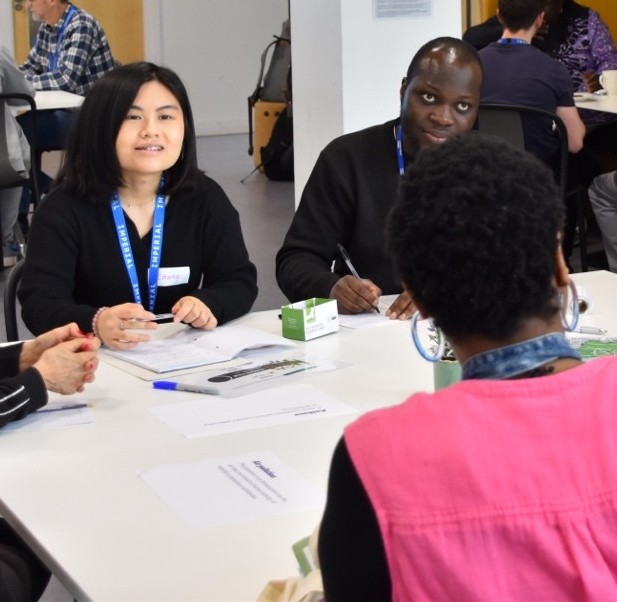
At the SAHSU Environment and Health Coffee Morning in April, Dr Oluwaseyi Arowosegbe and Dr Chang Cai shared their research on how London’s Toxicity Charge and Ultra Low Emission Zone (ULEZ) to reduce traffic-related air pollution affected population health.

During the coffee morning, Dr Oluwaseyi Arowosegbe and Dr Chang Cai hosted three 25-minute table discussions with small groups of participants. The demographic cut across male and female, young and older age groups and different ethnicity groups. The two researchers first introduced their study aims and the planned methods and data to be used to address their research questions. They then started open discussion on what people think about the ULEZ and how it affected their local environment, such as traffic flows and air quality, and their daily lives. The two researchers also conducted two engagement activities that ask the people to use paper stickers to vote for their usual way of travelling, awareness of the ULEZ, and languages that they would like to hear the research on.

The discussion highlighted both positive outcomes and areas needing improvement. Many attendees noted a significant drop in car volume and improved air quality. One of them also mentioned their improved respiratory health – better performance for lung function tests and less asthma attacks since the introduction of ULEZ. Some members of the public also shared their criticism of ULEZ as they think the intervention is causing congestion on border roads and a financial burden to those with old non-ULEZ-compliant cars. The public also raised some concerns about the “unintended synergetic impacts” of the ULEZ and other government actions, such as increase in tube fare and limited number of public transport during rush hours, leading to more private cars on the roads and thereby defeating the purpose of ULEZ.

The event offered an open space to engage with the public. The public members felt more empowered to voice their opinions and concerns and more connected to the projects through the coffee morning meeting. The participants became better aware of resources to learn more about the ULEZ and the research. The two researchers were able to try activities that better facilitate conversations and to engage directly with previous participants. It built stronger connections and trust between the public and the researchers and reassured the researchers that the public is always interested in science and the need to continually engage with the public.
Oesophageal (Food pipe) cancer trends and risk factors in England

At the SAHSU Environment and Health Coffee Morning in April, Dr Gwen Murphy shared her plans for research on understanding oesophageal, or food pipe, cancer in England.
Cancer of the oesophagus is often found only when the cancer has already spread and is difficult to treat. Gwen’s research is focused on improving our understanding of the causes of oesophageal cancer so that we can prevent it occurring or identify it earlier when it is easier to treat. Two types of tumours can grow in the oesophagus and the risk factors are distinct for each type. Understanding what causes each type of oesophageal cancer and identifying people most at risk helps us to design cancer prevention and early detection programs. Gwen’s project will create the first map of oesophageal cancer in England and use environmental monitoring data to understand whether factors like air pollution or intensive farming increases risk of oesophageal cancer.
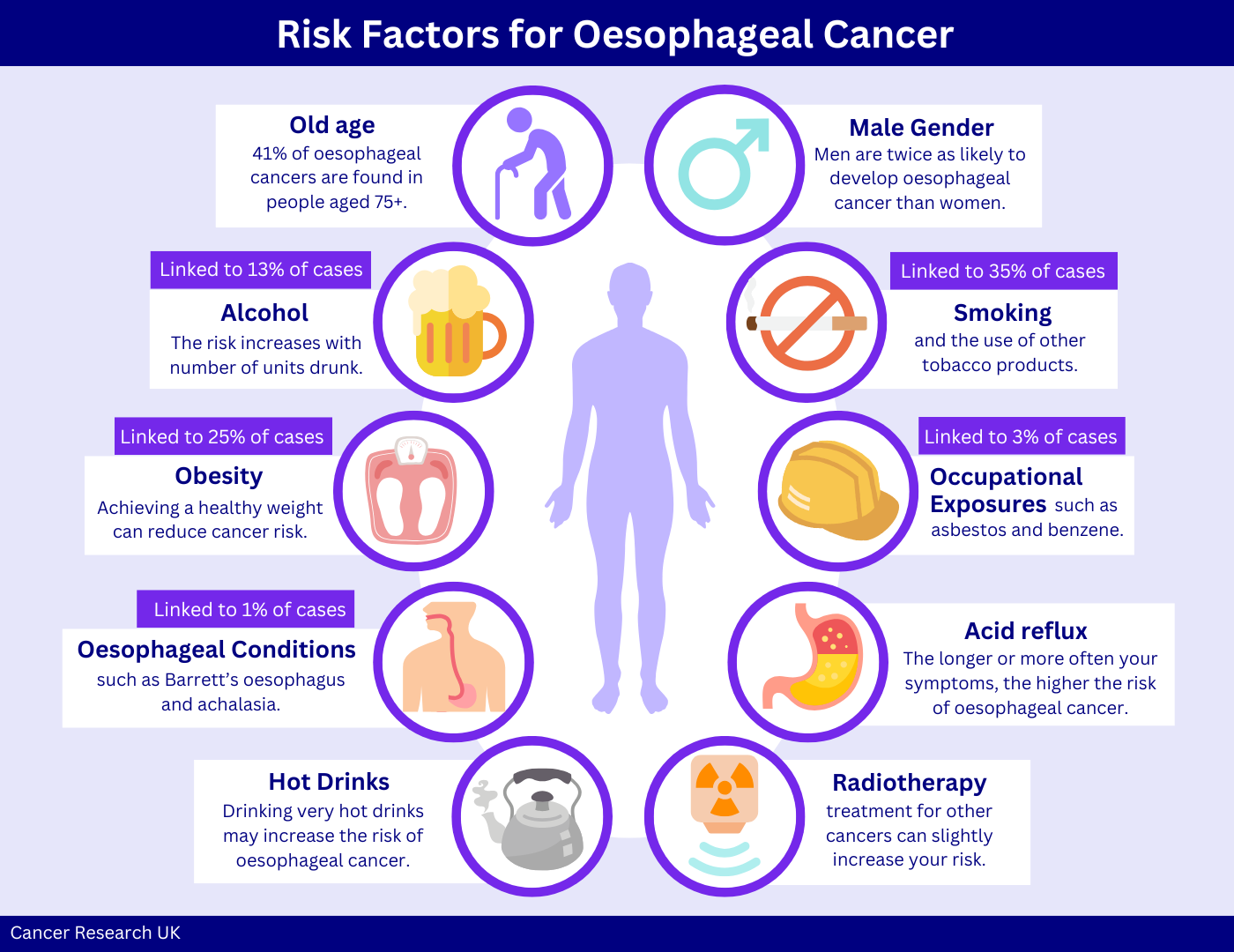
During the morning, Gwen hosted three 25-minute table discussions with small groups of people. Gwen wanted to learn more about what people understand currently about oesophageal cancer: did they know anyone who had had it, what do people call the cancer and, what did they know about oesophageal cancer risk factors. Gwen also asked people where they would like to find the results of this research (online, local papers, radio etc). To help the discussions get started Gwen and her team had prepared a short summary of the project and some images describing where in the tumour the oesophagus is and what we know about risk factors at the moment.
People in the discussion groups did not initially understand the difference between “throat cancer” and cancer of the oesophagus and they also preferred the use of the common name “oesophageal cancer” over alternative names like “food pipe cancer” and “gullet cancer”.
Many people talked about being concerned about how environmental factors increase the risk of cancer generally. People were surprised to learn about the risk factors of oesophageal cancer and were particularly interested to hear that drinking very hot drinks has been found to increase risk of this cancer. Everyone who participated in the discussions understood the idea behind the project and said they would be interested to hear the results. Some people chose not to join the discussions because they did not want to talk about cancer.
People were very supportive of the planned research and of research generally. The fact that people were interested and engaged was very encouraging and the thoughts they shared have shaped the research Gwen will do and the way she describes it.
Gwen hopes to continue to update participants with the progress of her research and to learn more about their thoughts on cancer prevention more generally.

Insights for healthy ageing: trends in dementia-related mortality

At the SAHSU Environment and Health Coffee Morning in April, Dr Angela Pinot de Moira shared her early-stage research on how people with dementia die.

Although dementia is now the leading cause of death in England, many people with the condition die from other causes such as heart disease or pneumonia. Angela’s research looks at which health conditions contribute to deaths in people with dementia and how these patterns vary across England. She hopes this will help identify who is most at risk of dementia and what other factors might influence that risk.

During the coffee morning, Angela hosted three 25-minute table discussions with small groups of attendees, representing a mix of ages and genders. As this is a sensitive topic and her research is still in its early stages, she was particularly interested in how to communicate her research to the public. She wanted to explore: How do people feel about talking about death? What language is best to use? How much do people know about how deaths are recorded and used in research?

Instead of the usual academic slides, Angela used a short written summary and an example map to explain her project. The format was surprisingly effective: participants were engaged, willing to share personal stories and contributed thoughtful insights. Angela also shared some of her own experience, as her mother lived with dementia.

Participants generally preferred clear terms like “death” or “mortality” over euphemisms like “passing” or “losing someone,” which they found vague or unhelpful. They also felt that terms like “end-of-life” could sound alarming. There was general agreement on the need for more open conversations about death and dying.

Some people shared their experience with death certificates, noting that dementia is often not recorded, depending on the immediate cause of death. This raised questions about how much information is captured on official records.

The event has helped Angela feel more confident about speaking about death and dementia with the public, and what language to use. The level of interest and the stories shared were very motivating. Building on these discussions, Angela hopes to explore new ways to involve participants, perhaps through co-authored summaries of her research findings.