Conversations about innovation in healthcare often focus on emerging technologies: smarter diagnostics, faster data analysis, and the development of new medical devices. While these advances are important, the discussions often overlook a more fundamental question: who are these innovations actually designed for?
Historically, healthcare research and innovation have often assumed the male body as the default. Women have been underrepresented in clinical trials, biomedical studies and health technology testing, creating data gaps that affect the design of treatments, devices and services. As a result, women are more likely to experience adverse drug reactions and misdiagnoses, reflecting gaps in how health data has been collected and used in medical research. Addressing this problem, however, requires more than simply improving datasets. It also means involving women in research and co-designing healthcare innovations to ensure products and services meet their real needs.
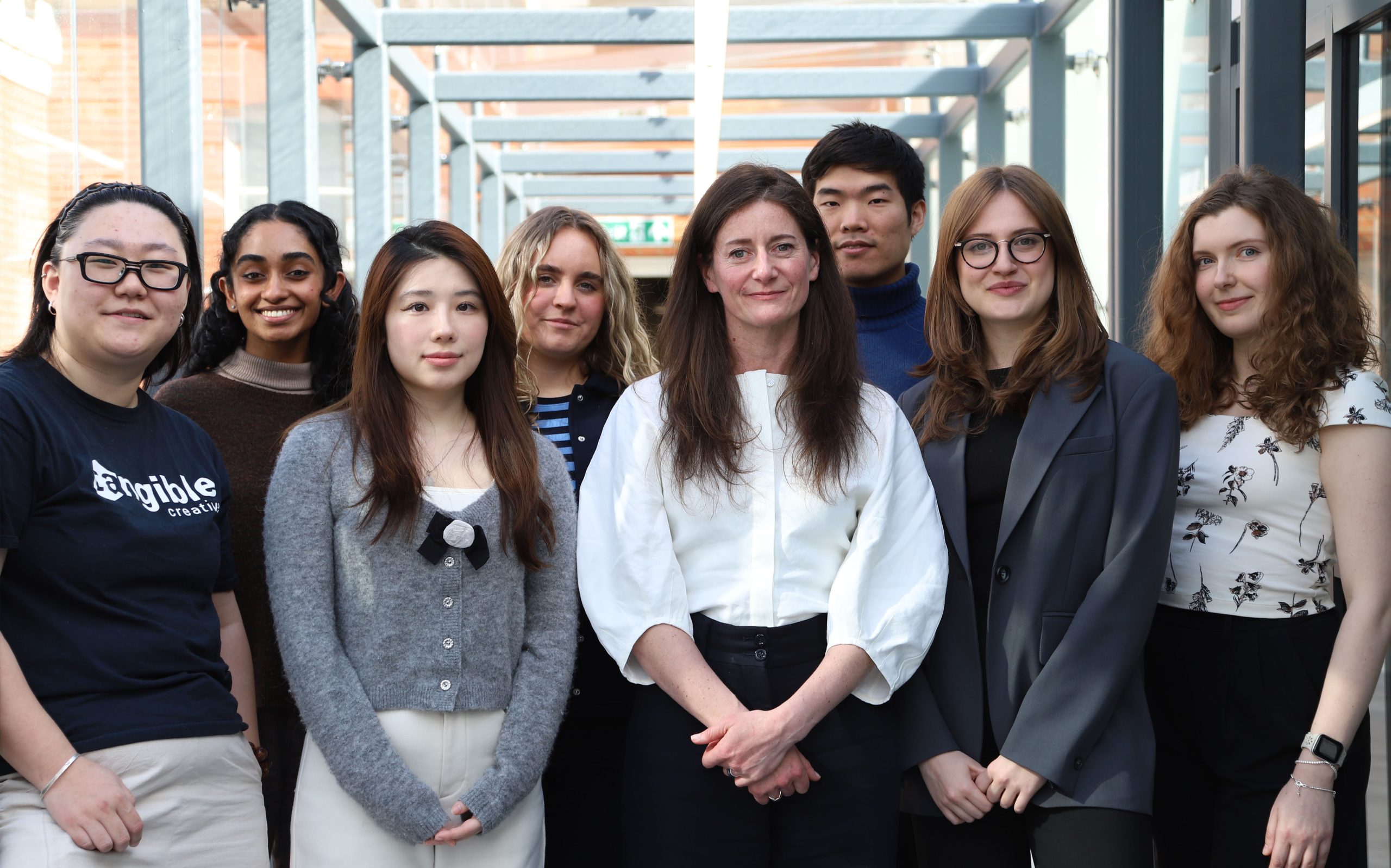
This is the approach taken by the Collective Innovation Lab (CIL), led by Dr Celine Mougenot at the Dyson School of Design Engineering. Rather than simply designing innovations for women, Dr Mougenot and her team co-design with them, ensuring women’s voices are embedded in the process of developing new products and services.
Co-design in practice
Despite rapid advances in healthcare in recent years, including the use of artificial intelligence, many technologies and digital tools still fail to reflect women’s experiences and needs.
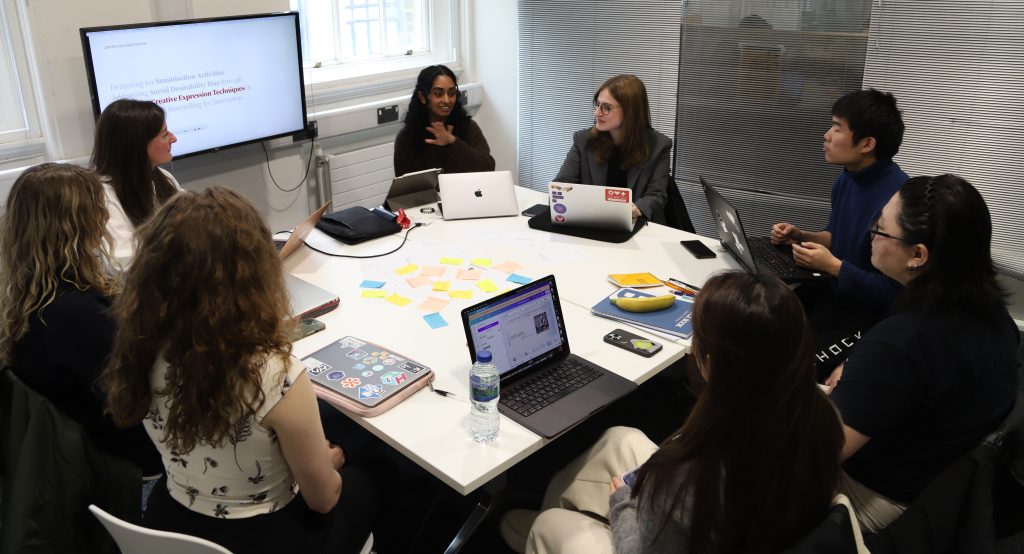
Co-design offers a framework to address these blind spots. It is not simply user-centred design, however. Instead, it involves users in contributing as “experts of their own lived experiences”, shaping research questions, generating ideas, and testing early-stage concepts: rather than treating user feedback as a final checkpoint, it embeds participation into every stage of development. Co-design also serves as a tool for designers to recognise and overcome assumptions about women’s experiences, ensuring solutions reflect real-world perspectives rather than preconceptions.
As Dr Mougenot emphasises:
“When innovation happens without the voices of the people it aims to serve, important realities are easily missed. In women’s health, that can mean designing tools, products or digital services that simply don’t fit with women’s everyday experiences.”
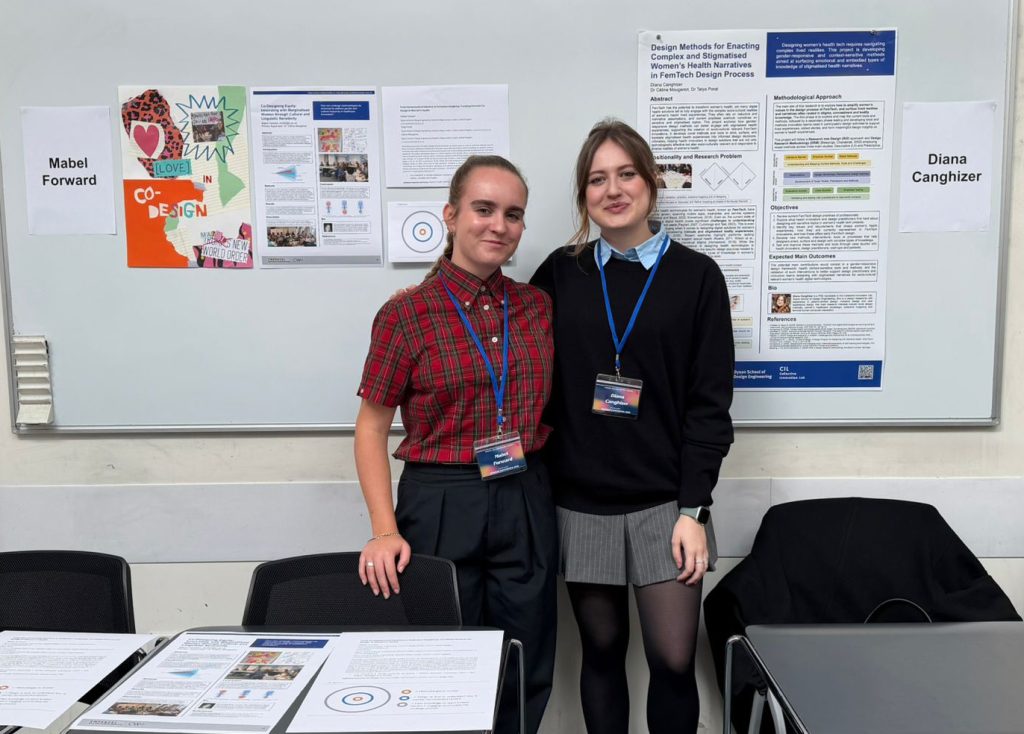
A series of interviews with FemTech innovators, conducted by Diana Canghizer, PhD researcher at CIL, highlighted this issue. Designers who have not experienced pregnancy or menopause often struggle to imagine what women go through and how to elicit these experiences, making it difficult to create effective solutions. Diana’s research focuses on developing design methods that help uncover and design with women’s lived realities, especially in the context of intimate, stigmatised or socially taboo topics, including experiences related to menstrual, pelvic, and reproductive health. By using creative participatory techniques, her work aims to ensure that innovations are context-aware and truly reflect women’s experiences.
The same principles of co-design were also put into practice at the REDESIGN Women’s Health Hackathon organised at the Dyson School of Design Engineering. Led by CIL PhD researcher Echo Wan, the event brought together nearly 100 participants from engineering, medicine, design and business, to tackle challenges in women’s health. Through workshops on user research and rapid prototyping, teams developed solutions rooted in real needs and lived experiences. The winning concept, MenoBand, proposed a wearable device to help manage menopausal hot flushes, combining sensing technology with a mobile app for symptom tracking.
Inclusive innovation
Involving women in the design process is essential, but it is only part of the equation. Researchers from the Collective Innovation Lab recognise that women’s needs vary depending on their age, ethnicity, socioeconomic status, and health history.

To address these complexities, Dr Mougenot and her group adopt an inclusive design approach that engages diverse communities and perspectives. One example is the work of Mabel Forward, a PhD researcher at CIL, who is exploring how to integrate intersectionality with co-design methodologies. Her work focuses on South Asian women’s experiences of menopause through participatory workshops with a community support group in North-West London. Using creative activities and storytelling, the project aims to develop culturally sensitive ways for participants to share their lived experiences, which are often overlooked in mainstream healthcare research.

From the lab to real-world impact
While co-design can be more time-intensive than other approaches, it plays an important role in ensuring that innovations are adopted and perceived as trustworthy. In the FemTech sector, for instance, many products, including menstrual health apps and wearable breast pumps, are developed based on extensive feedback from female users to ensure that the technologies reflect real needs and experiences. As Dr Mougenot explains: “When people are involved in shaping a solution, they are much more likely to trust it and use it in their daily lives.”
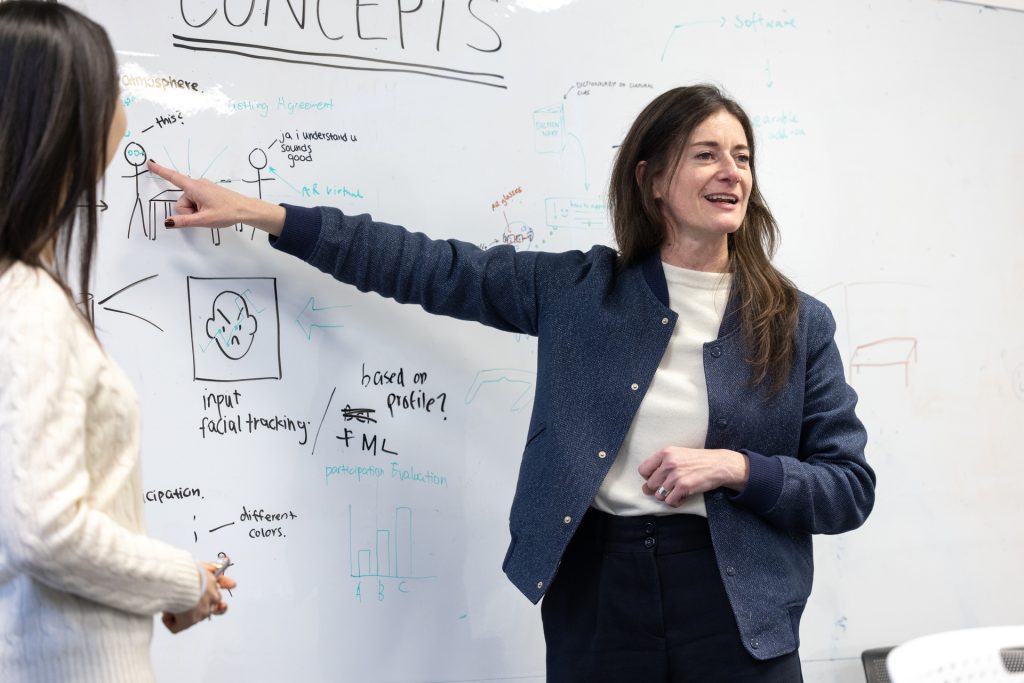
The Dyson School of Design Engineering applies this philosophy not only to research but also to teaching. In her course on Human-Centred Design Engineering, Dr Mougenot introduces methods such as stakeholder engagement and co-design. Similar approaches are taught during the MSc Design Engineering and MSc Design with Behaviour Science programmes, where students learn how participatory research methods can inform the design of more inclusive innovations.
Design engineering students are encouraged to think beyond simply “making better things” and instead ask “who is this for”, in order to truly understand “how to make things better” – for people and for the planet.
Final-year student projects illustrate this approach in practice. For instance, Yasmin Zaraket’s YAQIN, a faith-sensitive AI mental health app co-designed with Muslim women, demonstrates how culturally informed design builds trust and supports therapy readiness. Meanwhile, Serena Sebastian’s project uses arts-based methods, including comic-making, to help young women share authentic experiences of gynaecological and other health conditions.
Imperial research for women
At the heart of the Collective Innovation Lab’s ethos lies its commitment to co-design: ensuring that the innovation and science work for everyone. By placing women’s voices at the centre of the research process, the lab is helping to redefine what design engineering can do for women and women’s health.
For Dr Mougenot, Women at Imperial Week offers an opportunity not only to celebrate women researchers but also to reflect on the impact of inclusive innovation.
As she concludes:
“Designing better futures requires more than new technologies. It requires listening to the people whose lives those technologies will affect. With women making up 51% of humanity, their voices must not be ignored. They must be central to innovation. This is our mission.”
* * *
To stay up to date with the lab’s activities, follow them on LinkedIn.