Born Later, Breathing Better? How Lung Function Has Changed Across Generations
Do people born more recently have better lung function than earlier generations?
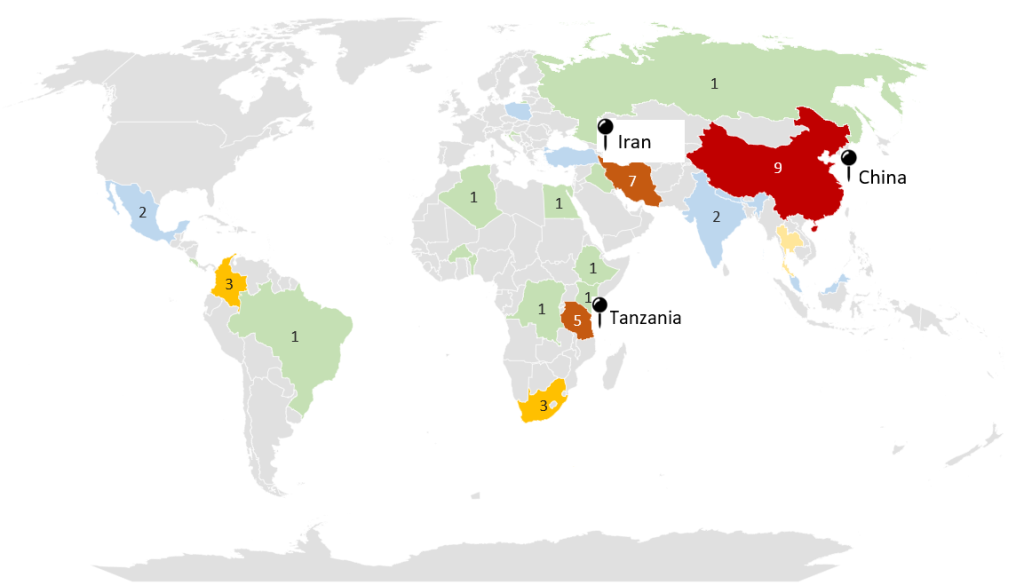
A recent study using data from 28,569 adults across 34 countries in the Burden of Obstructive Lung Disease (BOLD) study found that people born in more recent decades generally had better lung function than those born earlier.
What did the analysis find?
Participants were born between 1902 and 1976 and had completed spirometry at recruitment. Across time the forced vital capacity (FVC), the forced expiratory volume in 1second (FEV1) and the ratio FEV1/FVC improved across birth cohorts.
Even after accounting for factors such as age, height, smoking, body weight, education, occupational exposures and previous tuberculosis, people born later continued to have higher lung function.
The findings were both seen in high-income countries (HICs) and low- and middle-income countries (LMICs), as well as among men and women and people with different smoking histories.
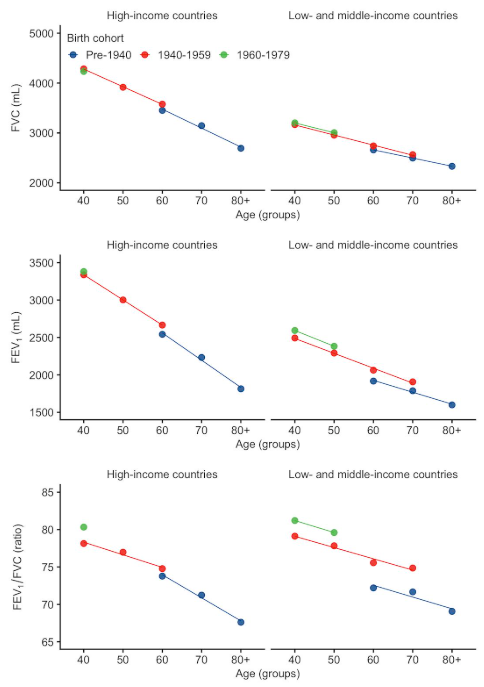
Figure 1 Birth cohort effects on post- bronchodilator lung function. Post- bronchodilator lung function by age group, country income group and birth cohort. Each marker represents the subgroup- specific mean of lung function values, and linear trendlines are shown. FEV1, forced expiratory volume in 1 s; FVC, forced vital capacity.
Why might lung function be improving?
Birth year itself does not make someone’s lungs healthier. Instead, it may reflect the conditions experienced by different generations.
However, our study cannot tell us which of these factors caused the differences. It shows an association between later birth year and higher lung function, not a direct cause-and-effect relationship.
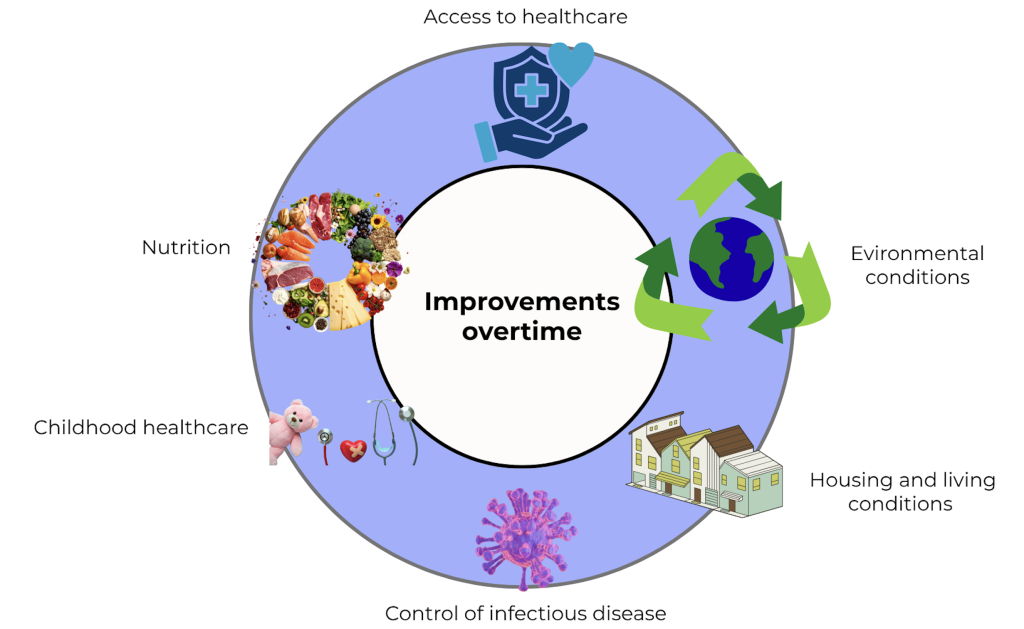
Figure 2. Plausible factors explaining the improvement in lung function over time.
Why does this matter?
Lung function tests are interpreted by comparing an individual’s results with expected values. If lung function has changed across generations, reference standards based on older populations may not always reflect what is typical for people born more recently.
What should we take away?
The findings highlight that lung health is shaped over a lifetime and may reflect improvements in health and living conditions across generations. More long-term research, particularly in LMICs is needed to understand what is driving these generational changes.
Want to know more? Read our paper now published in Thorax
Written in collaboration with Dr Jixuan Ma