The iBSc and Beyond with Evan Diver-Hall
Evan Diver-Hall, a doctor and graduate of Imperial, tells us how his dissertation project set up an enduring interest in the Medical Humanities, and led him to present at a History conference in Leeds.
After graduating from the iBSc in Medical Sciences with Humanities, Philosophy and Law (HPL) in 2024, I underwent quite a dramatic cognitive shift. After a year spent being encouraged to think creatively, critically and holistically, I was suddenly back in the world of clinical medicine. It took some time to get used to. I’m sure many HPL alumni can relate to the slight culture shock of returning to the wards. Since then, I’ve recently graduated from medical school and, in hindsight, that post-HPL adjustment period didn’t last long. Before I knew it, I was immersed once again in the world of medicine: rehearsing for OSCEs, reciting bizarre acronyms, and being tormented by revision flashcards in my dreams.
After graduating, though, I realized that the part of my brain that had been so thoroughly exercised during HPL, the creative and analytical part, was beginning to gather dust. I wanted to put it back to work. So, I revisited my dissertation and applied to present my research at the Society for the Social History of Medicine’s international conference in Leeds.
My dissertation project was interdisciplinary but, put simply, it used visual media – specifically the title pages of two 17th-century editions of Avicenna’s Canon of Medicine – to explore changing relationships between medicine and the natural world. A little niche, perhaps! Yet the project took me on an unexpected intellectual journey, opening up an era of history that had previously been completely unfamiliar to me.
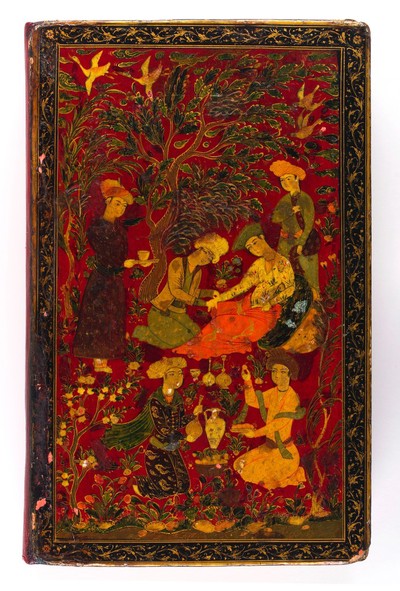
Through medieval Persia, I encountered a conception of medicine and healing that was deeply intertwined with the rhythms of the natural world. In contrast, printed Venetian editions of the same text reflected a far more exploitative relationship between humans and nature. I found these contrasting perspectives fascinating and, without exaggeration, they altered the way I think about medicine and our place in the world. Over the past few years I’ve been exploring Buddhism and its philosophies and, rereading my dissertation, I can now recognize the early seeds of ideas that have continued to grow and shape my thinking.
Originally, I had planned to attend the SSHM conference with a friend from the same HPL cohort as me. Both of our abstracts had been accepted, but unfortunately a family trekking trip across Albania meant that Leeds would have to wait to hear about her fascinating project! This meant I would be going alone. I was fortunate enough to receive a bursary from the Society, which meant I could book myself a nice hotel in Leeds and make the most of the experience.
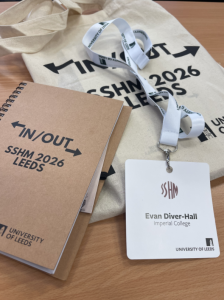
Walking into an academic environment so different from my current career felt daunting. However, once I put those nerves aside and simply appreciated the privilege of being surrounded by such an enthusiastic community of historians, clinicians and researchers, I thoroughly enjoyed myself. I attended a range of fascinating talks, including a PhD student’s research on colour therapy in twentieth-century Britain, a presentation on magic and medieval medicine, and another exploring the role of nature in hospital design (which even referenced HPL’s very own Giskin Day!).
When it came to presenting my own paper, I had 20 minutes to speak followed by 10 minutes of questions. Beforehand, I revisited my notes on the public speaking masterclass we had during our iBSc, which proved incredibly helpful. We don’t get many opportunities to practise formal public speaking during medical school, so it was nice to return to those foundations. The questions afterwards were enjoyable, and I loved discussing the project with people who shared similar interests. Looking back, I wish I’d been a little bolder in approaching people between sessions, but for my first conference in this kind of academic setting, I think I did a pretty good job.
Overall, it reminded me of how rewarding it can be to step outside the familiar world of medicine and reconnect with the Humanities. If you’ve completed, or will soon complete, a HPL project that you’re proud of, I’d recommend submitting an abstract to conferences like these; it was a novel and enjoyable experience.
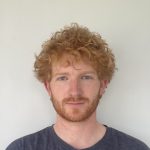
Evan is a doctor currently working on the Acute Medical Unit in Bangor, North Wales, having graduated with honours from Hull York Medical School. During his intercalated degree at Imperial College London, he developed an appreciation for the broader context of medicine, focusing his research on the historical importance of the natural world in healthcare. Alongside medicine, Evan can often be found canoeing with friends on the Norfolk Broads, where he grew up. His interests lie at the intersection of clinical practice and the humanities, particularly how our relationship with the natural world can shape our understanding of health and healthcare.