By Priyal Pajwani (Sustainable Imperial Student Ambassador)
Priyal shares insights into her role as a student auditor for the Green Impact programme – a toolkit of impactful activities which Imperial staff teams can take to improve sustainability across the university and at home.
As a Master’s student in Business Analytics and AI at Imperial College Business School, I became involved with Green Impact through the Sustainable Imperial Ambassador Programme. With a longstanding interest in sustainability, I was keen to understand how Imperial approaches it at an institutional level, particularly how wider commitments translate into decisions and actions across individual teams.
What is Green Impact?
Green Impact is a sustainability programme run by Students Organising for Sustainability UK (SOS UK) and is used at Imperial to support teams in improving their environmental and social practices. It is a United Nations award winning programme that has been used by more than 2,200 organisations, with participating teams working through a toolkit of practical actions covering areas such as energy, waste, travel, procurement and biodiversity.
As part of the Sustainable Imperial Ambassador Programme, this volunteering opportunity offered an interesting way to explore sustainability while applying an analytical mindset to something new. The role involved reviewing evidence submitted by the Imperial departmental teams, assessing actions against defined criteria, and speaking directly with the staff responsible for implementing these initiatives across Imperial.
Training to be an auditor
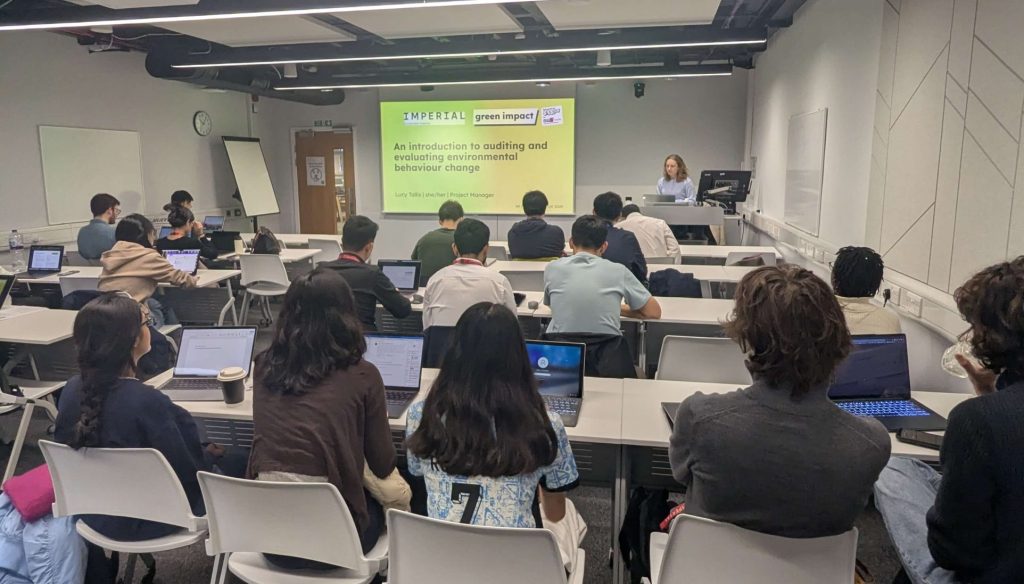
Before beginning the audits, all student volunteers complete a 2.5 hour training session delivered on campus from SOS UK in environmental auditing and evaluating environmental behaviour change. The training is approved by the Institute of Sustainability and Environmental Professionals (ISEP) and provides the framework needed to carry out the audits consistently and objectively.
After completing the training and practical audits, student auditors also receive a digital credential recognising the skills and experience gained through the programme.
How sustainability takes shape across Imperial
Following the training, students were placed into groups of two or three and assigned departments to audit. Alongside two other student auditors, I completed audits for Library Services, the Grantham Institute for Climate Change and the Environment, and the Environmental Research Group.
Each audit began with reviewing the award level the team was working towards and the evidence already submitted against the relevant Green Impact criteria. Within our group, we divided the assessment according to our individual areas of interest across sustainability themes, before meeting the department to discuss its work in greater detail. The evidence we reviewed took several forms, from invoices and photographs to meeting minutes, internal surveys and staff communications, depending on what was required to demonstrate each action. Meeting the teams was therefore an important part of the process, as it provided an opportunity to speak directly to the staff about the initiatives they had implemented, and maintained within their departments.
“Meeting the teams was therefore an important part of the process, as it provided an opportunity to speak directly to the staff about the initiatives they had implemented, and maintained within their departments.”
Each audit reflected the different functions and priorities of the respective teams, for example the Library Services focused strongly on staff and student engagement, with initiatives including Hedgehog Awareness Week, office planting and wider biodiversity activities. At the Grantham Institute, sustainability was reflected across both its climate research and policy work and daily operations, while the Environmental Research Group incorporated it into research practices through shared laboratory equipment, responsible procurement, waste reduction and biodiversity initiatives.
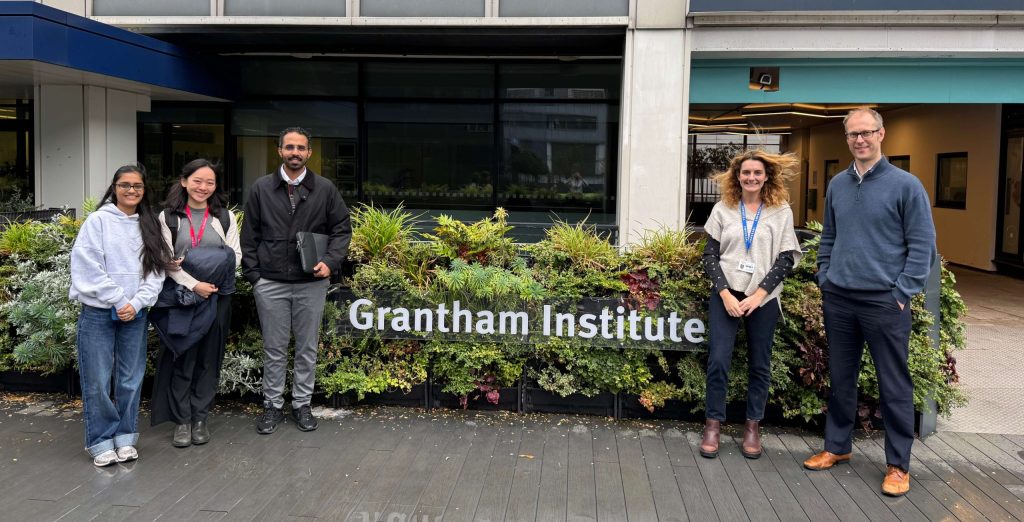
Overall, the programme gave me the opportunity to have conversations with senior staff working in sustainability, collaborate with students from academic backgrounds different from my own, and see how smaller actions across individual teams can collectively contribute to wider institutional objectives. The structure was also flexible around academic commitments; once the evidence review and team discussions were completed, students could finalise their audit documentation independently and submit it by the end of the day, with this final stage generally taking less than an hour.
Gaining career skills and experience
Beyond its institutional relevance, I found the programme useful as an early career professional currently applying for graduate roles.
More importantly, I had to provide feedback to senior staff and explain why the evidence did or did not meet a particular standard. All of this within two days gave me an experience to discuss in applications and interviews beyond university projects and traditional internships. For students interested in areas such as analytics, consulting, risk, operations or sustainability, it is a relatively small time commitment for an experience that can add a different dimension to an early career profile.
“For students interested in areas such as analytics, consulting, risk, operations or sustainability, it is a relatively small time commitment for an experience that can add a different dimension to an early career profile.”
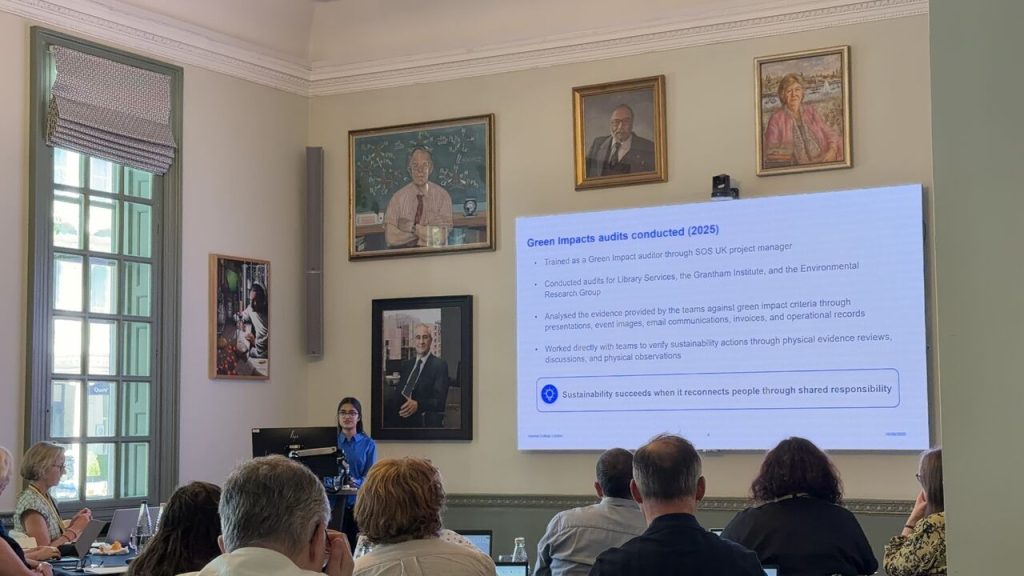
Through my contributions to the programme, I was invited to attend one of Imperial’s Staff Sustainability Champions meetings, where I contributed from a student auditor’s perspective and provided recommendations on how teams could strengthen the evidence supporting their work. It subsequently led to an invitation from Imperial’s Library Sustainability Group to speak at the European Business School Librarians Group (EBSLG) Conference, hosted at Imperial this year, where I presented my experience as a student auditor and discussed the Green Impact programme and auditing process.
These opportunities demonstrated the value placed on student perspectives within Imperial, including at senior levels, while also showing how involvement in a programme such as Green Impact can lead to opportunities beyond the initial scope of the role.
Getting involved
This year’s Green Impact audits at Imperial are taking place on Wednesday 21 October. If you’d like to volunteer, complete the application form by 14 October.
SOS UK also run further training sessions throughout the year across the UK which you can learn more about on their Green Impact Audting webpage.
Read Green Impact Auditing at Imperial in full
 Sheena is Village Manager for Imperial’s Old Oak Innovation Cluster. Most recently, she led a new reuse initiative in Kemp Porter and Woodward Buildings, giving thousands of unwanted student items a second life.
 Whether it is finding a new home for unwanted kitchen items, repairing jewellery, transforming old furniture, or making conscious choices about what I buy, I believe sustainability is often about the small decisions we make every day.
 I’m inspired by people who see possibilities where others see problems. Throughout my life, I’ve been surrounded by practical, hardworking people who repair, reuse, and make the most of what they have rather than simply replacing things. That mindset has always stayed with me and has shaped how I approach both my work and my personal life.
 I’d like to continue developing my career in accommodation and supporting projects, with a strong focus on sustainability, student experience, and community engagement.
 Ikrar is a Community Coordinator at the Enterprise Lab, where he supports student, staff and alumni entrepreneurs and innovators. He was a
 And how about at work?
 One aspect is, I think we need to broaden how we define success. In innovation and business, for example, success is often measured in terms of sales, growth and expansion. While those metrics have their place, they don’t always reflect sustainable values. Finding ways to balance economic success with environmental and social impact is one of the key challenges for the future.
 One idea that has shaped my life is the concept of being a “multi-potentialist”. I first heard of this concept through an Indonesian author and podcaster, Fellexandro Ruby. He’s really influenced how I think about my career and personal growth. I believe people are capable of being more than one thing, and that their identity should not be limited to a single career or role.
 Florence is Imperial’s Waste & Recycling Manager. Her work focuses on reducing the amount of waste the university generates, increasing the proportion that gets recycled, and trialling circular economy innovations on campus.
 It’s about thinking beyond yourself. Showing people that they matter, remembering important moments in their lives, and making the effort to let them know you’re thinking about them.
 As Waste & Recycling Manager, what message do you have for new students and staff at Imperial?