Green Impact Auditing at Imperial
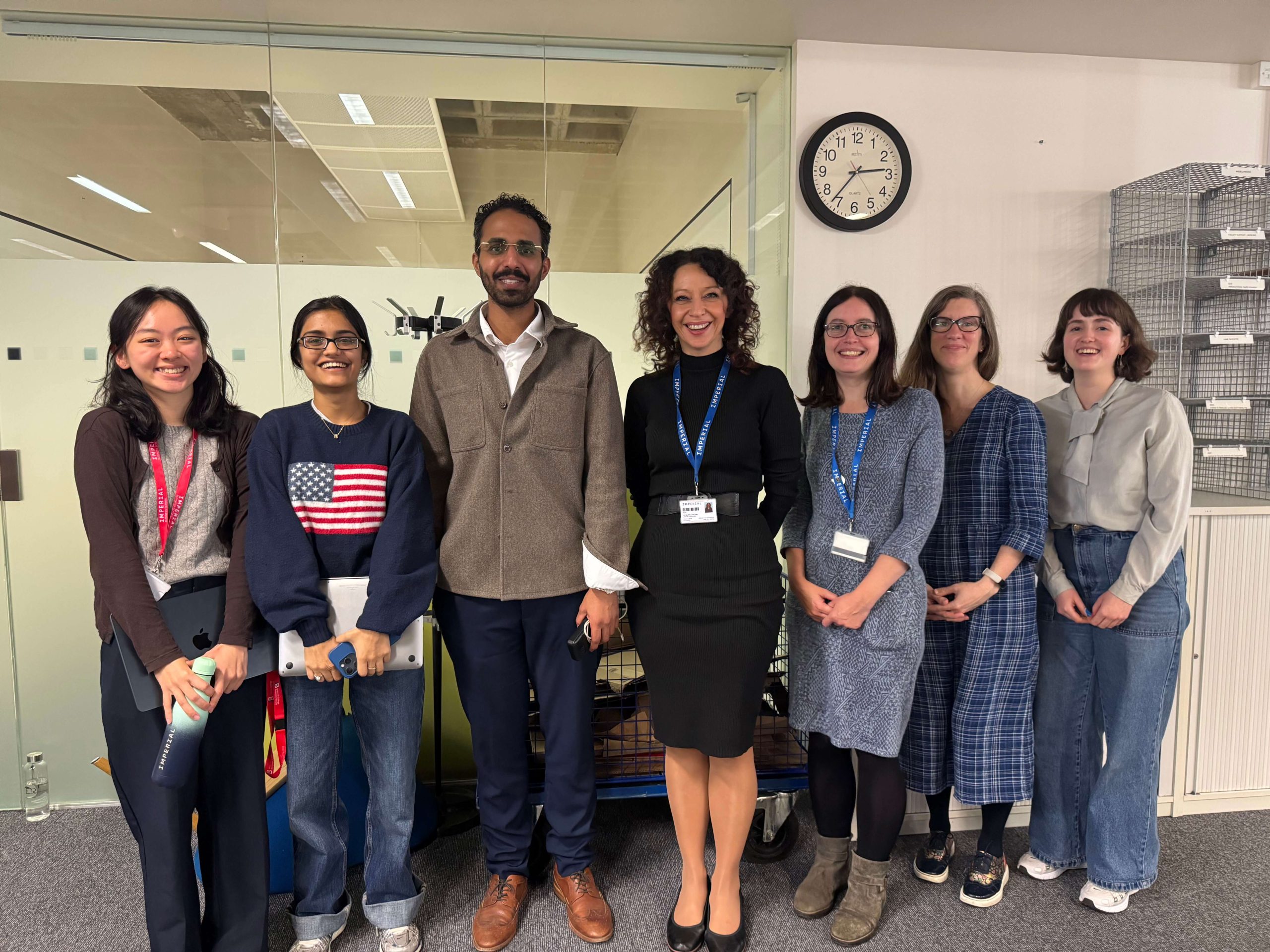
By Priyal Pajwani (Sustainable Imperial Student Ambassador)
Priyal shares insights into her role as a student auditor for the Green Impact programme – a toolkit of impactful activities which Imperial staff teams can take to improve sustainability across the university and at home.
As a Master’s student in Business Analytics and AI at Imperial College Business School, I became involved with Green Impact through the Sustainable Imperial Ambassador Programme. With a longstanding interest in sustainability, I was keen to understand how Imperial approaches it at an institutional level, particularly how wider commitments translate into decisions and actions across individual teams.
What is Green Impact?
Green Impact is a sustainability programme run by Students Organising for Sustainability UK (SOS UK) and is used at Imperial to support teams in improving their environmental and social practices. It is a United Nations award winning programme that has been used by more than 2,200 organisations, with participating teams working through a toolkit of practical actions covering areas such as energy, waste, travel, procurement and biodiversity.
As part of the Sustainable Imperial Ambassador Programme, this volunteering opportunity offered an interesting way to explore sustainability while applying an analytical mindset to something new. The role involved reviewing evidence submitted by the Imperial departmental teams, assessing actions against defined criteria, and speaking directly with the staff responsible for implementing these initiatives across Imperial.
Training to be an auditor
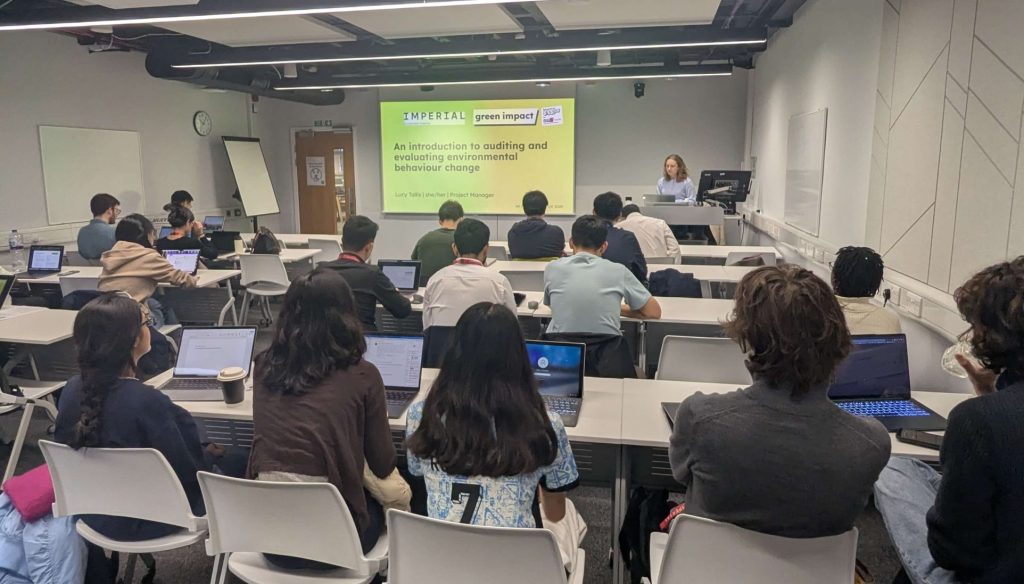
Before beginning the audits, all student volunteers complete a 2.5 hour training session delivered on campus from SOS UK in environmental auditing and evaluating environmental behaviour change. The training is approved by the Institute of Sustainability and Environmental Professionals (ISEP) and provides the framework needed to carry out the audits consistently and objectively.
After completing the training and practical audits, student auditors also receive a digital credential recognising the skills and experience gained through the programme.
How sustainability takes shape across Imperial
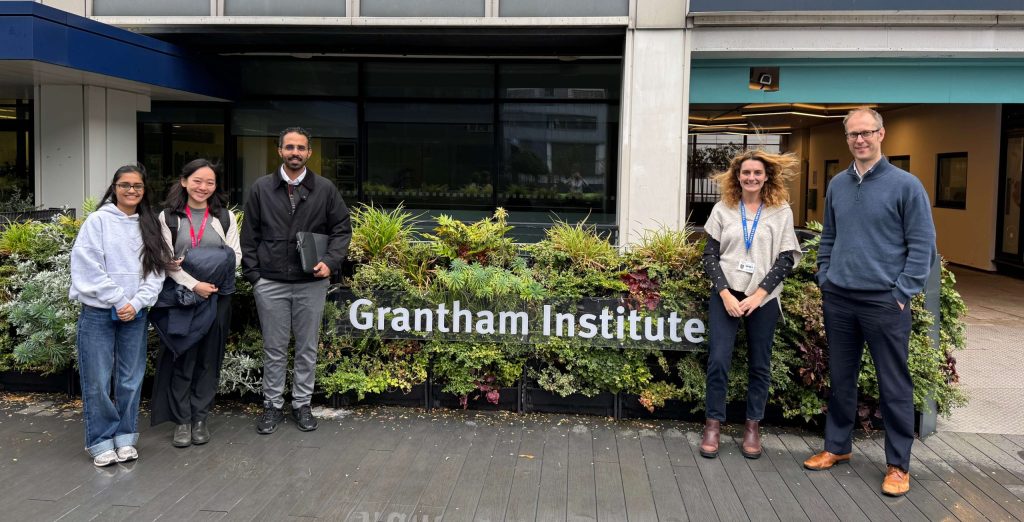
Following the training, students were placed into groups of two or three and assigned departments to audit. Alongside two other student auditors, I completed audits for Library Services, the Grantham Institute for Climate Change and the Environment, and the Environmental Research Group.
Each audit began with reviewing the award level the team was working towards and the evidence already submitted against the relevant Green Impact criteria. Within our group, we divided the assessment according to our individual areas of interest across sustainability themes, before meeting the department to discuss its work in greater detail. The evidence we reviewed took several forms, from invoices and photographs to meeting minutes, internal surveys and staff communications, depending on what was required to demonstrate each action. Meeting the teams was therefore an important part of the process, as it provided an opportunity to speak directly to the staff about the initiatives they had implemented, and maintained within their departments.
“Meeting the teams was therefore an important part of the process, as it provided an opportunity to speak directly to the staff about the initiatives they had implemented, and maintained within their departments.”
Each audit reflected the different functions and priorities of the respective teams, for example the Library Services focused strongly on staff and student engagement, with initiatives including Hedgehog Awareness Week, office planting and wider biodiversity activities. At the Grantham Institute, sustainability was reflected across both its climate research and policy work and daily operations, while the Environmental Research Group incorporated it into research practices through shared laboratory equipment, responsible procurement, waste reduction and biodiversity initiatives.
Overall, the programme gave me the opportunity to have conversations with senior staff working in sustainability, collaborate with students from academic backgrounds different from my own, and see how smaller actions across individual teams can collectively contribute to wider institutional objectives. The structure was also flexible around academic commitments; once the evidence review and team discussions were completed, students could finalise their audit documentation independently and submit it by the end of the day, with this final stage generally taking less than an hour.
Gaining career skills and experience
Beyond its institutional relevance, I found the programme useful as an early career professional currently applying for graduate roles. It gave me experience reviewing evidence against defined criteria, building on my analytical skills, while also developing my ability to ask appropriate questions and communicate professionally with stakeholders.
More importantly, I had to provide feedback to senior staff and explain why the evidence did or did not meet a particular standard. All of this within two days gave me an experience to discuss in applications and interviews beyond university projects and traditional internships. For students interested in areas such as analytics, consulting, risk, operations or sustainability, it is a relatively small time commitment for an experience that can add a different dimension to an early career profile.
“For students interested in areas such as analytics, consulting, risk, operations or sustainability, it is a relatively small time commitment for an experience that can add a different dimension to an early career profile.”
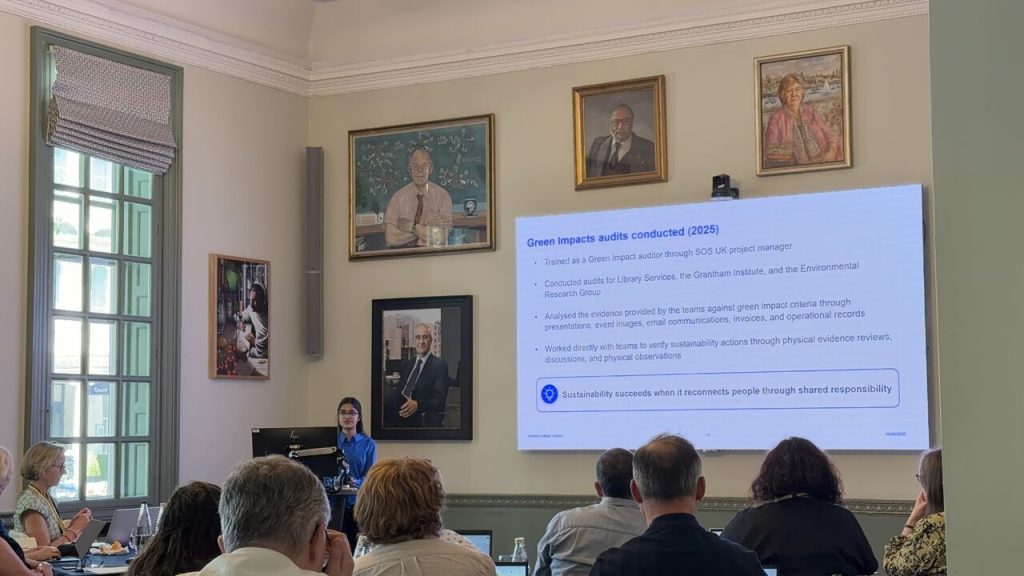
Through my contributions to the programme, I was invited to attend one of Imperial’s Staff Sustainability Champions meetings, where I contributed from a student auditor’s perspective and provided recommendations on how teams could strengthen the evidence supporting their work. It subsequently led to an invitation from Imperial’s Library Sustainability Group to speak at the European Business School Librarians Group (EBSLG) Conference, hosted at Imperial this year, where I presented my experience as a student auditor and discussed the Green Impact programme and auditing process.
These opportunities demonstrated the value placed on student perspectives within Imperial, including at senior levels, while also showing how involvement in a programme such as Green Impact can lead to opportunities beyond the initial scope of the role.
Getting involved
This year’s Green Impact audits at Imperial are taking place on Wednesday 21 October. If you’d like to volunteer, complete the application form by 14 October.
SOS UK also run further training sessions throughout the year across the UK which you can learn more about on their Green Impact Audting webpage.