What is your name?
Felix Varenne
Where are you from?
Paris
To which class do you belong?
MSc Translational Neuroscience, Class of 2026
Where and what did you study before joining Imperial College London?
I studied a BSc in biochemistry at UCL
How did you find your Master’s experience at the College?
I thoroughly enjoyed it. The fast pace of the first few modules was challenging, less because of the complexity of the material than its sheer density. That’s perhaps to be expected when you’re studying the brain, one of the most complex objects in the known universe, if not the most complex. Once I’d adjusted to the pace, I loved the range of modules, from the neuropsychiatry of addiction to machine learning models in healthcare. I was also lucky to be part of a very diverse and fun cohort and to have brilliant and supportive professors and tutors along the way
Which research project did you work on?
I worked in the Centre for Psychedelic Research (CPR), part of the Department of Brain Sciences at Imperial, under the supervision of Dr. David Erritzøe and Dr. Claudio Agnorelli. My project used existing clinical trial data to investigate whether participants’ baseline psychological traits measurably shape the nature of the acute psychedelic experience. The initial results support this idea, and I’m hoping to incorporate data from further studies to test it more robustly
Where are you now?
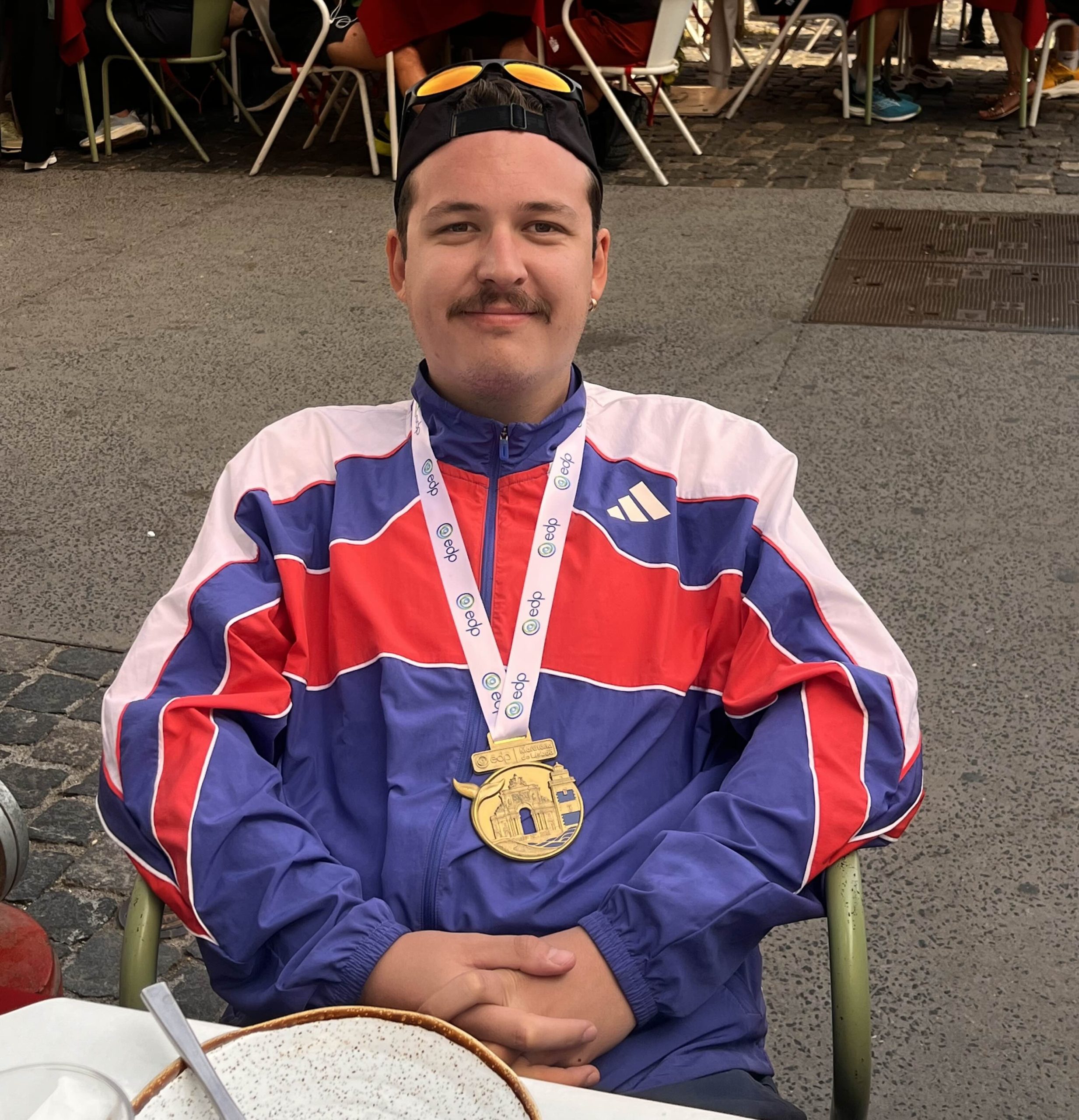
I’m taking a short break after a demanding but deeply rewarding year. I had been training for the Lisbon Marathon, which I’ve now completed!
What are you working on?
Following my break, I’ll be staying on at the CPR to develop my thesis into a paper for publication next year. I’m also applying for the President’s PhD Scholarship to investigate how psychedelics interact with neuronal mitochondria, with supervision from the Centre for Psychedelic Research and the Department of Brain Sciences, including Dr Kambiz Alavian.
What is the most important lesson you learnt as a Master’s student?
Curiosity is essential in any discipline, and even more so in science. It’s what led me to this course. But once I was in it, the intensity and depth of the material meant curiosity alone wasn’t enough, and that’s where consistency came in. When friends and family asked how the course was going, I described it as a speedboat picking up speed. At first the ride is bumpy and uncomfortable, but once you’re up to speed you glide over water that used to feel choppy. Any slowdown, though, drops you straight back into the chop. Consistency has been one of the hardest things for me to maintain, but also one of the most satisfying
How did the Master’s programme help you get to where you are now?
The MSc rekindled my passion for learning and research, and for trying to unravel some of the most fundamental aspects of the human brain and, by extension, how we consciously perceive and understand reality. I never imagined myself as an academic or a researcher, but here I am applying for grants and increasingly excited about adding my own little brick to the foundations of neuroscience and psychedelic research