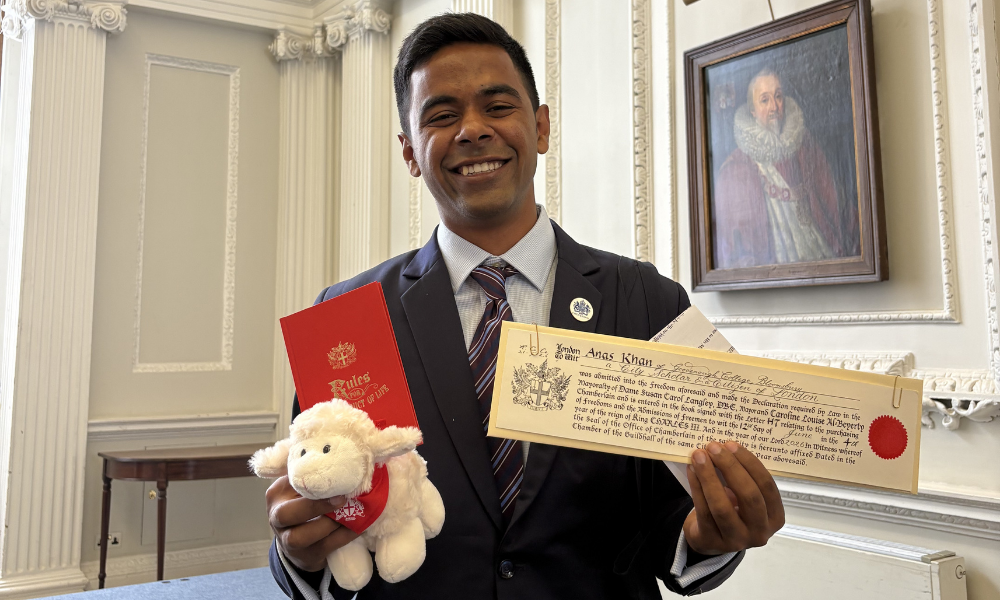
Anas Khan, a Chevening Scholar at Imperial College London, reflects on his journey from Bihar to the UK, where he is studying AI and machine learning and was recently admitted to the Freedom of the City of London as a City Scholar. He explores how these experiences have shaped his interest in human-centric AI for social good.
London has a way of holding many centuries in the same breath. One day, I am studying artificial intelligence (AI) at Imperial. Another day, I am standing inside Mansion House, joining one of London’s oldest civic traditions.
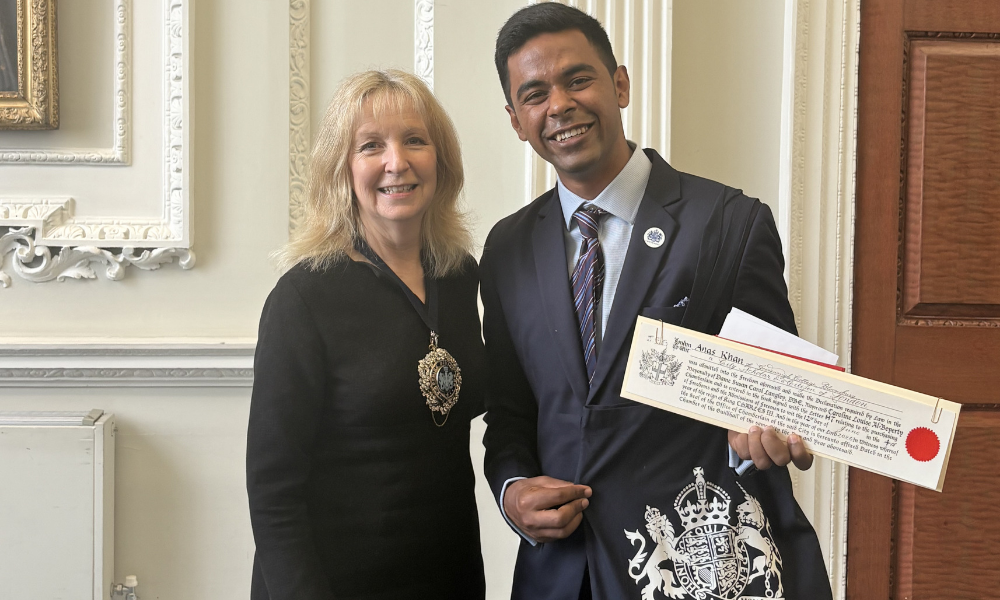
On 12 June 2026, I was admitted to the Freedom of the City of London as a City Scholar. The ceremony was performed by Sheriff Keith Bottomley, with the Lady Mayor, Dame Susan Langley, in attendance. It was a proud and humbling moment. It also made me reflect on the journey that brought me here, from Bihar in India to Imperial College London.
I came to London last year as a Chevening TVS Motor Company Scholar. This scholarship has been a bridge between countries, institutions, and ambitions. It enabled me to study at one of the world’s leading universities. It also placed me in a community where empathy is a core driver of impactful leadership.
That idea matters deeply to me. I grew up in Bihar, where ambition is everywhere, but opportunity is not always evenly shared. I have seen how access to good classrooms, guidance, and technology can shape a young person’s future. Those experiences stayed with me. They are one reason I became interested in AI that helps people, rather than only making existing systems more efficient.
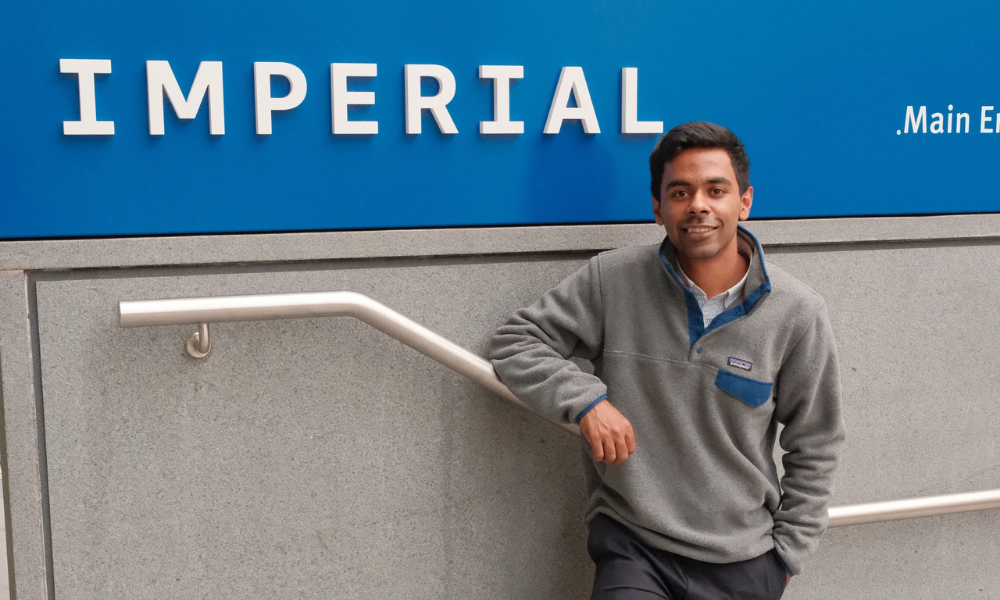
At Imperial, I am studying an MSc in Computing, focusing on artificial intelligence and machine learning. Machine learning means teaching computers to find patterns in data and use them to make predictions or decisions. But personally, the key question is not only whether an AI system works. It is who it works for, who it leaves out, and how it can be made more useful in everyday life.
The Department of Computing has helped me ask those questions with care and rigour. My modules have taken me from systems and hardware to deep learning, which powers many modern AI tools. Through independent research, I also explored ideas linked to AI for social good. That freedom reminded me that research is about more than solving technical problems. It is also about choosing the right problems to solve.
As I see it, public-good AI means technology that creates real value for ordinary people. It could mean personalised learning tools for students who cannot afford private tutoring. It could mean systems that help teachers understand where a class is struggling. It could mean AI tools that work for different languages, accents, backgrounds, and levels of digital access.
Human-centric AI is about keeping people at the centre of design. It asks us to listen before we code. It asks us to test whether a tool is fair, safe, and understandable. It also asks us to remember that technology should support human judgement, not replace human dignity.
Being admitted to the Freedom of the City of London brought these ideas into sharper focus. The ceremony connected me to a long civic tradition. It also reminded me that belonging comes with responsibility. I was nominated by the Lady Mayor and supported by senior figures in the City of London. Their confidence in me felt like an invitation to contribute more.
As I signed the historic register, I thought about how unlikely this path once seemed. I also thought about everyone who helped make it possible: my family, friends, Chevening, TVS Motor Company, Imperial, Goodenough College, and the City of London Corporation.
This honour is not an endpoint. It is a milestone. I hope to keep building AI systems that widen access to education, healthcare, and opportunity. I want my work to help ensure that no one is held back by geography, income, or lack of exposure.
London’s ancient traditions and Imperial’s future-facing research may seem far apart. In my view, they now feel connected. Both ask us to imagine what kind of society we want to build. I feel grateful to stand between those worlds, with one foot in history and the other looking toward a more inclusive technological future.