Category: College News & Updates

Inaugural Lecture of Professor Julien Vermot: How to build a heart at 180 BPM – 21 Jan

The Inaugural Lecture of Professor Julien Vermot

How to build a heart at 180 BPM 

Professor Julien Vermot, Professor of Biomechanical Signalling & Tissue Morphogenesis
21st Jan, CAGB 200, South Kensington Campus

How do mechanical forces influence organ development?

The heart offers a powerful model to explore this question, forming and functioning under constant physical load. Disrupted responses to these forces are linked to heart valve defects, among the most common congenital malformations.

In this lecture, Professor Julien Vermot will share how recent advances in mechanobiology are uncovering the molecular pathways that connect mechanical stimuli to gene regulation during heart development. Drawing on examples from his own research, he will highlight the role of membrane ion channels, nuclear mechanotransduction, and cellular dynamics in shaping heart valve formation.

A drinks reception will follow this lecture in the City and Guilds building concourse.

Speaker

Professor Julien Vermot is Professor of Biomechanical Signalling and Tissue Morphogenesis at Imperial College London. His research focuses on how biomechanical forces are translated into changes in gene expression during development, using a combination of molecular biology and advanced 3D imaging. He joined Imperial in 2019 after holding senior research positions in France and the United States.

Click here to register to attend either in person or via YouTube. 

Event contact: Kemi Aofolaju

Imperial-AIMS Global Fellows Programme (apply by: 27 Jan)

Addressing Heat-Driven Consequences of Climate Change in Cities
01 – 05 June 2026 | Accra, Ghana, hosted by AIMS Ghana

Imperial College London is delighted to partner with the African Institute for Mathematical Sciences (AIMS) for the fourth bilateral Global Fellows Programme (GFP), taking place from 1st – 5th June 2026 in Accra, Ghana, hosted by AIMS Ghana.

In the current scientific environment, international and interdisciplinary collaborations and networking are fundamental to developing successful projects. In a competitive research environment, funding bodies increasingly look for interdisciplinary, collaborative research with partners from around the world. The modern researcher requires both excellence in research and strong professional collaborative competencies.

This exciting programme is designed to facilitate participants to actively focus on the development of these professional skills and competencies.

Doctoral candidates from any discipline are invited to apply to this 5-day professional development course: the Imperial-AIMS Global Fellows Programme: ‘Addressing Heat-Driven Consequences of Climate Change in Cities’.

This is a chance to challenge yourself outside of your normal working environment, meet people from other disciplines and cultures, and have fun! 

Find out more & Apply

Applications close at 11am on Tuesday 27th January

Help shape Open Research training at Imperial and beyond

Can you help address challenges like the reproducibility crisis and publish-or-perish culture? Complete a short survey on awareness and use of Open Research practices – it takes less than five minutes.

We’re sharing this opportunity on behalf of Dr Hamid Khan, Imperial’s Open Research Manager and Local Network Lead (LNL) for the UK Reproducibility Network. The survey is being conducted along with LNLs across the country to identify areas for initiatives and training across institutions.

To take part, you can be a researcher in any discipline or career stage, including academic staff, research staff and doctoral students. Any researcher can take part, even if you are completely unaware of Open Research/Open Science – this is intended to help identify gaps in knowledge.

Click here to take part in the survey

The study has received approval from the Brunel Research Ethics Office (30088-A-Jan/2025- 53666-1). Responses will be anonymous and confidential.

To explore how Open Research can benefit you, your research and wider society, get in touch with Hamid in Library Services. He and his team can equip you with the confidence, skills and tools to embed transparency, equity, accessibility and reliability at every stage of your research.

Grantham Institute Climate Research Showcase 2026 (submission deadline: 04 Feb)

The Grantham Institute’s Climate Research Showcase returns on Wednesday 4 March 2026, bringing together Imperial’s world-leading climate research and innovation community to exchange ideas, foster collaboration and accelerate action on climate.

Submissions are now open to take part in the Showcase!

Present your research poster, host a participatory workshop and connect with climate experts from across college working to advance multidisciplinary science and solutions.

Find out more about how to take part and register to attend here.


New Doctoral Theses: access and alerts

Looking for Imperial theses? Explore and download theses via the Library’s guide:

Stay updated with Spiral

  • Imperial users can subscribe to collections (e.g., departmental PhD theses) and receive daily, weekly, or monthly digests of newly added items.
  • Log in with College credentials to subscribe.
  • External users can follow updates via RSS for the same collections.

How to subscribe (Imperial users)

  1. Go to Spiral: https://spiral.imperial.ac.uk
  2. Open the collection you want to follow (e.g., “Physics PhD theses”).
  3. Click “Subscribe” and choose your preferred frequency.
  4. Manage your preferences here: https://spiral.imperial.ac.uk/subscriptions

Introducing dAIsy – Imperial’s New GenAI workspace

dAIsy is Imperial’s new Generative AI platform, designed to give you safe, easy access to multiple AI models (such as GPT, Claude, Deepseek, and others) through a single interface.

dAIsy is built to support teaching, learning, and research while ensuring data protection and institutional compliance.

Why use dAIsy?

  • Private and secure – your data stays protected. All your prompts and chat history are stored securely in Imperial’s cloud.
  • Build your own agents – You can define instructions or behaviours suited to your specific needs.
  • Advanced developer role available on request – if you want to go deeper.

Imperial offers licensed AI models to promote equitable access and, alongside Microsoft Copilot, dAIsy supports our commitment to harnessing AI’s transformative potential responsibly and effectively.

Further support

Imperial Lates: open call for researchers

Imperial Lates are a series of free, after hours, adults-only events. They provide Imperial researchers with a fantastic opportunity to engage with members of the public in an exciting, informal environment.

All submissions are welcome, from initial ideas to fully developed activities. The Imperial Lates programming team can help to develop an idea further, discuss opportunities to host a talk or take part in a panel discussion, or connect researchers with a creative practitioner to explore their ideas through an artistic workshop.

This season’s themes are:

October: Light

Join our researchers in welcoming the autumn and celebrating Diwali, the Festival of Light. Learn all about how light works, as well as it’s uses in health research and even in space!

November: Time

Explore the nature of time at November’s Imperial Lates. Deep dive into the very first second of the universe, catch up with the fastest object ever built, or dance inside a quantum clock.

January: Wellbeing

New year, new you! Start 2026 afresh by learning the scientific secrets to hacking your health and wellbeing from Imperial researchers in our January Lates.

Click here to find out more and to fill out the open call form 

If you have any questions, please email lates@imperial.ac.uk

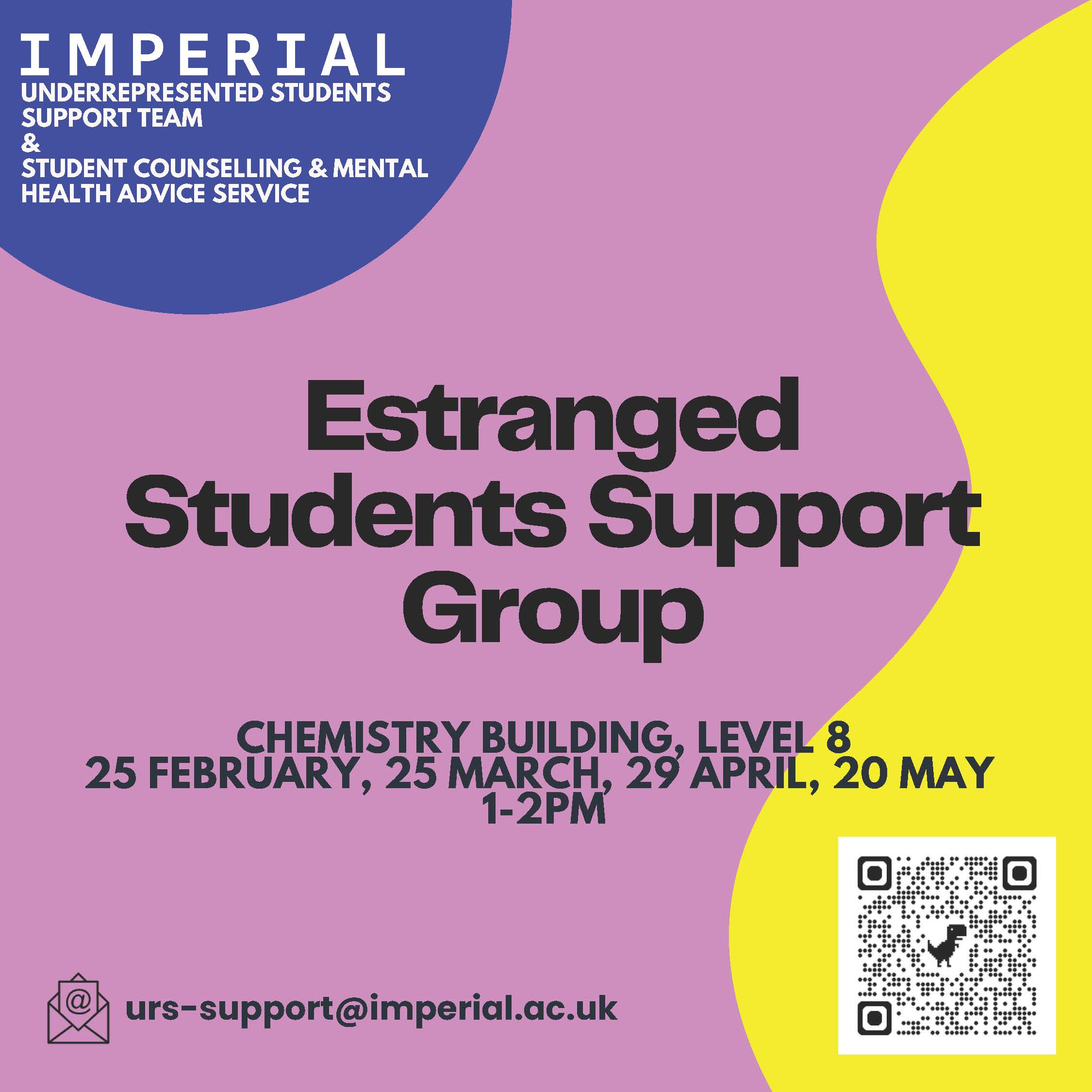
Help to shape the Student Counselling and Mental Health Advice Service

Give your views on the workshops, groups, and courses currently on offer from the Student Counselling Mental Health Advice Service. Your feedback will help to ensure services are relevant, inclusive, and accessible to all students.

The team are especially interested in hearing from those of you who have not yet attended any sessions.

Complete the two-minute survey

Establishing the Imperial IBD Research Community – Join Us!

Are you a researcher, engineer, or clinician working on or interested in inflammatory bowel disease (IBD) research? If you’re based at Imperial, Imperial NHS, or St Mark’s Hospital, we’re building an IBD research community to foster collaborations, support grant applications, and facilitate knowledge sharing and translation across all departments, career stages, and backgrounds.

Please take a moment to help us map this network by completing this short form: Join the IBD Research Community.

Save the Date for Our First Networking Event

📅 When: 24th April, 16:00
📍 Where: Hammersmith Campus

Let us know if you’ll be attending by filling out the form by 21st February, so we can secure the right venue size.

Join the new Viva Engage channel: Measuring Visibility and Impact

Join the new Viva Engage channel: Measuring Visibility and Impact

Scholarly Communications Management team has created a new Viva Engage community channel, Measuring Visibility and Impact to share insights and updates and invite discussion and collaboration on the various tools that imperial subscribes to. Tips and guidance on responsible use of metrics will also be shared.

Imperial subscribes to a number of powerful tools (e.g. Altmetric for tracking mentions of research publications on social media and news and Overton for monitoring citations on policy documents), but many staff and students are either unaware of these sources or unsure how to use them effectively. Through the Measuring Visibility and Impact channel, we aim to bridge this gap by advertising the tools, sharing updates about them, interesting case studies and organising training sessions to equip you to work with them.

The research analytics products allow you to:

  • track academic and societal impact of research publications, not only journal articles but other types of outputs such as reports, theses or preprints,
  • move away from journal-based metrics and h-index,
  • better communicate research results and increase visibility,
  • help you prepare job applications, narrative CVs, grant applications and REF submissions,
  • understand the latest research trends and key research areas in different disciplines,
  • monitor research performance of research groups, departments, faculties or institutions.

The community channel will support Imperial’s commitment to the responsible use of metrics by promoting best practice, fostering awareness, and keeping you updated about initiatives and opportunities. The channel will serve the ultimate objective of building a healthy research culture at Imperial by helping us break out of the dysfunctional culture of publish-or-perish.

Please join the Measuring Visibility and Impact community channel on Viva Engage and share this message with your contacts who might be interested.