Author: Sanjana Kakar

Research Insights with Sofia Moliner Bobo
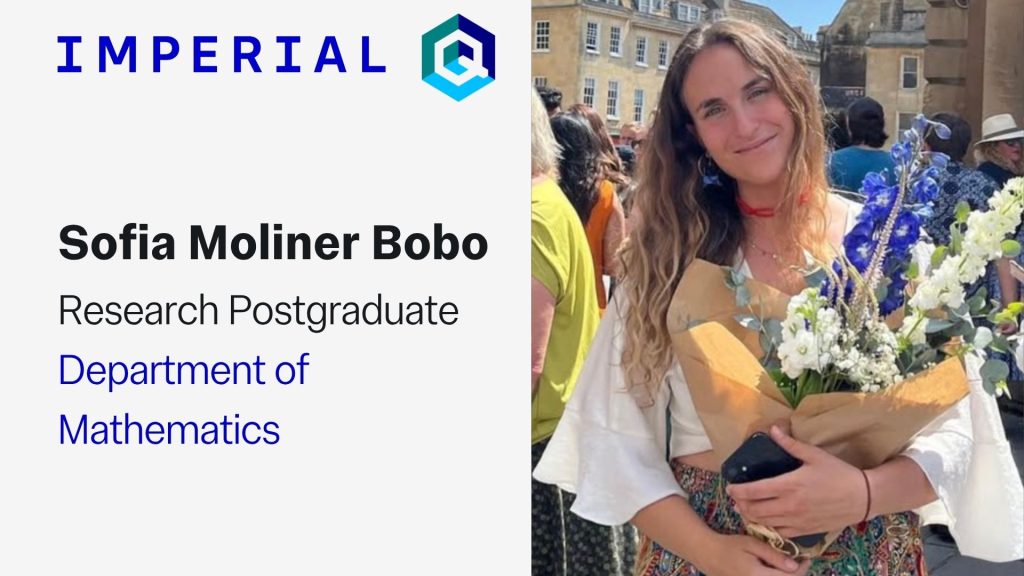
Sofia Moliner Bobo is a Research Postgraduate in the Department of Mathematics, working in the field of mathematical finance and quantum computing. Her research explores how quantum algorithms could be used to solve computationally intensive problems in finance, including derivative pricing, portfolio optimisation, risk analysis, and market simulation. In this blog post, she discusses her work on quantum algorithms for financial applications, the motivation behind combining quantum computing with mathematical finance, and the potential benefits for both efficiency and sustainability in the financial sector.

Can you tell us about your research area?

I am part of the Mathematical Finance department at Imperial working on Quantum Algorithms for financial applications. This field explores how quantum algorithms could accelerate computationally intensive problems in quantitative finance. It combines ideas from mathematical finance, machine learning, optimisation, and high-performance computing, with potential applications in derivative pricing, portfolio optimisation, risk analysis, and market simulation. Financial models are fundamentally probabilistic, often modelling asset prices, interest rates, or trading dynamics as stochastic processes evolving through time. This creates a natural connection with quantum systems, where probability and uncertainty are also fundamental features rather than imperfections of the model. My work aims to understand where quantum algorithms may provide realistic computational advantages over existing classical methods. This involves exploring both near-term and long-term quantum algorithms.

What led you to study this area?

I have always been interested in the intersection of mathematics, computation, and real-world applications. I grew up in a very finance-driven environment, which gave me early exposure to the industry and sparked my interest in financial markets from a young age. At the same time, during my undergraduate and MSc studies, I developed a strong passion for quantum computing, particularly in fault-tolerant quantum algorithms. What attracted me to this field was the opportunity to work between two very different communities. I always enjoyed the combination of theoretical research and practical applications, and I have a passion for communicating technical concepts to business- oriented audiences. Quantum computing in finance is still a developing area, which makes it an especially interesting space to help connect researchers, technologists, and industry practitioners. It allows me to work in a highly interdisciplinary environment and learn from my peers, while gaining exposure to both industry and academia in quantum computing. Additionally, the algorithms used in finance can be extrapolated to many fields. I experienced this personally when participating in the Quantum Innovation Challenge, where I applied a quantum algorithm commonly used in option pricing to calculate an optimal dose in PK/PD models.

What are the main aims of your current research?

I am currently investigating how a quantum walk-based algorithm called Quantum Fast Forwarding can be used to solve heat PDEs with complex boundary conditions, which are the foundational models describing the dynamics of option and interest rate prices. The aim is to provide a detailed complexity analysis to establish realistic conditions for quantum advantage over classical methods. This research could improve the efficiency of pricing complex financial products across large portfolios, where classical methods often become computationally expensive and difficult to scale. Ultimately, this project aims at applying this algorithm to compute portfolio-level risk sensitivities (also known as the “Greeks”), which are tools used by financial institutions to measure and manage financial risk.

How could this research potentially benefit society?

Financial institutions rely on extremely large-scale computational infrastructure for pricing, risk analysis, and market simulation, resulting in significant energy consumption. If quantum algorithms can accelerate some of these tasks in the future, they could help improve the efficiency and sustainability of financial systems. Beyond computational speed, I think an important aspect of this research is helping financial institutions understand and prepare for emerging quantum technologies. Quantum computing poses a long-term cybersecurity challenge, making it important for the financial sector to begin adapting its infrastructure and expertise early on. Doing so protects institutions from future threats and prevents them from becoming obsolete if the technology matures faster than they can adopt it. I believe there is significant value in building stronger connections between the quantum computing and finance communities so that institutions can better understand both the capabilities and the limitations of these technologies.

What are the next steps in your research? Are there any challenges ahead?

One of the next steps in my research is extending quantum walk-based algorithms to more complex derivatives where classical methods struggle to compute a solution within the required timeframe. These include options defined over many assets, exotic options, or options defined under more realistic models, such as local or stochastic volatility models, where the volatility of the asset is no longer constant. I am particularly interested inunderstanding how extensions of quantum walk-based algorithms (through Quantum Singular Value Transformation) could be applied to these scenarios, where the corresponding PDE parameters evolve in time. The next step is to investigate the extension of these methods to solve d-dimensional PDEs, where we believe that quantum computing could provide a significant advantage. One of the biggest challenges at the intersection of quantum computing and finance is that, although many quantum algorithms show strong theoretical promise, demonstrating a practical advantage for real financial problems remains difficult. The finance industry is fast- paced, highly practical, and application-driven, so it is crucial to demonstrate the potential of quantum technologies without feeding the quantum hype.
Research Insights with Dr Joseph Cotter

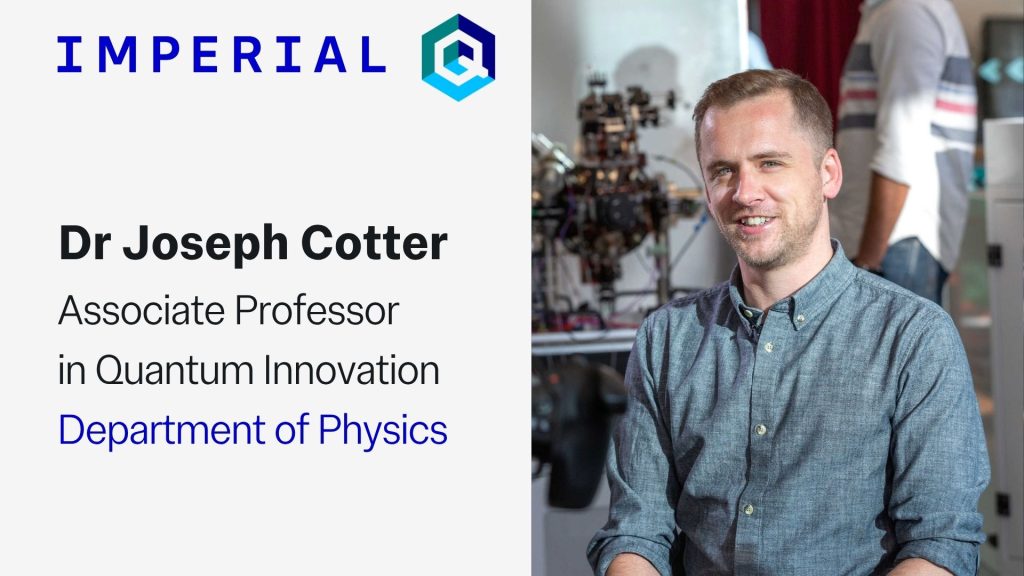
Associate Professor Joseph Cotter from the Department of Physics and Department of Materials at Imperial, and Co-Director of QuEST (the Centre for Quantum Engineering, Science and Technology at Imperial), works on quantum sensing and next-generation navigation technologies. His research focuses on atom interferometry and quantum-enhanced inertial sensors for navigation in environments where satellite signals are unavailable or unreliable. In this blog post, he shares more about his research, the motivation behind building alternatives to GPS, and the challenges of taking quantum sensors from the laboratory into real-world environments.

Can you tell us about your research area?

I develop quantum enhanced inertial sensors for future navigation systems that can be used for accurate positioning in satellite denied environments. These sensors rely on atom interferometry – a kind of matter wave interferometer – to very accurately measure the acceleration and rotation rates of vehicles, which we can use to calculate the vehicles change in position over time.

What led you to study this area?

I am fascinated by matter wave interferometry – that at small scales matter behaves like waves, that we can often control these matter waves really well, and that we can realise technologies built from those matter waves interfering – it still amazes me.

I’ve spent the last 15 years playing with matter wave interferometers of one kind or another – from measuring Earth’s gravity using interfering Bose-Einstein condensates on an atom chip, to testing the foundations of quantum mechanics through the interference of large complex molecules. The underpinning quantum principles that describe matter wave interference using Bose-Einstein condensates or complex molecules also apply to atom interferometry.

What are the main aims of your current research?

Signals from Global Positioning System (GPS) are vulnerable to jamming, spoofing and signal degradation. GPS also doesn’t work so well on submarines, aircraft, and in underground environments. I want to create a robust, reliable and resilient alternate to GPS.

How could this research potentially benefit society?

Global Navigation Satellite Systems (GNSS), like the US Global Positioning System (GPS), or the European Galileo system, provide extremely accurate position information almost anywhere on Earth. Our society relies on these systems, from navigation to banking, power grids to photo tagging, logistics to smartwatches.  A full loss of GPS/GNSS would cost the UK economy over £1 billion per day.

What are the next steps in your research? Are there any challenges ahead?

In the lab we’ve shown that quantum enhanced inertial sensors can deliver amazingly accurate measurements of acceleration and rotation. We’ve also started taking these usually extremely delicate sensors outside of the lab, successfully deploying them on moving platforms including ships and trains. So far, the impact of environmental factors mean our sensors don’t perform as well on moving platforms in the “real world” as they do in the lab. There’s a huge challenge ahead to translate results from the lab into robust and reliable technologies that realise the full potential of these sensors.

Research Insights with Dr Po-Heng Lee

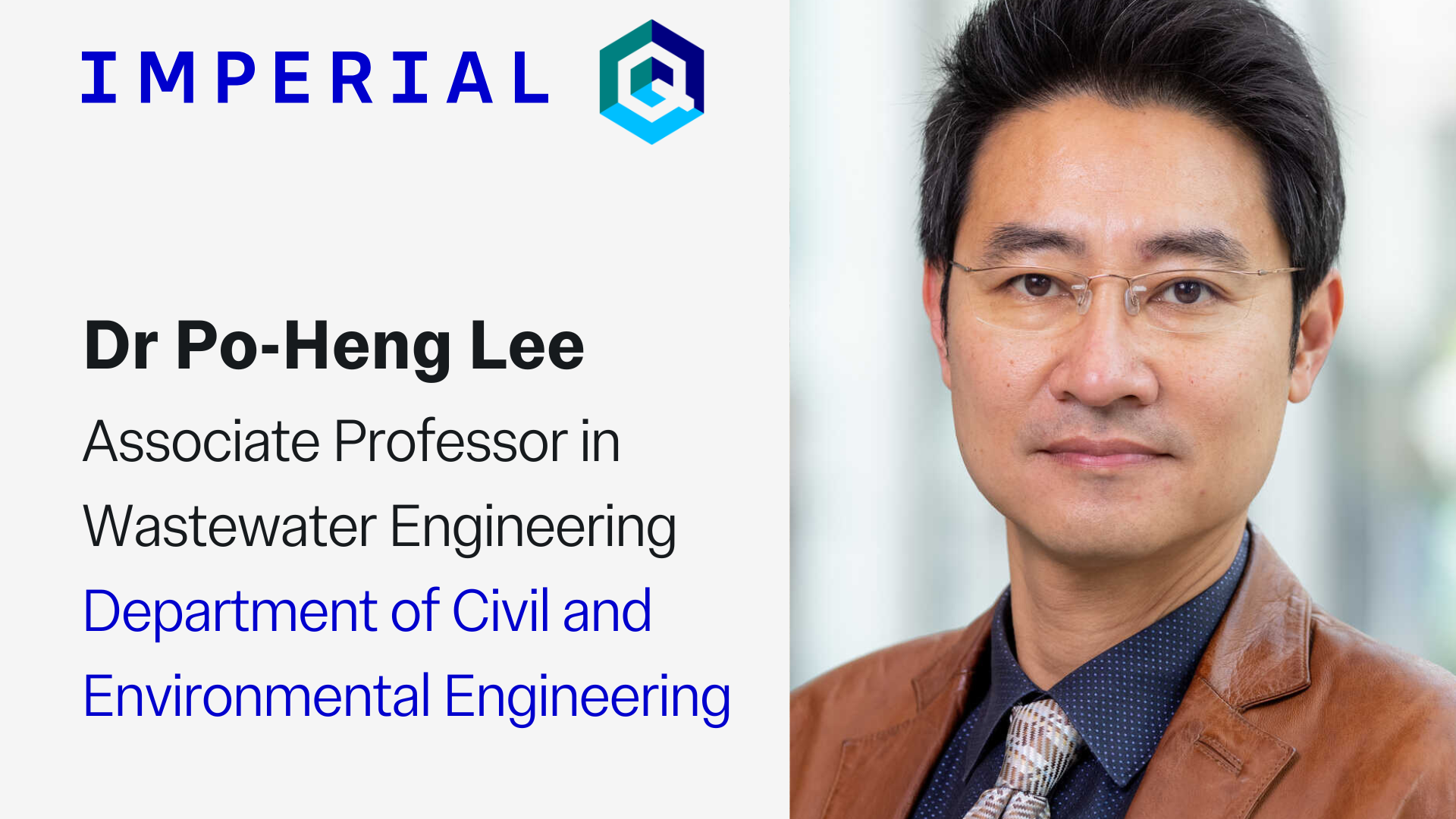
Associate Professor Po-Heng Lee from the Department of Civil and Environmental Engineering at Imperial College London works at the cutting edge of environmental engineering, microbial genomics, and data science. In this blog post, he shares more about his research as part of QuEST (Centre for Quantum Engineering, Science and Technology at Imperial). Associate Professor Lee’s research focuses on understanding microbial communities in wastewater and leveraging that knowledge to develop energy-positive treatment systems, high-grade water reuse, and circular resource recovery. He discusses how he came to this research area, the potential societal benefits of wastewater genomics and AI/quantum-optimized treatment, and the challenges of scaling lab innovations to utility- and city-scale systems.

Can you tell us about your research area?

I work at the intersection of environmental engineering, microbial genomics, and data science to protect environmental and human health. My group analyses microbial communities—and, where appropriate, human-associated genomic signals in wastewater—to understand microbial community dynamics and population health trends. We use these insights to design systems that turn wastewater into resources—clean water, renewable energy, and valuable chemicals—and to develop testable hypotheses about links between environmental exposures and lung development. We integrate real-time sensors, machine learning, and early-stage quantum methods with metagenomics to identify which microbes are present, what they’re doing, and how to guide them—turning genomic insight into practical control strategies and real-world interventions.

What led you to study this area?

I was first drawn to this field by the promise of quantum computing—new optimisation and simulation tools that can tackle microbial-network control and metagenomic pattern-finding problems that are difficult for classical methods. Alongside that, I’ve seen first-hand how water shapes people’s lives. As an engineer, I soon realised wastewater isn’t “waste” at all—it’s a valuable resource. Discovering that microbial communities can both clean water and generate energy—and that genomics, data science, and now quantum methods let us understand and steer those microbes—made this an irresistible, impact-driven area to pursue. Building on this, my work also examines how environmental pollution contributes to hypoxia, aiming to better understand the underlying mechanisms and to inform strategies that protect respiratory health and support healthy lung development.

What are the main aims of your current research?

  1. Energy-positive treatment. Build wastewater systems that generate more energy (e.g., methane, bioelectrochemical power) than they consume.
  2. High-grade water reuse for AI data centres. Produce reliable, low-carbon recycled water specifically for AI data-centre cooling (primary and secondary loops), meeting strict quality, corrosion, and biofouling control standards.
  3. AI and quantum optimisation. Combine machine learning with early-stage quantum methods to solve hard problems (control scheduling, sensor placement, anomaly detection) that challenge classical approaches at scale.
  4. Circular resource recovery. Recover nutrients (nitrogen, phosphorus), volatile fatty acids, hydrogen, methane (biogas) and bioplastics precursors alongside clean water.
  5. Pollution → hypoxia → lung development. Link environmental exposure data with biological readouts to test how pollution drives hypoxia and affects healthy lung development.

How could this research potentially benefit society?

Our work delivers cleaner, lower-carbon water systems by using microbe-guided treatment to cut pollution while recovering energy (e.g., hydrogen, biogas) and useful materials (e.g., bioplastics). AI- and quantum-optimised operations lower costs and reduce outages, and high-grade water reuse—especially for AI data-centre cooling—eases pressure on drinking-water supplies during heatwaves and droughts. Privacy-preserving wastewater genomics provides early public-health insight (e.g., antimicrobial resistance) and helps link pollution exposure to hypoxia risks, informing actions that protect children’s lung development. Together, these advances strengthen community resilience and support a more circular economy.

What are the next steps in your research? Are there any challenges ahead?

Next Step: We’ll scale multi-year pilots with utilities and AI data-centre partners to validate high-grade reuse for cooling and energy-positive operation. Plant “digital twins” will fuse sensors, metagenomics, and AI/quantum optimisers, then drive closed-loop control on site. A key push is turning metagenomic reads into operator-ready set-points (aeration, retention time, dosing) to keep beneficial microbes dominant. In parallel, we’ll build privacy-preserving pipelines that link environmental exposure data with wastewater biomarkers to study pollution → hypoxia → lung development, co-designing studies with paediatric respiratory teams to generate testable, clinically relevant hypotheses.

Challenges. Moving from lab to utility scale is hard: biology varies by season and site, and data are noisy with strict privacy and governance requirements. Demonstrating clear, repeatable gains over classical methods for combinatorial optimisation—i.e., genuine quantum advantage—remains an active step. Economics and procurement matter: new sensors, sequencing, and control stacks must beat incumbent costs and integrate with existing assets. For data-centre cooling, long-horizon corrosion and biofouling control are critical. For medical hypoxia, patient data collection is challenging due to ethics, consent, data security, interoperability, and the need for robust de-identification. Interpreting signals and communicating results to clinicians must be rigorous and clinically meaningful. Interdisciplinary collaboration also needs care: many partners are unfamiliar with quantum technique applications, so we provide plain-language briefs, transparent model assumptions, validation benchmarks, and “shadow-mode” trials before live deployment—plus targeted training—so collaborators can interrogate the methods, trust the outputs, and co-design solutions.