After taking part in WE Innovate at Imperial, Tamara Tortosa reflects on how her personal experience of seeking treatment abroad led to the creation of Qalyup – a startup focused on improving access to safer healthcare.
Tamara Tortosa is a nurse and alumna of the Institute of Global Health Innovation‘s MSc in Health Policy at Imperial College London. Her journey into entrepreneurship has been shaped by the intersection of lived experience, healthcare and academia. It was further shaped through her participation in WE Innovate, a pre-accelerator programme for women in innovation at the Imperial Enterprise Lab.
In her own words, Tamara reflects on the experience that led her to launch Qalyup.
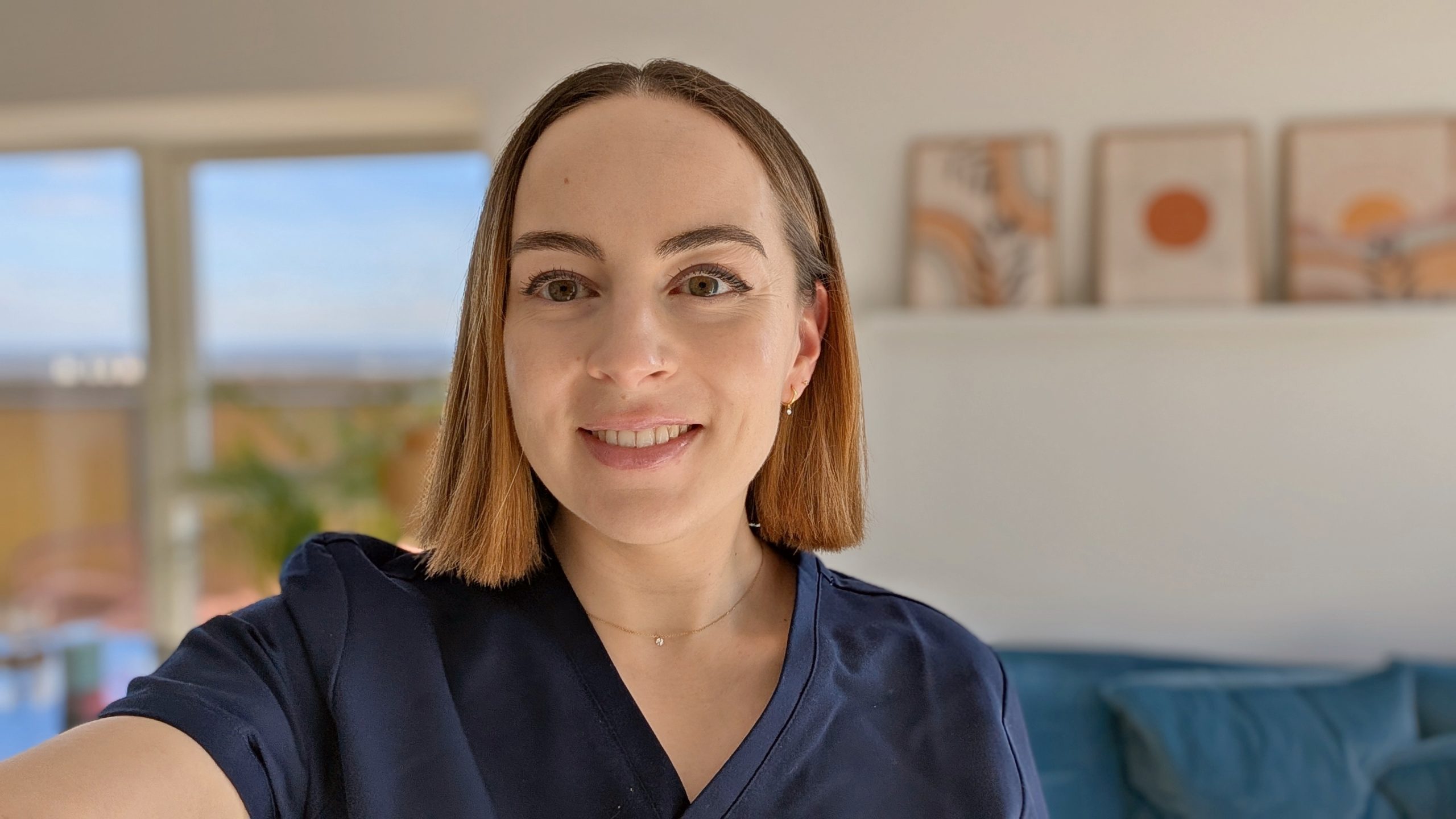
Three years ago, I went to the dentist and was quoted £2,500 for a root canal treatment. As a nurse living in London on my own at the time, this meant financial catastrophe. I had little choice but to travel abroad for treatment. I was terrified, and finding a trustworthy clinic felt like looking for a needle in a haystack.
I was very lucky. Not only did I land in an outstanding clinic, but I also found an honest dentist who advised that I did not need a root canal treatment – just a filling for under £100.
That experience made me realise this wasn’t just my problem; it was a symptom of something bigger.
The hidden risks of medical tourism
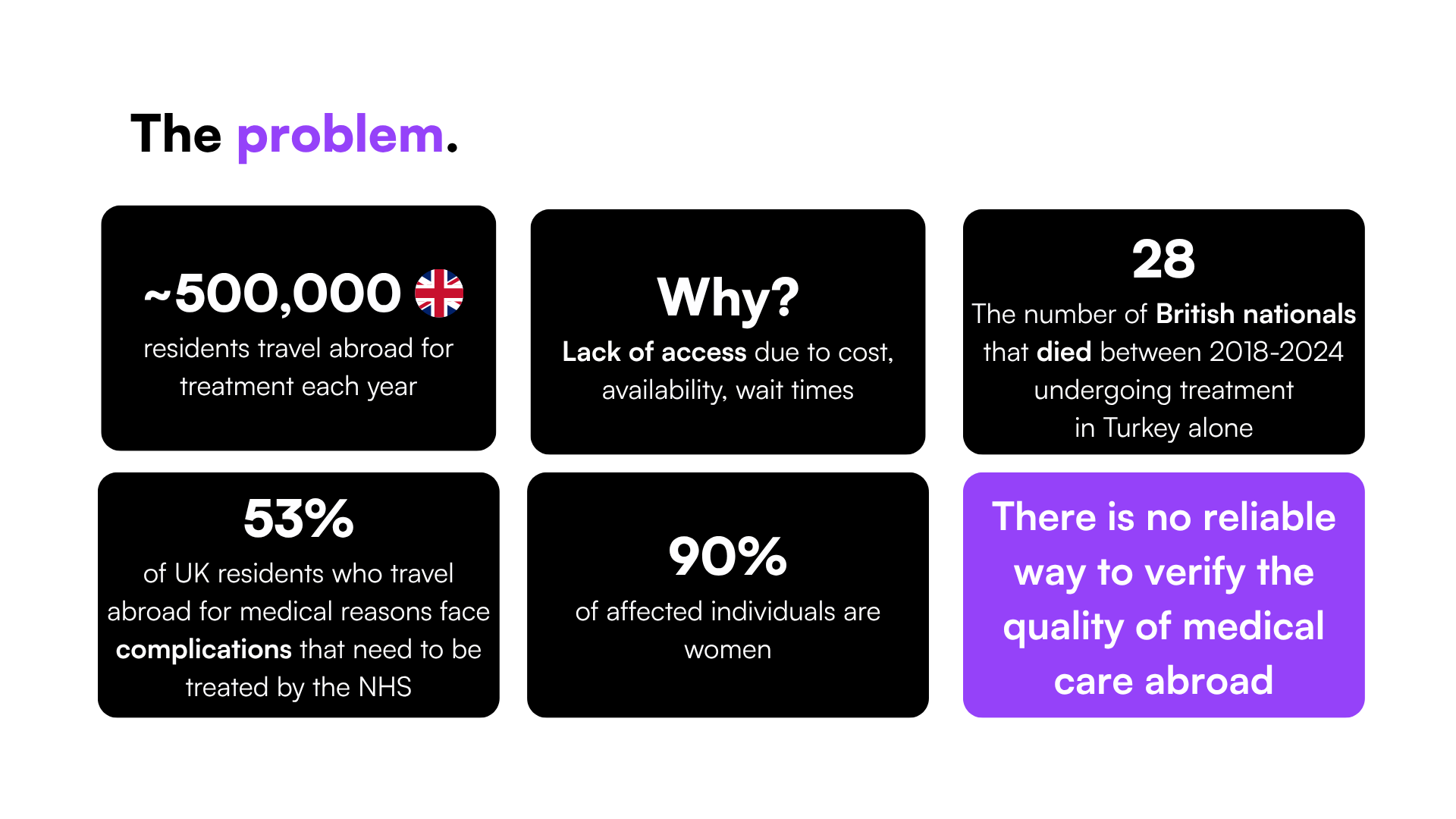
In 2023, around 430,000 UK residents travelled abroad for medical treatment. The reasons are varied, but often include affordability, accessibility and the availability of procedures not easily accessed at home, with pricing differences between countries being a key driver.
Nevertheless, the impact of complications following treatment abroad can be significant. Government figures indicate that 28 British nationals have died in Turkey following elective medical procedures since 2019. Evidence from UK case series suggests that among patients treated in the NHS for complications following treatment abroad, serious complications are common, with some studies reporting rates of up to 53%. Each case can cost the NHS between £1,000 and £19,000 to manage. This represents public money spent managing complications following treatment abroad.
I became obsessed with this problem. How could people access the care they need at a price they can afford without compromising safety?
My initial thought was to guide patients towards high-quality clinics abroad. But that quickly raised another question: what actually makes a clinic safe?
From dissertation research to a safer way to choose clinics abroad
At the time, I was in the right place to explore these questions, focusing on this topic for my MSc dissertation. Through my project, I developed a clinical quality assessment framework for evaluating dental clinics abroad. This now forms part of Qalyup’s intellectual property and underpins a safer way to undergo treatment abroad. Combined with over a decade of experience as a nurse, including several years in clinical quality assurance, I felt I could help people stay safer and avoid preventable harm.
That is how the intersection between innovation, lived experience and academia gave birth to Qalyup.
Qalyup connects people with vetted, high-quality healthcare providers abroad. Our purpose is to support people in accessing the care they need to improve their quality of life – which is exactly what our name represents.
At Qalyup, we believe no one should have to choose between their health, their finances and their safety. That belief began with my own story and continues with every patient we support.
How Imperial College supported our early days
The support of the university, beyond the academic side, has been fundamental in bringing this vision to life. The Imperial Enterprise Lab offers a wide range of resources to students and alumni who want to turn an idea into a startup. Since the beginning, I have felt supported by the advisors, masterclasses and community built around the lab.
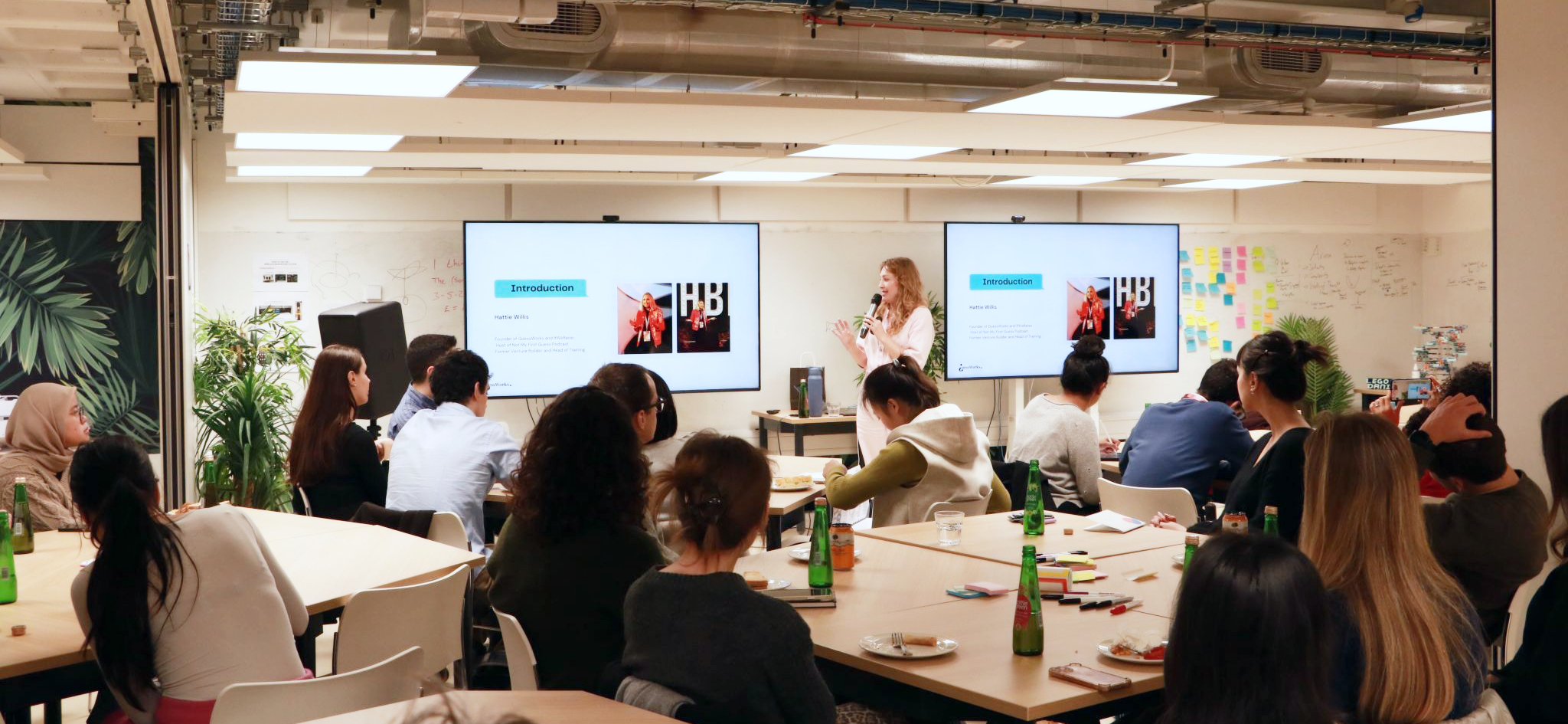
Earlier this year, I participated in WE Innovate, a pre-accelerator programme for women in innovation at Imperial. Out of more than 170 applications, 25 ventures were selected, and Qalyup was one of them. Participation in the programme has been pivotal in defining our go-to-market strategy and bringing the right people on board to move beyond the challenges of being a pre-revenue company.
The workshops and one-to-one coaching shaped our approach to customer discovery, user experience design, marketing and fundraising strategy.
Reflections from WE Innovate
Most importantly, during the two months of the programme, I had the privilege of being surrounded by an incredibly talented group of women turning bold ideas into real solutions across different STEM disciplines. It was an honour to share this journey with them, and I was deeply inspired by the shared ambition to make the world a little better.
My key takeaway from WE Innovate is the realisation that my drive to innovate and create change is not a flaw; it is a quality. Where I have previously struggled to fit into certain environments, Imperial has given me an ecosystem that not only celebrates that drive but also builds on it and provides a platform to turn it into real, impactful change.
Realising that Imperial is a true hub for innovation, and that the institution is ready to support you, has taken me to a point in my career that I never imagined. I can only say thank you to IGHI and Imperial for giving me the space to innovate and tackle this problem.
What’s next for Qalyup?
Looking ahead, we’re building on some exciting early momentum. We recently supported our first paying customer, who completed the first stage of treatment in Spain last week – an important milestone in validating the concept behind Qalyup.
Alongside this, we’re continuing to strengthen the founding team and refine the business model ahead of a planned pre-seed funding round in Q3 2026, which will help us expand our reach and support more patients seeking safer healthcare abroad.
Qalyup is here to make a positive social impact on people around the world by improving access to safer healthcare.
Participating in WE Innovate has played an important role in helping turn this idea into something tangible, and I would strongly encourage other students and alumni at IGHI to take advantage of the opportunities available through Imperial’s innovation ecosystem.
For me, Qalyup is just the beginning of a much bigger ambition to reshape how people access safe, affordable care globally.
Interested in learning more?