Month: April 2026

Transforming Clinical Uncertainty into a Strategy for Safe Care

Managing uncertainty is a core skill in primary care and other frontline clinical specialties such as emergency medicine where patients frequently present with early, evolving or non-specific symptoms that do not fit clear diagnostic categories. Rather than eliminating uncertainty, safe practice depends on recognising it, communicating transparently with patients and colleagues, and managing risk over time.

This is especially important for serious illnesses that may initially present with vague or common symptoms where premature or inappropriate reassurance can delay diagnosis. An example is ovarian cancer which can present with symptoms such as abdominal pain and bloating; and where there is overlap with other, less serious illnesses such as irritable bowel syndrome/

Safe management in patients with such presentations begins with a structured clinical assessment that considers red flags, comorbidities and the patient’s clinical and social contexts; alongside an explicit acknowledgement of diagnostic uncertainty. Shared decision-making is crucial: clinicians should explain what is known, what is uncertain, and why a “watchful waiting” approach may be appropriate. Clear safety netting then becomes a key risk-management tool.

Effective safety netting includes: specifying which symptoms should prompt concern; giving clear advice to patients on when and how to seek further help; setting an expected time course for symptom resolution; and arranging planned follow-up where appropriate. Documenting this advice and ensuring it is understood –  particularly in patients with language barriers, health literacy challenges or high levels of anxiety – is essential. Used well, safety netting transforms uncertainty from a source of risk into an active, patient-centred strategy for safe care.

Safety netting is the primary risk-management tool that transforms passive waiting into an active, patient-centred strategy.

Stage


Action
Symptom Specificity Define exactly which “red flag” symptoms (e.g., weight loss, night sweats) should prompt immediate concern
Clear Pathways Provide explicit instructions on how and when to seek further help (e.g., “Call the urgent line, don’t wait for a routine appt”).
Timeboxing Set a definitive time course for symptom resolution (e.g., “If this is a virus, you should feel better in 5 days”).
Planned Follow Up Arrange a “fail-safe” review to ensure the patient does not get lost in the system.

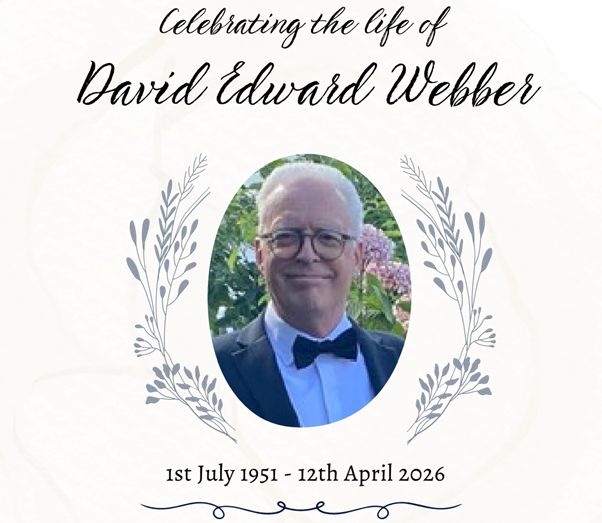
Obituary: Dr David Edward Webber OBE (1951-2026)

Dr David Edward Webber passed away peacefully on Sunday 12 April 2026, surrounded by his loving family after a period of illness, having faced cancer with quiet strength. He was 74.

Dr Webber was a pioneering figure in global self-care and a founding member of the Self-Care Academic Research Unit (SCARU) at Imperial College London. His work fundamentally shaped how self-care is understood, conceptualised and advanced across health systems, policy and academia.

He was the founder and long-serving President of the International Self-Care Foundation (ISF), established in 2014 to champion a more holistic, person-centred approach to health. Through this work, he became one of the foremost global advocates for integrating self-care into public health strategy, prevention and everyday life.

Among his most influential contributions was the development of the widely adopted “Seven Pillars of Self-Care” framework, which provided the first comprehensive articulation of self-care as a multidimensional construct. This framework has been translated into multiple languages and used internationally by governments, academic institutions and global health organisations. The framework was also the foundation of the Self-Care Matrix, a unifying framework for self-care, which he co-authored

Dr Webber also founded International Self-Care Day 27/7 (24 July), now recognised worldwide as a focal point for promoting responsible self-care. His efforts helped elevate self-care within the agendas of organisations such as the World Health Organization and the United Nations, contributing to a broader shift toward prevention and individual empowerment in health.

At Imperial College London, he played a central role in the establishment of SCARU, the first academic research unit dedicated to the scientific study of self-care. As an Honorary Research Fellow, he contributed to advancing self-care as a legitimate and necessary academic discipline, bridging policy, research and practice. Beyond his formal achievements, Dr Webber held several senior roles including previous Director General of the Global Self-Care Federation (previously the World Self-Medication Industry, WSMI). He was widely respected for his intellectual generosity, humility and ability to connect people and ideas across disciplines and sectors. He worked tirelessly to bring coherence to a fragmented field and to promote collaboration among diverse stakeholders.

His contributions were recognised at the highest level, including his appointment as an Officer of the Order of the British Empire (OBE), with the investiture conducted by HRH The Princess Royal in February 2024. Ever the student and the inquirer, he was subsequently in July 2024 awarded with distinction a Master of Art degree by research entitled ‘‘Emilie Isabel Barrington: Her place in the Holland Park Circle and the founding of Leighton House Museum, 1877-1926’’. This research has established the leading role played by Mrs Barrington in the foundation of the museum (the centenary of Leighton House Museum is in 2026).

To many, he was more than a colleague. He was a mentor, a guide and an enduring source of insight and encouragement. His influence extended beyond his global work through the individuals and communities he supported along the way.

Dr Webber leaves behind a lasting legacy in global health. His vision helped reposition self-care from a peripheral concept to a central pillar of sustainable healthcare systems.

He will be deeply missed by his family, colleagues and the international community he helped to build.