“Learning a new skill in the medical field in 12 months sounded ridiculous, but it’s achievable if you put in the work.”
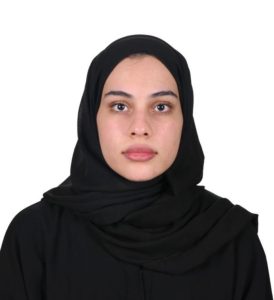
Balancing academic study with networking and even running a university society, we speak to Shahd Najjar about her experience on Imperial’s Medical Ultrasound (Vascular) MSc.
The Medical Ultrasound (Vascular) MSc gives students the opportunity to explore the scientific theories of medical ultrasound, before developing their skills on a placement in a hospital department.
Shahd tells us about what she learned from her time studying the course, and offers advice to prospective students.
Could you tell us a bit about yourself and what brought you to Imperial?
I am an international student from Saudi Arabia. After finishing my BSc in Neuroscience, I was a bit lost and noticed that my degree lacked practice and actual life skills; I had only gained theoretical knowledge. The MSc course at Imperial was interesting, top-rated and more importantly, gave me hands on experience.
What inspired you to pursue an MSc in Medical Ultrasound?
Medical Ultrasound is an amazing for diagnosis and pre-surgical planning. The amount of knowledge that can be acquired through one scan is baffling.
What have been the most valuable skills or knowledge you’ve gained from the course?
During my hands on work with the NHS, I had the amazing chance to connect with patients, speak to them and perform scans.
What is the most important thing you learned from Dr Mohammed Aslam, the course director?
I observed him work for a full shift, skipping his lunch hours just to make sure patients are not waiting for too long in the waiting room. He makes sure that each scan is thorough, precise, and all the requirements of a scan are met. His work ethic is amazing and should be learned from – no matter how tired he is, he gives 100% to patients and not only that, he is so dedicated to his students.
Were there any particular modules, projects, or experiences that stood out to you?
One great thing was attending so many conferences during this degree. Talking to professionals and innovators in the field gave a real taste of the job and helped me in shaping my future career plans.
How do you see this course influencing your future career or educational path?
I’ve learned a lot, talked to a lot of people, and connected with NHLI community. I attended a workshop with Dr Barbara Casadei; it was amazing to have the opportunity to speak to her and learn about her plans.
What have you gained from your time at Imperial, professionally, academically, and personally?
Learning a new skill in the medical field in 12 months sounded ridiculous, but I have realised that learning something new and developing new skills is achievable if you put in the work.
Has anything surprised you about the course or your time at Imperial?
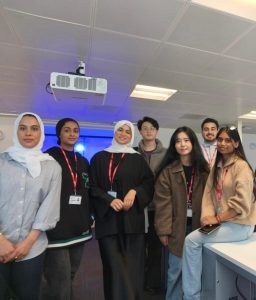
I was surprised to see that a work-life balance was achievable. I never thought I could have a nine-to-five job, but it was not that bad! Studying and working also seemed farfetched, but I travelled to Europe and fun created memories alongside achieving my academic goals. I also led the Saudi Society at Imperial where me and my team held great activities and had a lot of fun doing so. I was very involved in my university experience, as well as doing great academically.
What advice would you give to future students considering this course?
Have fun, work hard and never be embarrassed to ask for help. Another important point is get involved and make connections – it is a great gateway to opening up y
our mind.
How did founding the Saudi Society at Imperial shape your experience here?
When I first went to the welcome week at Imperial, I was amazed to see that the Saudi Society was inactive, especially since the Saudi community at Imperial is large. I re-founded it and took responsibility by hiring and leading a team. It was very stressful; however, it is such an amazing feeling to lead a group, and now I can still see it thriving!
What does being part of a diverse academic community mean to you?
It’s truly inspiring to see different age groups, different cultural backgrounds and academic backgrounds. I learned a lot by speaking and connecting with people. The variety of age groups was especially beneficial to me, as I have learned a lot from the older generation. They had great advice and wisdom.
What’s next for you? Are there any exciting projects or opportunities you’re currently working on or planning to pursue?
Yes! I’m working on a patent and founding my own health tech company. Working at the NHS, looking at patients and looking at the problems sparked an idea, although I regret not knowing about Imperial’s great programmes which help start-up companies. So, I advise future students to make use of all resources that Imperial has to offer. I’m doing great things and I’m thankful to Imperial and the NHLI for the opportunity to tell more people about my experience and create connections.
Find out more about our Medical Ultrasound and other MSc courses.