Celebrating this year’s BSc prize winners
Each year, NHLI awards academic prizes to the most exceptional students on our BSc courses.
This year’s awardees were:
BSc Remote Medicine
- Aastha Mundra was awarded the Remote Medicine Prize – Best Overall Performance and was nominated for the St Mary’s Development Trust Prize (for the student with the highest overall project score)
- Hadrien Janbon was awarded the NHLI Prize for Outstanding Achievement (for consistent high marks and high peer score)
BSc Translational & Respiratory Medicine
- Katerina Sini was awarded the Ian J Stolow Prize – Best Overall Performance
- David Yeoh was nominated for the St Mary’s Development Trust Prize
- Amy Curry was awarded the NHLI Prize for Outstanding Achievement
BSc Cardiovascular Sciences
- Yashwin Shyam was awarded the Agnes Cope Prize – Best Overall Performance and was nominated for the St Mary’s Development Trust Prize
- Vin Gomes was awarded the NHLI Prize for Outstanding Achievement
We spoke to some of this year’s awardees about their time at NHLI, what they have learnt, and their plans for the future.
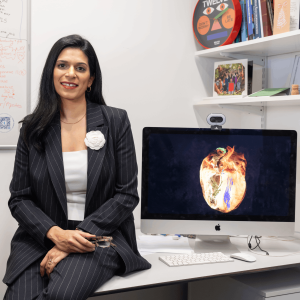
Aastha Mundra
What led you to studying BSc Remote Medicine?
I chose BSc Remote Medicine because I wanted an intercalated year that offered something different from traditional clinical medicine. I’d heard from older years that it was a sociable and engaging course, with a field trip to Brecon Beacons, and I was excited by the opportunity to explore areas of medicine that most medical students never have the chance to experience.
As someone who enjoys sport and the outdoors, the idea of learning how to manage medical emergencies in challenging environments really appealed to me. The course promised a unique perspective on healthcare, combining clinical medicine with research, human factors and decision-making in austere environments, and it certainly lived up to those expectations.
What have you enjoyed the most about the course, and what has been the biggest challenge?
One of the highlights of the course was the people. Our cohort included students from a wide range of backgrounds and universities, and spending time together during our field trips made it easy to build lasting friendships. I also loved hearing from guest speakers, including researchers working with international space agencies, whose experiences really broadened my perspective on where medicine can be practised.
The practical elements of the course were equally memorable. One of our ICAs involved a remote field exercise where we responded to a series of simulated medical emergencies, including a scuba diving incident, using only the limited equipment available to us. It was a brilliant way to apply clinical knowledge while thinking creatively under pressure.
The biggest challenge was learning to make clinical decisions when you don’t have the investigations, equipment or specialist support that we’d normally rely on in hospital. It pushed me to develop stronger clinical reasoning and become more confident making decisions with the information available.
What are the main lessons that you will take away from the course?
The biggest lesson I’ve taken away is that good medicine isn’t defined by the resources around you, it’s about your ability to think critically, adapt and make the best decisions for the patient with what you have. The course taught me that practising medicine in remote or austere environments requires a very different approach from working in a hospital, with greater emphasis on clinical reasoning, teamwork and resourcefulness.
I’d encourage any medical student considering an intercalated BSc to choose Remote Medicine. It offers experiences and perspectives that are unlike anything in the standard medical curriculum, and the skills I developed – particularly in clinical problem-solving and adapting to unfamiliar situations – will stay with me throughout my career.
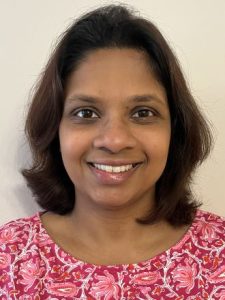
Katerina Sini
What drew you to the Translational and Respiratory Medicine BSc?
What drew me to TRM was its combination of clinical relevance and strong research focus. During my earlier years of medical school, I encountered respiratory conditions such as asthma and COPD across a wide range of clinical settings. Seeing how commonly these conditions affect patients, I felt that studying respiratory medicine in greater depth would be both interesting and highly relevant to my future practice.
I was also drawn to the translational nature of the course and its focus on bridging the gap between laboratory research and patient care. The opportunity to gain experience in laboratory-based, clinical, and data-driven research appealed to me, as it would allow me to explore different areas of research, develop a broad range of skills, and gain a clearer sense of which areas interest me most.
How have you found the experience of studying at NHLI?
Studying at NHLI has been a rewarding experience. I have valued the opportunity to learn from individuals who are true experts in their fields, and I felt truly supported by the teaching team throughout the year. This created a welcoming and encouraging environment which helped me make the most out of my BSc.
What are your plans and ambitions for the future?
Looking ahead, I hope to continue developing my research skills alongside my clinical training and to keep research as a meaningful part of my future career, regardless of the speciality I eventually choose. This year has given me a strong foundation to build on as I continue through medical school.
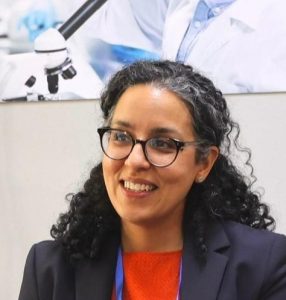
Yashwin Shyam
Why did you choose to study the Cardiovascular Sciences BSc?
My interest in cardiology began during my clinical placements, where I was first exposed to the specialty and quickly realised how much I enjoyed it. Wanting to explore the field beyond what I was learning in medical school, I took on a research project at the NHLI in my second year, focusing on the electrophysiology of the heart and cardiac arrhythmias. Being involved in research gave me a completely different perspective on cardiology and showed me how exciting the field is, both clinically and academically. It sparked a real curiosity to understand the science behind cardiovascular disease and how research can shape future patient care. By the end of the project, I knew I wanted to learn more, so choosing the Cardiovascular Sciences BSc felt like the natural next step.
What has been the highlight of your time on the course?
I think the highlight of the course was the opportunity to work alongside doctors and researchers who are leaders in their field. Not only did this give me an incredible platform to learn from experts, but it also allowed me to build my network and contribute to cutting-edge cardiovascular research. The research project was especially enjoyable, as it gave me the chance to explore a topic I was genuinely interested in, develop new research skills, and experience what it is like to be part of an active research team tackling real-world scientific questions.
If you could give incoming CVS BSc students one piece of advice, what would it be?
The Cardiovascular Sciences BSc has a reputation for being challenging, and that’s probably what every older-year student will tell you! But if you genuinely enjoy learning about cardiology and are curious about the science behind it, you’ll find the course incredibly rewarding. My biggest piece of advice would be to start reading research papers early and as often as you can. Not only will this help you build your knowledge, but it will also teach you how to critically analyse research and understand how scientific papers are written, skills that are invaluable and are assessed throughout the course.
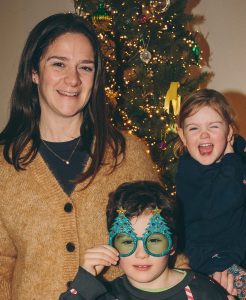
Amy Curry
Out of the BSc options open to you, why did you choose Translational and Respiratory Medicine (TRM)?
I chose the TRM BSc because I was particularly interested in understanding how scientific research can translate into improvements in patient care. I had particularly enjoyed my respiratory medicine placement in third year, and the breadth of the speciality appealed to me, from common conditions such as asthma and COPD to complex interstitial and infectious diseases.
Studying at the NHLI and doing clinics in the Royal Brompton Hospital also drew me to this course, as it offered the chance to learn from leading specialists who taught our lectures, and supported us throughout the year.
What was the most challenging aspect of the course and what did you enjoy the most?
The most challenging aspect of the course was probably the level of independence that was required, particularly when undertaking the research project. It was a significant change from the more structured nature of the medicine curriculum. Learning to deal with uncertainty and adapt when things did not go to plan was a valuable part of the experience.
What I enjoyed most was having the opportunity to explore a topic in much greater depth than the standard course allows. I particularly enjoyed my research project, as it allowed me to combine my interests in respiratory medicine, imaging, and research methodology. The BSc also gave me the opportunity to work alongside researchers and clinicians who are passionate about their fields, which made the course particularly engaging.
What advice would you give students who are thinking of studying TRM?
My main advice would be to go for it! The course gives you the opportunity to go well beyond what is covered in your other years of medical school. Being curious and willing to engage in topics independently makes a huge difference. You receive lectures from specialists at the top of their field based at the NHLI, which makes this BSc unique.
I would also recommend making the most of the opportunities available. The course can initially seem daunting, particularly when you are faced with a large and unfamiliar body of literature, but it is a great experience to get to grips with it, to learn how to read papers and genuinely understand what you are reading. Be proactive about asking questions, seek feedback early and do not be afraid to change your approach when something isn’t working.
Finally, enjoy having the opportunity to step outside the usual medical school curriculum. You will develop skills in critical appraisal, scientific writing, presenting, and independent research that are useful beyond the BSc year itself.
To find out more about the BSc courses offered by NHLI, please visit our website.