Dr Adela Constantinescu-Bercu on life as a Postdoctoral Research Associate
 “The ability to present complex findings in a structured and accessible way is fundamental to advancing science.”
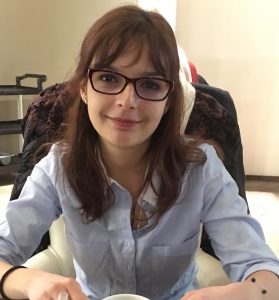
Dr. Adela Constantinescu-Bercu is an MRC-funded postdoctoral research associate at the NHLI, currently investigating the effects of Von Willebrand Factor (VWF) on vasculature as part of Professor Anna Randi’s research group. She has presented her research at a number of conferences, including the International Society for Thrombosis and Haemostasis (ISTH) Congress in Washington DC, US, the GRC in Vascular Cell Biology in Maine, US, and the BIC International Conference in Padua, Italy, and recently saw her work published in Blood.
We spoke to Adela about her research, her experience at Imperial, and what she has learnt in her time as a postdoctoral fellow.
What is Von Willebrand disease, and what is the focus of your current research into it?
Von Willebrand Disease (VWD) is the most common inherited bleeding disorder. It occurs when there is either a deficiency of Von Willebrand Factor (VWF), or when its function is affected. Patients with VWD can present vascular abnormalities (angiodysplasia) in the gut, which leads to gastro-intestinal bleeding – a major unmet need in these patients, as this often does not respond to conventional therapies.
VWF plays a crucial role in haemostasis, preventing us from bleeding during vessel injury. Our lab has previously shown that VWF also regulates angiogenesis (the formation of new blood vessels from existing ones). My research focuses on understanding how VWF affects angiogenesis with the aim of identifying new therapeutic targets for angiodysplasia in VWD. As part of my MRC postdoctoral project in Professor Anna Randi’s lab, I developed a vascularised ‘gut-on-chip’ model to study angiodysplasia in VWD. This is a personalised approach using patient-derived endothelial cells called ECFCs and revealed that patients lacking VWF present vascular remodelling defects that can be corrected with an anti-angiogenic drug, against angiopoietin-2.
Do you have any morning rituals to set you up for the day?
My mornings are largely structured around my daughter, who is in Year 1. Preparing her for school, having breakfast together and talking about the day ahead are central to our routine. It is safe to say she knows a lot more about blood vessels that other 5-year-olds do!
Once I drop her off at school, I start my workday properly. I take a few minutes to review my own priorities, look over the experiments planned and any deadlines pending. This brief moment of reflection helps me transition into work with clarity and focus.
Do your working days follow a similar pattern, or are they quite varied?
There is a general rhythm to my week, but my days are quite varied. Some are spent in the laboratory running experiments, or supervising Masters students. Others are focused on data analysis, writing or meeting collaborators. We also have weekly group meetings as well as section meetings where we present our results, engage in interesting discussions and receive constructive feedback. I also regularly attend webinars or seminars led by internationally recognised researchers, organised by NHLI, and participate in national and international conferences.
The multi-disciplinary aspect of this project also included a more unique start. I began working on this project by moving to Milan, to join our collaborator’s laboratory at Politecnico di Milano. Here I worked with Professor Marco Rasponi, in the Bioengineering Department, learning how to design and produce the microfluidic organ-on-chip devices I then implemented at Imperial. I was there for 3 months, which proved to be an adventure not only due to the steep learning curve of a field I never worked in before (bioengineering), but also from a personal perspective, as I moved there with my husband, daughter (who was 3 years old at the time) and dog. It was a true team effort, which proved to be very rewarding, culturally and professionally.
What do you enjoy the most about being part of Professor Anna Randi’s research group?
What I value most about being part of Professor Randi’s research group is the combination of high scientific standards and a genuinely collaborative atmosphere. There is a strong emphasis on critical thinking, and discussions are both rigorous and supportive. Group meetings and one-to-one discussions are spaces where ideas are encouraged and challenged, so that these are strengthened and refined. I also really enjoy the highly collaborative environment, which facilitates a multidisciplinary approach to the research.
Professor Randi’s mentorship is also essential, given her genuine investment in the professional growth of everyone in the group. I have greatly benefited from her guidance regarding my long-term career development, particularly this year, when I am preparing to apply for my first fellowship. I consider her a role model for the researcher I hope to become. Being part of her group has shaped both my scientific perspective as well as my aspirations as a researcher.
What are the next steps in developing the vascular “organ-on-a-chip” model?
The next steps for the vascularised ‘gut-on-chip’ focus on increasing its physiological relevance and experimental robustness. Our immediate priority is to refine the system so that it more closely reflects the gut microenvironment. This includes integrating intestinal epithelial cells to recreate the interface between the epithelium and underlying vasculature, enabling us to study the crosstalk between epithelial and endothelial cells.
In parallel, we aim to introduce controlled mechanical stimulation to mimic peristalsis. This work in progress is achieved using an actuation pump to recapitulate the dynamic conditions of the intestinal environment and study how mechanical cues influence vascular integrity and tissue homeostasis.
The long-term goal is to also establish a reliable platform for translational research, which can be used to study disease mechanisms and assess potential therapeutic strategies in a system that more closely reflects physiological conditions.
Why is this research important to you, and what do you hope it could achieve?
This research is particularly meaningful to me because it connects fundamental vascular biology with real clinical implications. A deeper mechanistic understanding of the link between VWF and vascular abnormalities not only has the potential to refine the management in VWD, but also to inform broader vascular and haemostatic disorders where endothelial dysfunction plays a central role.
What are the most important things you have learnt from presenting and publishing your research?
One of the most important lessons I have learnt is that clear communication of the data is crucial. The ability to present complex findings in a structured and accessible way is fundamental to advancing science.
Presenting my work at conferences and seminars has also shown me how valuable networking is. Meeting experts from all over the world has led to new ideas, fresh perspectives and, in some cases, the beginning of new collaborations. The informal conversations after a talk or during a poster session are very important, especially at a career stage where developing an international network can shape future projects and opportunities.
The peer-review publication process has taught me resilience and openness to feedback. Constructive feedback strengthens the quality of the research and often provides perspectives that improve the final work. Publishing feels not like an endpoint, but rather like contributing to an ongoing scientific conversation.