Reflections on the 22nd International Vasculitis Workshop
“It was remarkable to see how my work resonated with others and stimulated meaningful academic dialogue.”
Annie Alocious, a fifth-year medical student at Imperial College London, recently received the Justin Mason Travel
Grant from NHLI to present her First Class BSc project (completed at NHLI last year) at the International Vasculitis Workshop two weeks ago. Here, she shares her reflections on traveling internationally to share her work for the first time.
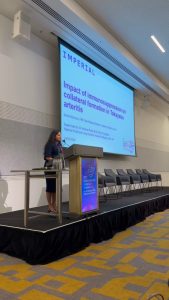
I am deeply grateful for the support of the Justin Mason Memorial Fund, which enabled me to attend the 22nd International Vasculitis Workshop in Melbourne, Australia from February 21–25, 2026. I presented my intercalated BSc project, awarded First Class Honours, titled “Impact of immunosuppression on collateral formation in Takayasu arteritis”. This opportunity proved to be a profoundly enriching experience, both personally and professionally.
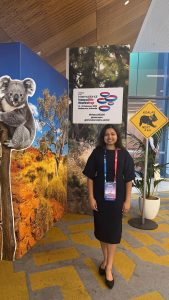
I never imagined that my journey as a medical student would take me across the world, and visiting Melbourne for the first time was a highlight. In my short time there, I experienced the unique beauty of Australia, from kangaroos and koalas to witnessing the little penguins native to Melbourne’s Phillip Island. This vibrant setting made the professional milestone even more memorable.
This conference marked my first oral presentation at an international meeting, representing a pivotal moment in my academic journey. Having dedicated the past year to my research, often working in isolation and sharing updates mainly with my supervisors, I found it both daunting and exhilarating to present my findings to a global audience. I remember taking a deep breath before looking out at the room of over a hundred attentive faces. Their encouraging smiles and photographs they took of my slides felt like a validation of the work’s significance, strengthening my confidence not only in public speaking but also in the academic rigour of the project itself.
After the presentation, clinicians from around the world stood to offer their perspectives, sparking thoughtful discussions that broadened my understanding of a subject I had previously considered niche. It was remarkable to see how my work resonated with others and stimulated meaningful academic dialogue. I was also honoured to contribute to asubsequent panel discussion among leading researchers in the field.
The opportunity to meet and learn from renowned experts, many of whose names I recognised only by their publications, was invaluable. It was a privilege to speak with several of Professor Mason’s colleagues and friends, who fondly recalled his character and expressed admiration for his contributions. Similarly moving was the connection with patient representatives from Vasculitis UK, who emphasised the real-world impact of our research. These conversations echoed my experience the previous year at Hammersmith’s Large Vessel Vasculitis clinic, where I had met many patients who had been under Professor Mason’s care.
I remain especially thankful to Professor Mason, whose legacy endures through the mentorship of my supervisors, Dr Taryn Youngstein and Dr Andrew Porter. Their guidance, which began during my BSc project and continued through this presentation, has been foundational to my development. I am certain that their supportive and insightful approach reflects Professor Mason’s own dedication to teaching and nurturing future clinicians and researchers. This generous travel grant, awarded in his name, covered essential costs including flights, accommodation and conference registration.
This experience has inspired me and solidified my desire to pursue a career in academic medicine. The encouraging reception of my work has further motivated me to continue this project and pursue its publication as my debut first-author paper. Being exposed to leaders across rheumatology, vascular medicine, cardio-immunology and other specialties highlighted the vital role of interdisciplinary collaboration and provided much to reflect on as I weigh my future specialty path. Above all, it renewed my belief in the importance of remaining curious, engaged and dedicated to research that tangibly improves people’s lives.