Author: Bernhard Kainz

Inside Imperial’s fourth-year Deep Learning course
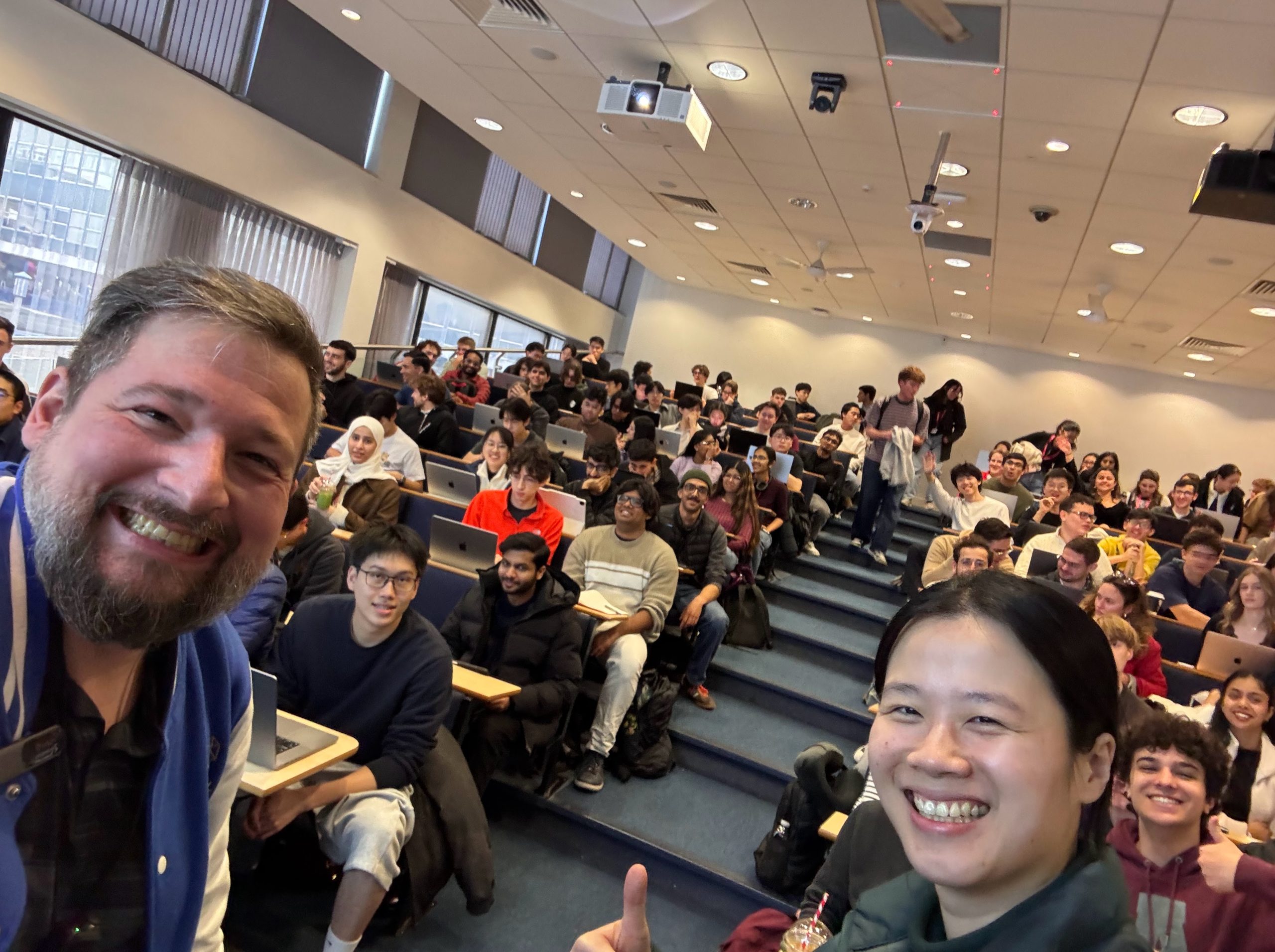
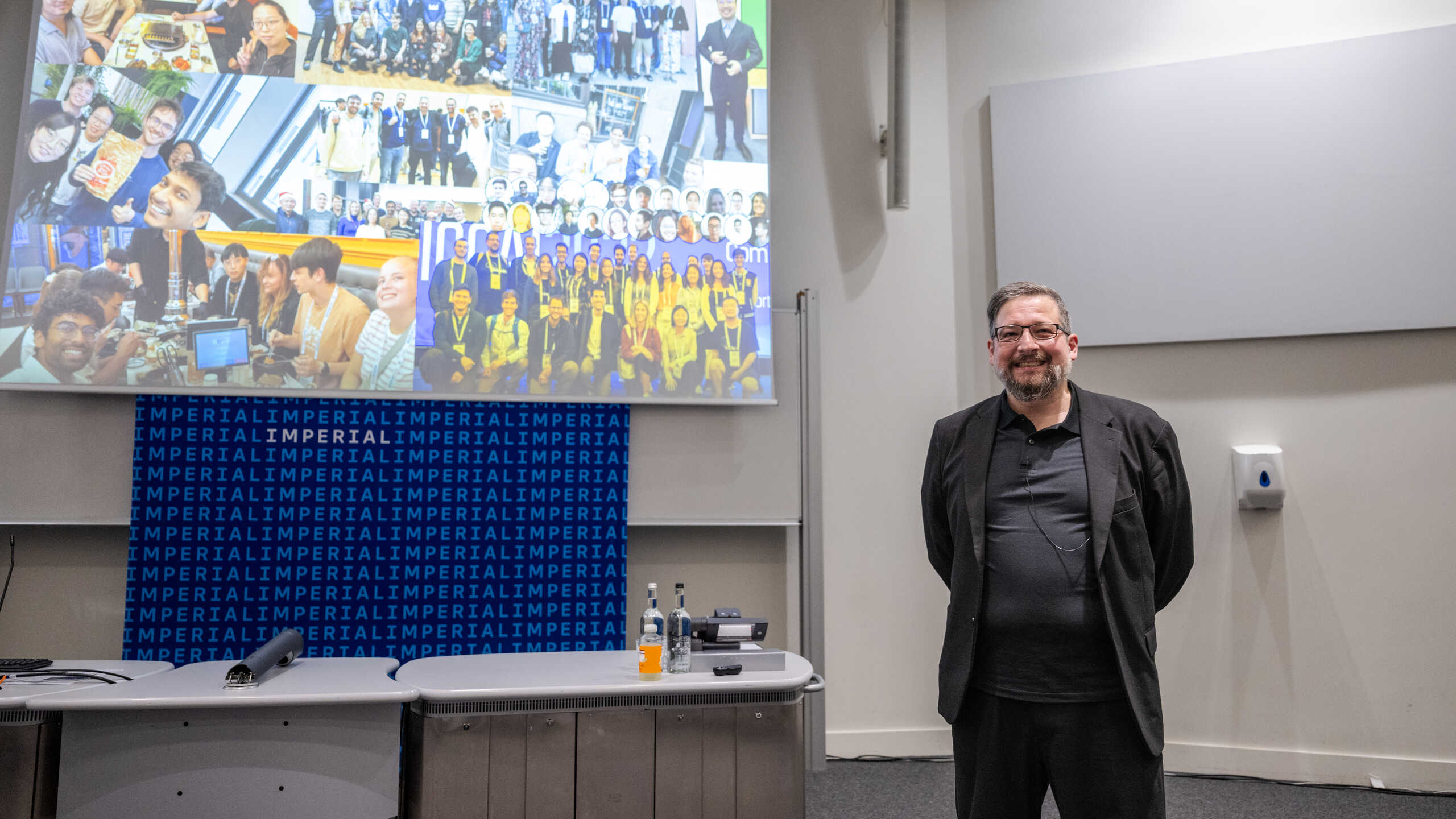
Prof Bernhard Kainz and Dr Yingzhen LiProfessor Bernhard Kainz outlines how Imperial’s fourth-year Deep Learning course combines theory with hands-on experimentation at scale. With more than 600 students taking part this year, the course explores both the foundations of deep learning and emerging approaches in generative and multimodal AI.


Deep learning continues to evolve at pace, but a strong understanding of its foundations remains essential. In the Department of Computing, students on the fourth-year Deep Learning course engage with both the theoretical foundations and modern frontiers of the field, combining rigorous analysis with hands-on experimentation at scale.

This year, more than 600 students took part under the joint leadership of Professor Bernhard Kainz and Dr Yingzhen Li, with support from Dr Harry Coppock from the UK AI Security Institute (ASI). The course explores core principles of representation learning, modern architectures and optimisation strategies, and integrates classical deep learning with emerging paradigms in generative and multimodal AI.

A central component of the course is the well-established “hot dog, not hot dog” project, inspired by the television series Silicon Valley. Students begin by developing robust classifiers to distinguish between hot dog and non-hot dog images, addressing challenges such as dataset bias, distribution shift and generalisation.
Building on this work, students then extend their models to generate entirely new images, transitioning from discriminative to generative modelling. Through this process, they are introduced to advanced concepts including diffusion-based generative models, data-centric AI and the limitations of synthetic data.

Although playful in appearance, the project is designed to operate under realistic computational constraints. Students typically work in single-GPU environments, encouraging efficient model design and careful experimentation rather than brute-force scaling. This setup supports practical engagement with how models learn, fail and generalise.

This year’s submissions included strong examples of resource-efficient diffusion models capable of synthesising high-quality images from noise. These approaches reflect techniques that are now widely accessible through large language model interfaces provided by organisations such as OpenAI, Google and Anthropic.

Given the size of the cohort, separate winners were selected for each course stream following a vote conducted by the 25 graduate teaching assistants supporting the course.

Project winners
COMP60034: Tom Shtasel

COMP60034: Tom Shtasel

COMP70010: Harvey Densem

COMP70010: Harvey Densem

The project was led by Hanna Tolle and Carles Balsells Rodas, whose coordination supported the delivery of the course at scale.

The winners were awarded API credits for the large language model of their choice, supporting continued exploration of modern AI systems beyond the course.

Celebrating student work from Imperial’s Computer Graphics course

Bernhard Kainz

Professor Bernhard Kainz highlights student work from the Department of Computing’s Computer Graphics course, where students develop rendering algorithms and visual effects using Imperial’s browser-based teaching framework. Outstanding work is recognised through awards for technical complexity and scene composition.


Computer Graphics combines algorithmic thinking, physical modelling and visual design. In the Department of Computing, the Computer Graphics course gives students the opportunity to apply these principles by building rendering systems and generating photorealistic images.

Students on the course work using ShaderLab Web, the department’s browser-based Computer Graphics teaching framework. The environment supports the development and testing of rendering algorithms directly in the browser.

As part of the course, students develop their own Computer Graphics rendering effects and implement a ray tracer using the web-based programming environment. Ray tracing is a physically grounded rendering technique that enables the creation of realistic images through the simulation of light transport within a scene.

For the final project, students are free to implement their own visual effects and scene designs. This typically results in a wide range of creative and technically sophisticated outcomes, reflecting different approaches to rendering and scene construction.

Outstanding work is recognised through two award categories. The Technical Complexity award highlights advanced rendering features such as physically correct refraction, volumetric effects and global illumination. The Scene Composition award recognises visually compelling and creative scene design.

Technical Complexity Award

The winning submissions demonstrated physically accurate refraction and reflection, advanced material modelling and carefully constructed lighting setups, resulting in highly realistic renderings.

Forest Li (fl1123) Bernhard Kainz

Runner-ups:

Baekhyeon Sung (bs1723)

Max Ryan (mtr23)

Scene Composition Award

The winning submissions combined complex geometry with strong artistic direction, producing visually distinctive scenes with coherent lighting and material design.

Cheng Tan (ct1022)

Runner-up

Noam Tal (nt1825)

Award recipients receive API credits to support further experimentation with modern Computer Graphics and AI systems.