Inside Imperial’s fourth-year Deep Learning course
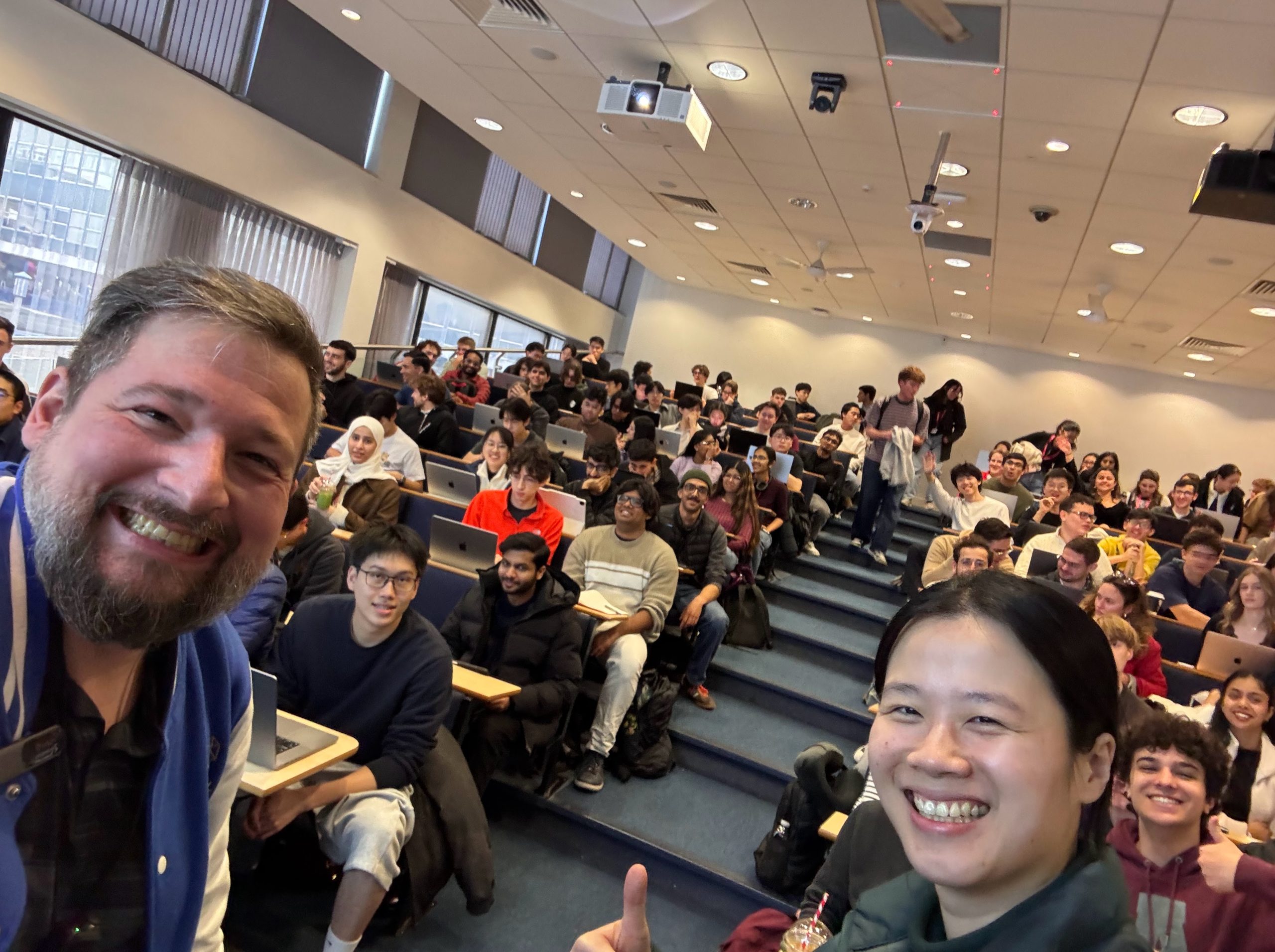 Professor Bernhard Kainz outlines how Imperial’s fourth-year Deep Learning course combines theory with hands-on experimentation at scale. With more than 600 students taking part this year, the course explores both the foundations of deep learning and emerging approaches in generative and multimodal AI.
Deep learning continues to evolve at pace, but a strong understanding of its foundations remains essential. In the Department of Computing, students on the fourth-year Deep Learning course engage with both the theoretical foundations and modern frontiers of the field, combining rigorous analysis with hands-on experimentation at scale.
This year, more than 600 students took part under the joint leadership of Professor Bernhard Kainz and Dr Yingzhen Li, with support from Dr Harry Coppock from the UK AI Security Institute (ASI). The course explores core principles of representation learning, modern architectures and optimisation strategies, and integrates classical deep learning with emerging paradigms in generative and multimodal AI.
A central component of the course is the well-established “hot dog, not hot dog” project, inspired by the television series Silicon Valley. Students begin by developing robust classifiers to distinguish between hot dog and non-hot dog images, addressing challenges such as dataset bias, distribution shift and generalisation.