We’re back with #WNBiPonWednesdays! For this post, we interviewed Idil, a second year physics undergraduate who won the 2025 Imperial FoNS-MAD innovation competition, securing £7,000 in funding and founding D-View. Thank you for speaking with us Idil!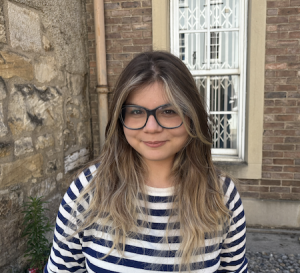
Can you talk about your experience participating in FoNS-MAD competition, and founding D-View?
It was a very unique experience – I would definitely recommend it! The competition team was very supportive from the moment that we’ve applied and there are lots of opportunities, like getting a lab space, funding, and an advisor.
What we’re trying to have at the end is a micro seismic event detector that’s based on AI, so that it can be deployed in earthquake search and rescue. The motivation is from the 2023 Turkey-Syria earthquake. We’re both Turkish students, so it’s a very personal idea that’s close to our hearts, and receiving such support as two Turkish students in our first year at the university meant a lot for us. And after winning, thanks to the publicity we got from different social platforms, we were contacted by venture capitals and different investors about our product!
How can you see D-View evolving beyond the competition?
In addition to being contacted about funding from investors, we’re also considering different accelerator programs to take D-View to next stage. We’re actually also in contact with Turkish official governments to get this product on the market as soon as possible, so it can be used in an earthquake that’s definitely going to happen in a few years in Istanbul.
D-View actually stands for Drone View – so at the end, we want to have the system integrated on a drone so it can operate autonomously, without a technician. And we want to have a product that can be used in different scenarios, other than earthquake searches and rescues later on as well.
What have you done to develop your interest in physics, outside of the course?
Towards the end of last summer, I participated in a stellar evolution research group to look into supermassive stars and their existence. I got in contact with a PhD student from the University of Chicago who’s now working at Harvard, and he was looking for people to join in. We used a very old programming language and computer simulations to see how different generation stars behave through long periods of time.
I also like to read about physics in my free time as well! Specifically, about how physics is connected to different disciplines like art or philosophy.
What do you do in your free time, apart from physics?
Currently, I’m not in any societies since D-View was taking up a lot of my time. But my way of dealing with academic stress is music. I like to play instruments – I play the piano whenever I have free time. I’ll usually book a music room in the Blyth Center for Music at Imperial, and just go there learn a few new pieces. I actually started taking classes on violin as well, so I’m learning violin right now. I think it’s really helpful in terms of emotional discharge!
What advice would you give to your younger self?
I think I would tell her to pursue her passions regardless of what other people are saying. When I was applying for physics, I had a lot of people coming up and telling me that I wouldn’t be able to thrive in physics because I’m a woman. Being able to put myself forward with the competition in my first year really proved to myself that I can achieve and grow in an academic environment, as long as I stay confident and stay determined.