#WNBiPonWednesdays: Prof Marina Galand
This week on #WNBiPonWednesdays, we are featuring Prof Marina Galand, a professor in planetary sciences! Thank you for your time!
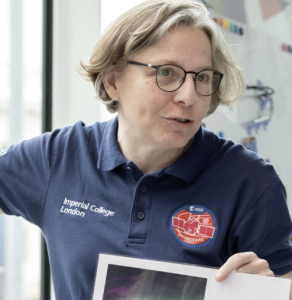
What is your area of expertise?
My research focuses on plasma around planets, moons, and comets in the Solar System. More specifically, I am interested in the deposition and redistribution of solar and auroral energy in atmospheres. The deposited energy ionises the atmospheric neutrals; the induced plasma layer plays a critical role in the interaction of the body with its environment. The energy deposition can also be probed remotely, through, for example, the spectacular auroral emissions (or northern/southern lights at Earth). I have been developing and adapting kinetic and fluid models and have applied multi-instrument analysis, to interpret observations from space missions, including Cassini (Saturn and Titan) and Rosetta (comet 67P), and in preparation to JUICE (Jupiter and Ganymede) and Comet Interceptor. My research has evolved from pure modelling to data analysis and processing, and to instrumentation. I am currently leading the magnetometer on probe B2, as part of Comet Interceptor, the next space mission to a yet-to-be-discovered comet!