Dr Simon Foster, Outreach Manager within the Faculty of Natural Sciences, talks about Imperial’s recent outreach activities through the India STEMathon and the passion and intelligence of young people that he witnessed on the trip.
One of the great aspects of my role as FoNS Faculty Outreach manager, is engaging with young people across the UK to promote STEM as a potential career, or as an interest that they will hopefully continue to enjoy no matter what path they might take in life. This interaction can take many forms, from talks about the research we conduct in FoNS, student mentoring, career guidance, to exam preparation, but one type of engagement that continues to get huge involvement is the ‘classic’ STEM competition.
Started by Becky Middleton, Director of Education and Student Experience in FoNS, over a decade ago, the FoNS Science and Innovation competition has proved a huge success with young people, with more than 250 teams entering annually from across the UK. However, the competition attracted huge numbers of entrants from across the planet, so much so, that we decided to split it into separate UK and International streams. The focus of the competition is to ask teams of young people to come up with a scientific and innovative solution to one of the UN’s sustainable development goals and then present their ideas in a five minute video. Finalists are then invited to compete at Imperial in the annual grand final.
‘The imagination, scientific knowledge and creativity of the entrants has always amazed me’
The imagination, scientific knowledge and creativity of the entrants has always amazed me, along with the confidence of being able to present these ideas to a panel our panel of judges. I remember being required to present research as an Undergraduate and Postgraduate student, and I was completely gripped with terror whenever I was required to give a presentation, so I am always in complete awe at the young people who participate. As I have found out, rather late in my career, scientific research is nothing without the ability to communicate it to your peers, and so I am absolutely delighted to help play a small part in helping to developing these skills with young people. Another great aspect of the competition is that it helps take young people beyond the classroom and curriculum, allowing them to research scientific areas they might not normally engage with, but have a passion for, hopefully leading them to investigate this as a potential avenue to study at University.
So, during a chat with the International recruitment team about potential ways we could engage with students in India, the idea of ‘transplanting’ the DNA of the FoNS Science & Innovation competition to India, seemed an obvious and exciting possibility. This resulted in Imperial’s India STEMathon launching in 2024, with 10 teams reaching the final in Delhi and Team Plarick being crowned champions. Alongside their prize, the team was invited to participate in the International Science & innovation competition finals in London, winning the 16-19 age category.
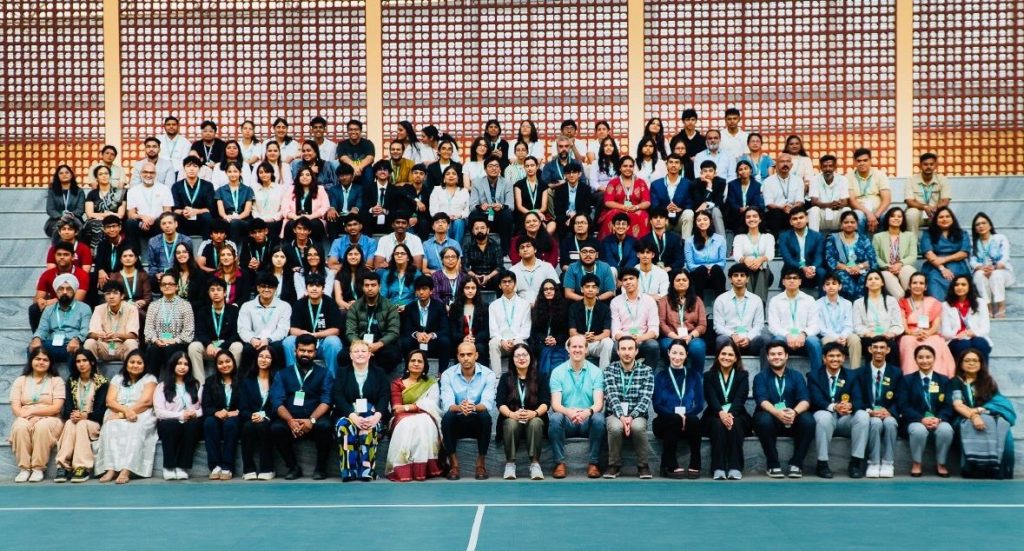
This year, with interest in the competition greatly expanding, we headed to Bangaluru, home of Imperial Global India’s science hub. The hub has been created to expand UK-India collaboration, innovation and research in global challenges such as climate, food and health, and so proved to be the perfect location and backdrop for the India STEMathon, with its focus on the UN’s sustainable development goals and aims of developing collaboration and innovation amongst young people. Bengaluru is also considered ‘India’s Silicon Valley’, with a booming IT sector and home to a number of unicorn companies (privately held startups valued at over $1 billion), so overall it seemed a natural destination to host the competition.
Launching in July, several hundred teams entered the competition from across India, and choosing the finalists was an incredibly difficult task. However, in late November, 20 teams met in Bengaluru to fight it out for the title of STEMathon champions.
On the Friday night all the teams were invited to a reception at the Bengaluru Science gallery, where they got the chancge to meet Imperial staff, learn more about Imperial and most importantly find out what the next two days had in store for them! Saturday found the teams involved in an intense day of perfecting their ideas with help and support from Imperial staff and alumni, as well as getting advice as to how they could best pitch their ideas to the judges at the round of finals in the following days.
The 20 teams were eventually whittled down to just 4 teams who were selected for the grand final, where they pitched their ideas to the panel of judges, who also asked probing questions to test not only the depth of their scientific understanding, but also to check the business and economic foundations of their proposed ideas. I must admit, when judging competitions such as this, I am always filled with a sense of inadequacy as many of the students are truly brilliant and I feel something of an imposter sitting in judgement upon them!
There was a huge variety in the ideas on presented by the teams, ranging from new safety equipment for workers in the building industry, new techniques for mussel farming, cheap and simple water purification devices, eco-friendly dyes for fabrics and AI driven recycling equipment.
‘I continue to be amazed by the passion and intelligence of young people’
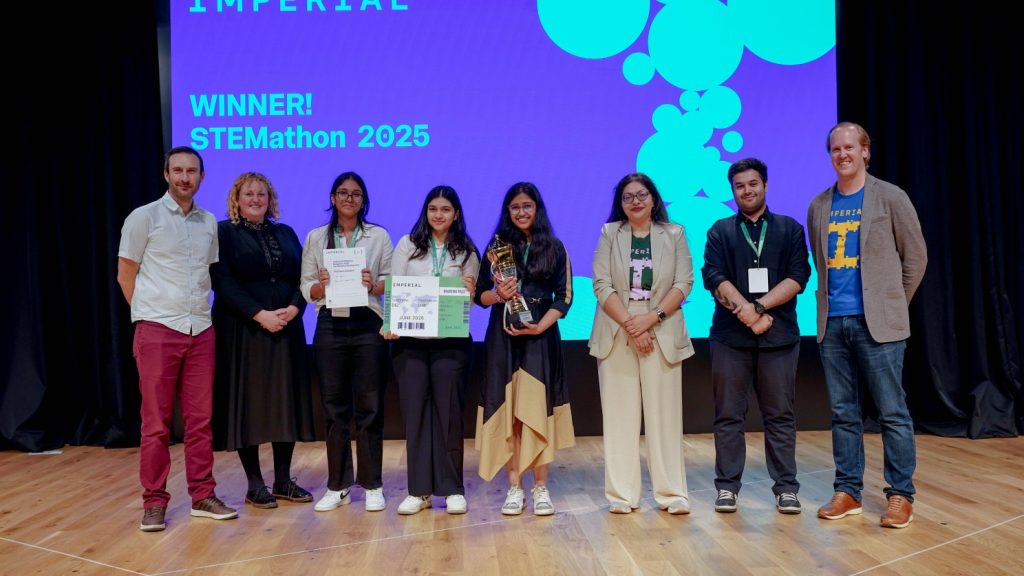
The STEMathon concluded with the students from Jayshree Pariwal School, Jaipur, being crowned the winners, with their idea to help neurodiverse school students using an AI driven educational platform that adapted to the students learning style and needs, ensuring that no student is left behind in their educational journey.
As always, I continue to be amazed by the passion and intelligence of young people across the planet and the next generation of STEM researchers will be formidable and the global challenges we now face will be met.