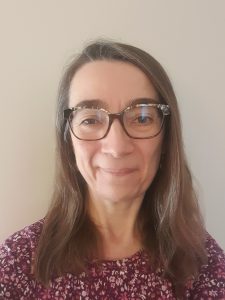
 As part of Women at Imperial Week, we asked Dr Karen E Logan, Director of Programme Management at Target Malaria within the Department of Life Sciences, some questions around her proudest career achievement so far, her role models and how can we better support women in STEM and technical roles.
What has been your proudest achievement so far?
Academically it was attaining my PhD, I was the first person in my family to go to university. I am not what you would consider “academically brilliant,” I had to work hard for my qualification, it was not easy, but not being afraid of demanding work has helped enormously during my career, it is another challenge to be tackled, not an immoveable barrier.
Personally, I have been a volunteer for over 30 years with the charity Riding for the Disabled. In 2019, I passed my Coaching qualification, allowing me to coach and mentor children who are normally judged based on their disability, rather than simply as a horse rider. Nothing beats the smile on the kids’ faces when they hug their ponies.
What barriers to career progression do women still encounter in academia or research today?
Women in UK academia and research continue to face a mix of structural and cultural barriers that slow progression. Job security, especially early in careers, limits long-term planning and opportunities. Women also carry a disproportionate share of teaching, pastoral care, and administrative work, which is essential but undervalued in promotion decisions.
Access to research funding and leadership roles remain uneven, with interruptions from caring responsibilities affecting competitiveness for major grants.
“Unconscious bias and exclusion from influential networks continue to shape who is seen as ‘ready’ for leadership”
The UK’s well-documented “child penalty” leads to stalled pay and career progression after motherhood, while men’s careers continue to advance. At the same time, unconscious bias and exclusion from influential networks continue to shape who is seen as “ready” for leadership, and unsupportive departmental cultures further undermine confidence and retention.
These challenges are amplified for women from minoritised or working class backgrounds, who face compounded structural disadvantages.
If we consider the “so what” of this, we need to acknowledge the potential loss of innovation, perspective, mentorship, and leadership potential from our organisation if it is not addressed.
How can we better support women in STEM and technical roles, where they remain underrepresented?
As a woman in STEM I feel we have a responsibility to advocate and talk about our experiences and our own career pathways and development, we are obligated to highlight the positives as well as the negatives, with those starting their careers and with those further along the path.
We need to remember to tell the good stories, as for sure there are many of those as well. Regardless of where we are in our careers, or what position we hold, we never lose that need to have someone to talk to, I think we sometimes forget that. One very practical way organisations can support this is by creating structured mentoring or peer-support networks, so women at every stage have a safe space to ask questions, share challenges, and build confidence. These small, intentional connections can make a huge difference to someone’s sense of belonging and momentum. I know the opportunities like this that I have had during my career certainly helped.
Is there anyone you’d consider a role model within your area of work?
I have been very fortunate in my career, I have had many role models, some very positive, and some equally not, but those negative experiences are just as valuable as you grow.
The list of positives are many, early mentors like my PhD supervisor, Professor Julie Fitzpatrick, showed me what was possible at a time when I doubted my own ability. Others opened doors and championed me, from Dr Jo Viney and Professor Patrick Nolan in my early post-doctoral academic years to Dr Phil Hogarth and Dr Helen Harris, who helped me broaden my perspective and make the transition to beyond the lab.
“I have learned a great deal from colleagues who pushed my thinking”
I have also learned a great deal from colleagues who pushed my thinking, like Dr Zoe Hindle, and from leaders who genuinely seek out my views, such as my current manager, Professor Austin Burt. Each has played an important part in my development. I feel very fortunate for that, and I am genuinely excited about what is still to come.
What is one piece of advice you wish you had received earlier in your academic or professional journey?
“There are so many different paths that can be taken with scientific background”
That science did not just mean bench science. There are so many different paths that can be taken with scientific background. It is not just about academia and applying for grants, there is industry, and everything in between. There is bench science, but there is also patent law, contract law, quality assurance, regulatory, manufacturing, logistics, teaching, grants management and of course project management to name but a few.
If I had been exposed to this during my undergraduate and post graduate studies, I could have explored different training opportunities that would have helped me develop and hone my skills earlier in my career and perhaps improved my advancement.
What role can Imperial play in ensuring women are represented across the research spectrum?
Create a safe open space for women to see that there are possibilities, in all areas of the organisation. Create access to structured mentoring and career pathways. Increase visibility of female role models, that other women can talk to and gain insights and share learning. Representation matters, but it has to be meaningful. We want to be appointed because our skills and experience are the right fit, not just to fill a box on a HR form.
The goal is an environment where women are visible across the research spectrum because they have been given fair opportunities to demonstrate their strengths. Representation builds stronger teams, contributes to better decisions, and supports a more inclusive culture, which lead to improved productivity, staff retention, and well-being. But this will require cultural change and leadership accountability for this to be achievable.