Month: June 2026

Award-winning Women and Asthma project to conclude with Clean Air Day exhibition in Tower Hamlets

“We all know how women’s health is underrepresented and is not taken seriously. So being able to be advocates, have that knowledge ourselves now, and join in conversations is empowering.”

– Lived Experience participant 

Women are more likely to have asthma, have more severe symptoms and are twice as likely to die of an asthma attack than men. 

In response to this grave – and gravely under-reported – health inequality, a group of researchers at the National Heart and Lung Institute (NHLI) embarked on the Women and Asthma project. Funded by the Wellcome Trust, this project sought to shine a light on the complex lived experiences of women with asthma through craft and creative storytelling. 

By bringing public engagement and biological research together, Women and Asthma has given women who live with the condition a chance to share their stories; researchers the opportunity to learn more about how asthma affects people’s daily lives; and the public a rare insight into what living with asthma is really like. 

The Women and Asthma team were recently selected as winners of The Achievement Award as part of The President’s Awards for Excellence in Societal Engagement. President Hugh Brady said of their work, “We recognise that the Women and Asthma project delivered bespoke engagement that addresses a well-documented health inequity. The team demonstrated substantial, sustained commitment across many roles, underpinned by deep and meaningful collaboration.” 
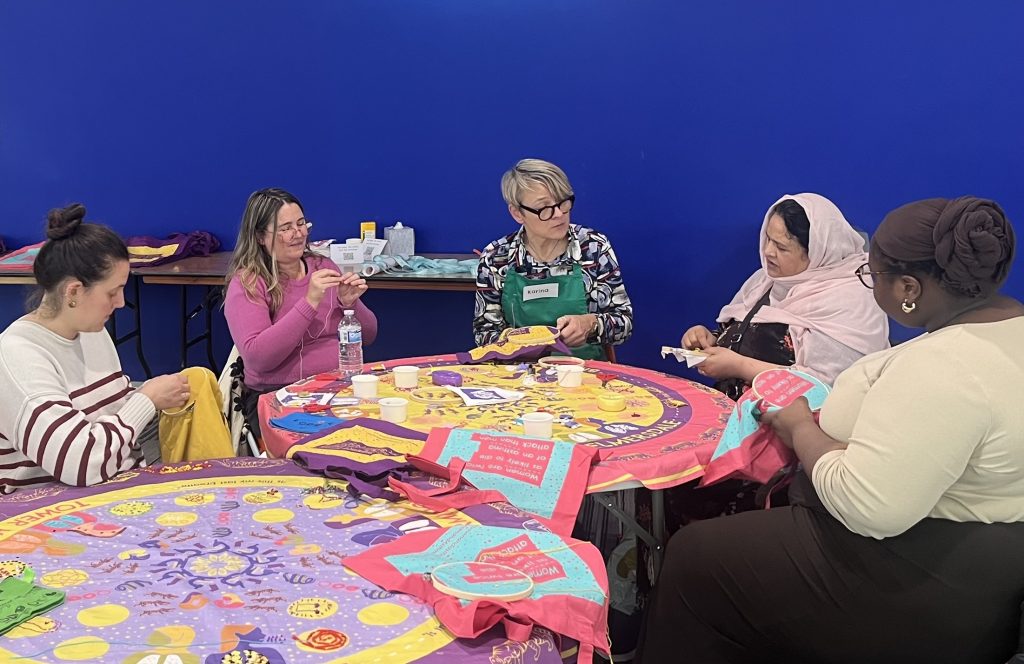

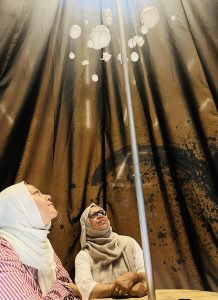
The project began with the Makers Exchange, a programme of creative workshops in three communities across the UK, delivered in partnership with local community craft organisations: The Sewing Rooms in Skelmersdale, Craftspace in Birmingham, and Stitches in Time in Tower Hamlets. These workshops were then developed into Stories of Breath, a multi-sensory immersive installation created by creatives, researchers, and women with asthma, which was exhibited in each of the above locations in September 2025. 

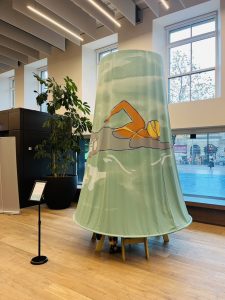
Stories of Breath will be presented for the final time in London for Clean Air Day on Thursday 18 June as part of  We Weave Air  by What’s the Matter? Festival. It is open to all, and many of those who have participated in the Women and Asthma project will be in attendance. The exhibition will be open as a drop-in from 10.00-16.00 at Tower Hamlets Town Hall. It is also available to view as a digital experience on the Women and Asthma website. 


With the project nearing its conclusion, the team asked the members of the public who saw Stories of Breath when it was first exhibited what they had gained from the experience. Here are just a few quotes: 
“I’m so grateful that I saw this exhibit. It definitely gave me more awareness on the struggles women face with asthma. I feel very inspired by the stories I heard and appreciative of their vulnerability. I am a recent graduate who aims to research women’s health, and this exhibit has made me feel more motivated to accomplish my dreams. This was a beautiful way to bring these issues to people’s attention.” 

“I have had asthma for 60 years and have never really discussed how it feels. The audio descriptions have put into words how I feel, especially when my asthma is at its worst.”

“I have little to no knowledge of asthma, let alone how asthma affects women. I am a trainee teacher and will be more mindful of the perfumes and fragrances I wear, I didn’t realise fragrances may affect those living with asthma.” 

“This exhibit opened my eyes to the immune system’s link to asthma as well as the differences between males and females with asthma and I will be keeping an eye out for new research.” 

“Science can be fascinating, beautiful and compelling.”


Watch the Women and Asthma film to learn more about the project:
 

Understanding infection in cystic fibrosis: meet the researchers

“It is crucial to understand how these pathogens interact… with the aim of discovering new targets for treatments.”

For Cystic Fibrosis (CF) Week, 8-14 June, we’re shining a light on the work of two PhD students at NHLI who are helping to advance our understanding of lung infections in CF.

Greta Šveikauskaitė (Allsopp Group) and Shannon Blay (Hughes Group) are both exploring how microbes behave and interact in the unique environment of the CF lung – research that could help inform more effective treatments in the future. Their work forms part of the Precision-CF Innovation Hub, a Cystic Fibrosis Trust and LifeArc funded research programme bringing together researchers and clinicians to improve the diagnosis and treatment of CF lung infections.

Professor Jane Davies, Dr Dominic Hughes, Dr Luke Allsopp, part of the PRECISION-CF, a Cystic Fibrosis Trust and Life Arc funded project researching secondary bacterial infections associated with cystic fibrosis in the lab in the Emmanuel Kaye Building.
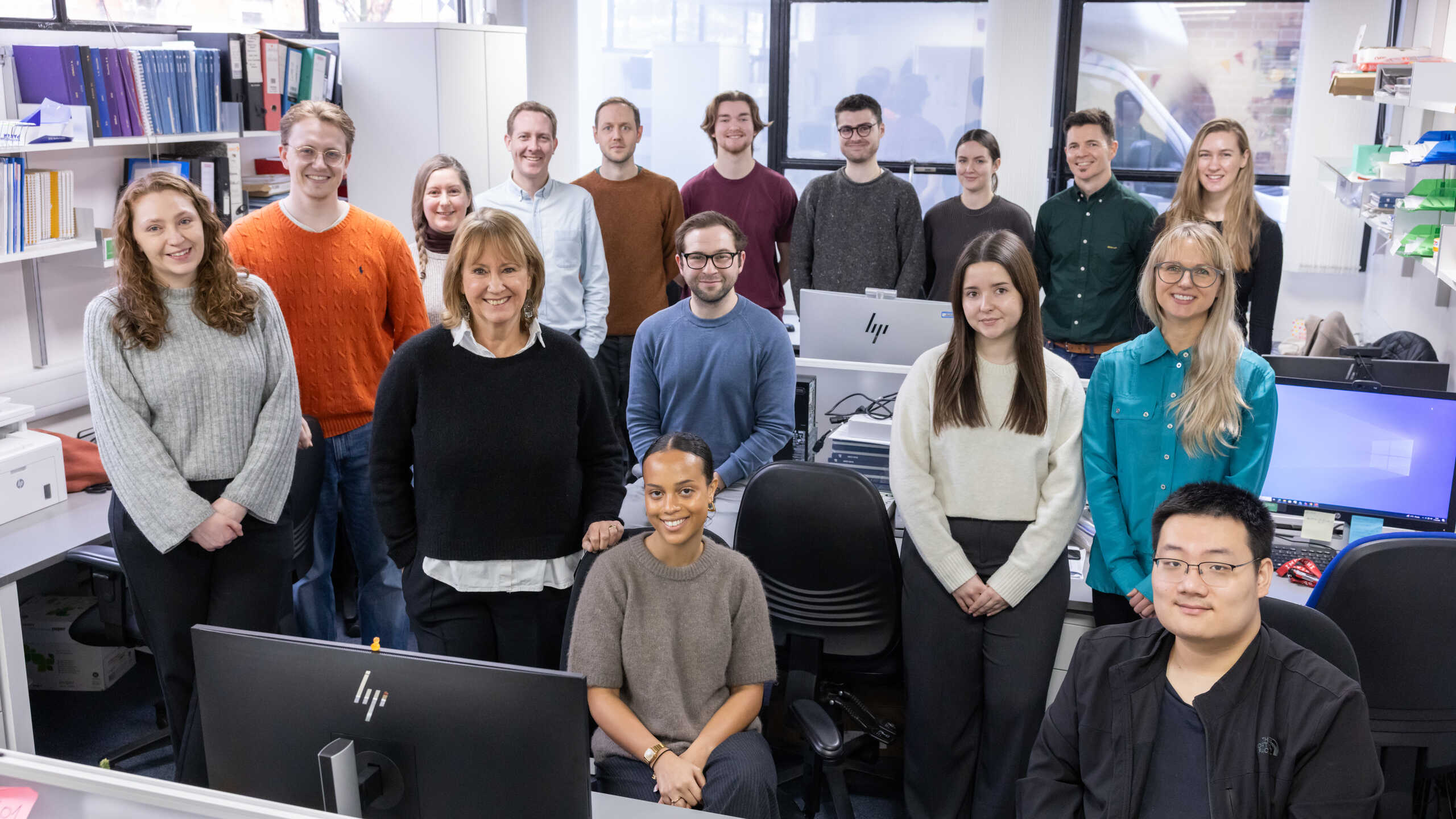
Greta Sveikauskaite (back row, third from right) and Shannon Blay (middle row, second from right), with Professor Jane Davies, Dr Dominic Hughes, Dr Luke Allsopp and members of the research groups.

Understanding bacterial dominance in CF infections

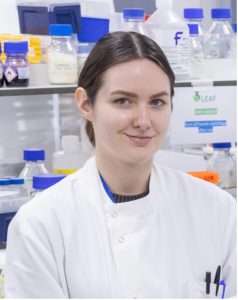
Greta Šveikauskaitė, PhD student (Allsopp Group)Greta in the lab

What is your current research in cystic fibrosis focused on?

Cystic Fibrosis is a genetic condition that affects many organs but has a particularly large impact on the lungs. CF causes the thickening of lung mucus, reduced clearance within the lungs and a frustrated immune system, creating a perfect environment for bacterial growth.

During infection, bacteria can lead to cell damage directly, but immune responses that do not effectively clear the bacteria can persist over time, resulting in damage that leads to reduced lung function.

Although the CF lung can be infected by a range of bacteria, Pseudomonas aeruginosa is the most common and most troubling. My project in the Allsopp Group focuses on how P. aeruginosa becomes dominant and outcompetes other bacteria.

“We do not fully understand how P. aeruginosa causes infection and becomes so successful. My work will hopefully reveal environmental triggers that lead to a boom in P. aeruginosa presence and make it more aggressive”

P. aeruginosa alters its behaviour in this environment and in response to other bacteria, and this is the focus of my PhD. One bacterial system I am particularly fascinated by is a protein nanomachine that it uses like a harpoon against other bacteria, or human cells, to inject toxins that lead to cell death. This system is called the type VI secretion system. I am researching how P. aeruginosa responds to the CF lung environment to arm itself for this bacterial warfare.

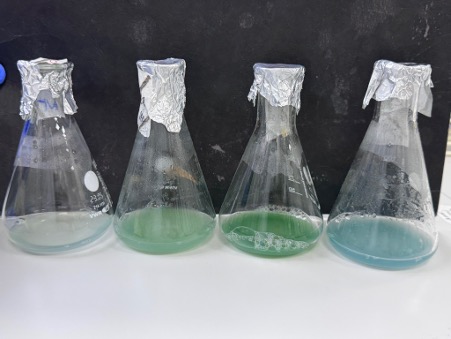
Pseudomonas aeruginosa responds to being grown in different media by turning on the production of different pigments

What impact do you hope your research will have for people living with CF?

I hope that findings from my research will help us better understand these bacteria. This is important as we do not fully understand how P. aeruginosa causes infection and becomes so successful. My work will hopefully reveal environmental triggers that lead to a boom in P. aeruginosa presence and make it more aggressive. Once we understand this, we could use these triggers as a guide for more effective future treatments.

What does a typical day look like for you as a PhD student?

My days are filled with experiment planning, literature reading, and a lot of experiments!

Collaboration plays a big role in CF research – how has this influenced your work?

I am part of the Precision CF Innovation Hub, part of the Translational Innovation Hub Network for CF Lung Health and Infection funded by LifeArc and the Cystic Fibrosis Trust.

This means that my work fits within the wider CF research landscape and I get to collaborate not only with researchers at Imperial, but also from other UK universities, and learn about broader CF research topics. I also interact and collaborate with clinicians, which helps remind me of the bigger picture beyond day-to-day laboratory work.

What are the next steps for your research?

I hope we are able to achieve better detection of the bacteria infecting CF lungs, coupled with increased understanding of their infection patterns, so we can deliver rapid and effective treatments that improve the lives of people with CF.

Looking ahead, what breakthrough would you most like to see?

I would love to see a way to restore natural innate immunity, with increased “good” (commensal) bacteria that could better equip the body with an active defence system against harmful bacteria such as P. aeruginosa.


Exploring polymicrobial infections in CF lungs

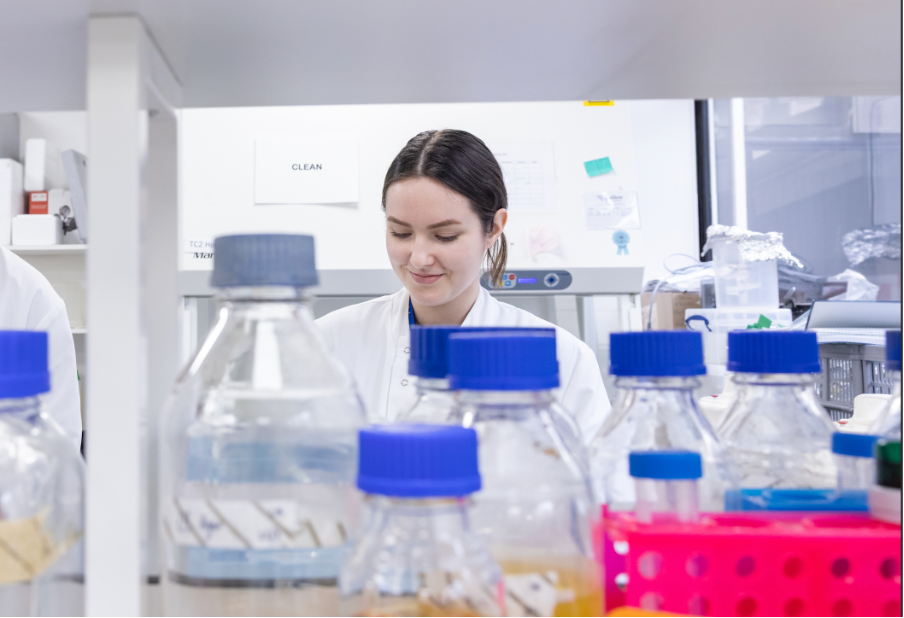
Shannon Blay, PhD student (Hughes Group) Shannon in the lab

What is your current research in cystic fibrosis focused on?

My research focuses on how the bacteria Pseudomonas aeruginosa (Pa) and the fungus Aspergillus fumigatus (Af) interact during co-infection in people with CF.

Lung infections in CF are common, and there is increasing understanding that these infections are polymicrobial—made up of many different pathogens. Pa and Af are the most common bacterial and fungal pathogens found in CF lungs.

Because people with CF have thicker mucus that is harder to clear, alongside an impaired immune response, infections often become chronic—triggering inflammation and progressive lung damage.

The introduction of CFTR modulators, such as Kaftrio, has been a huge breakthrough. However, these treatments are not effective for around 10% of people with CF, and even in those receiving modulators, chronic infections often persist and are difficult to treat due to antimicrobial resistance.

Research has shown that Pa and Af co-infection worsens patient outcomes, including requiring more frequent hospitalisation. It is therefore crucial to understand how these pathogens interact and why this negatively impacts health outcomes, with the aim of discovering new treatment targets.

My research explores how Pa and Af interact directly and indirectly, and how this affects their growth and survival.

What impact do you hope your research will have?

CFTR modulators, specialised healthcare and newborn screening have transformed outcomes for many people with CF. However, an ageing CF population brings new challenges, including chronic lung infections.

By researching polymicrobial interactions, I hope to contribute to a better understanding of how pathogens behave during infection so that we can treat them more effectively and alleviate symptoms. The opportunity to have a positive impact on people living with CF is what motivates me.

What does a typical day look like for you as a PhD student?

A typical day begins with checking my plan and writing a very ambitious to-do list. My experiments are time-dependent, so I usually carry them out in the morning.

After lunch, I focus on admin tasks, reading scientific papers and analysing data. Keeping accurate records is crucial, so I maintain both a lab book and electronic notes. I also regularly meet with my supervisory team or lab group—so my days can get very busy!

How has collaboration influenced your work?

“The collaborative nature of CF research is incredibly inspiring as an early-career researcher.”

Collaboration is central to my research, particularly as my project forms part of Precision-CF, one of four UK translational innovation hubs funded by LifeArc and the Cystic Fibrosis Trust.

I work closely with researchers within my group, including Dr Lillie Purser, to develop laboratory models of polymicrobial infection. We also collaborate with Professor Darius Armstrong-James to access A. fumigatus isolates from CF patients.

Our group is also exploring collaborations across departments, including with bioengineering. The collaborative nature of CF research is incredibly inspiring as an early-career researcher.

What are the next steps for your research?

My next steps are to continue optimising co-culture models to study polymicrobial interactions. I will then investigate how Pa and Af interact in different media, including synthetic cystic fibrosis medium, which mimics CF sputum.

This will help better simulate the CF lung environment and improve the clinical relevance of my research.

What breakthrough would you most like to see?

I would most like to see further advances in CFTR modulators or genetic therapies so that they can benefit everyone with CF, including those currently not eligible due to rare mutations or treatment intolerance.


Find out more about our Respiratory Infections research at NHLI and show your support by wearing yellow on the brightest fundraising day of the year, Friday 12 June.

Student Journey: Top Tips for Thriving as a Postgraduate at Imperial

MSc in Genes, Drugs and Stem Cells – Novel Therapies student Harriet Ashley“The MSc course has a very strong community. One thing that stood out was how much more discussion is encouraged in class rather than passive learning.”
Harriet Ashley is a current MSc in Genes, Drugs and Stem Cells – Novel Therapies student and one of the recipients of the Genes, Drugs and Stem Cells Scholarships 2025/26. Let’s hear about what inspired her to pursue science at Imperial and some top tips to make the most of the Imperial experience.


What first inspired you to pursue Biological Sciences at Imperial, and how did that experience shape your decision to progress into the MSc in Genes, Drugs and Stem Cells – Novel Therapies?

When I was at my sixth-form college, I had very inspiring A-level Biology and Chemistry tutors. My Biology tutor built an environment where every student was seen and challenged and they encouraged us to read more about biology through her weekly book recommendations. I remember learning about CRISPR for the first time in Jennifer Doudna’s book A Crack in Creation and discussing in length the impact that gene editing technologies could have in future scientific research with my tutor. Skipping to 2026 and I’m now utilising CRISPR-Cas13 in my own master’s project to speed up the test control process of cell and gene therapies. To this day, I’m still grateful to her for encouraging my curiosity, having thoughtful discussions with me and inspiring me to continue Biological Sciences into undergraduate level. My Chemistry tutor studied Natural Sciences at the University of Cambridge and growing up near Doncaster, this isn’t a background you come across often. I’m grateful to him for giving me the confidence and resources to aim high for top universities like Imperial College London which I initially believed were unreachable.

Applying to Imperial for Biology was 100% the right decision for me and I’ve found the last three years nothing short of exceptional, having loved every moment of my course and all the friendships I’ve made along the way. Biology at Imperial has given me a range of opportunities, including studying abroad in Germany, joining the netball team as well as getting to join an Imperial research group for a 10-week project for my final year dissertation. With the early exposure to research that I’ve had during my undergrad, I was confident that I wanted to stay at Imperial to do my master’s. The MSc in Genes Drugs and Stem Cells – Novel Therapies stood out to me because of the opportunity to do a six-month research project in the industry, which I am currently undertaking at the Cell and Gene Therapy Catapult at Guys Hospital.

How has the transition from the BSc to the MSc felt for you?

As with any course at Imperial, the undergraduate Biological Sciences course is equally challenging and rewarding. Studying for exams over the holidays, pulling all-nighters in the library and full days in the lab have given me a lot of resilience and confidence in myself. Therefore, the transition to the workload of an MSc has been somewhat more manageable. Transitioning with some course mates from my BSc has also helped to build a more supportive environment. The course conveners and the lecturers have been very transparent from the start, creating a very welcoming environment. I feel that the course has been designed very well to encompass students from a range of backgrounds in life sciences, medicine and pharmacology to bring them to the same level, helping to ease the transition.

Could you share a module, a project or a session from the MSc that has had the biggest impact on your career aspirations?

One of my favourite parts about the course is the fact that for every session in each module, we have a guest speaker from a different department or institution, and this has helped me network and open my mind to a range of diverse perspectives. One of the most impactful lectures we had was about the application of artificial intelligence in the pharmaceutical industry, delivered by Dr. Andrée Bates from Eularis. The session explored how AI is transforming the drug development pipeline, from target identification and molecule design to clinical trial optimisation and regulatory processes and introduced me to new fascinating concepts like digital twins. Seeing strong female leadership in a highly technical field also reinforced the importance of representation in STEM. This has motivated me to pursue a career in innovative, technology-driven areas of the pharmaceutical industry.

How would you describe the community within the MSc programme? What makes it stand out?

The MSc course has a very strong community with regular socials held by the course reps every month. The staff are also very approachable and welcome any questions during or after lectures. One thing that stood out comparing to undergrad was how much more discussion is encouraged in class rather than passive learning, allowing the students and staff to learn from one another. Since starting my master’s project at a company, I have not felt disconnected from the course. My imperial supervisor still catches up with me regularly and there is also a range of events scheduled during the project phase such as an interim project presentation and a course cohort picnic!

Receiving the Genes, Drugs and Stem Cells Scholarship must have been a great moment! What did it mean to you, and what top tips would you share with future applicants who are planning for MSc study?

Funnily enough, I received the email that I’d been awarded the NHLI scholarship while I was working over the summer in London to save up for my master’s. Imperial attracts students from a multitude of backgrounds, and I soon learnt that not everyone has the same appreciation when it comes to finances. As someone who has worked throughout sixth form and during exam seasons, money was something that I thought about a lot and I suffered from quite bad imposter syndrome at the start of university. Whilst I was lucky enough to have support from family, I still had to support myself for general living expenses and costs. My top tips for funding an MSc study would be to apply for the full student loan from student finance England if you are a home student as it is not means-tested for postgraduate study. When you’re applying for courses, remember to check if the department offers their own internal scholarship for that course as well as checking what scholarships or bursaries the university offers and if you’re eligible to apply.

In terms of budgeting for your living expenses whilst studying your master’s, my best advice would be to get a summer job or internship and save up before you start the course. Imperial also offers plenty of student-friendly job opportunities during term time with very good pay. Some of these roles include being a student ambassador, a welcome ambassador, working as a graduate training assistant (GTA), working at the union bar or part time tutoring (and much more!)

If you experience any financial stress during your master’s programme, Imperial has plenty of services to help you deal with this including counselling services to help you navigate your options as well as a hardship fund which you can also apply for during term time for unexpected circumstances.

What advice would you give to students who are considering applying but feel unsure if this is the right programme for them?

If you’re interested in working in any aspect of advanced medicinal therapeutics such as cell and gene therapies, regenerative medicine, organ printing, tissue engineering, monoclonal antibody therapies or neurotechnology, then this course is for you. Whether you want to learn more about the intricacies of the science behind these therapies, or you’re interested more in the IP, commercialisation and distribution of these therapies, then this course covers both aspects in detail in the first six months. In the last six months, you will undertake an integrated research project. This can either be a laboratory project based at Imperial, a placement in industry or an international project at another university. The connections of the course offer so many opportunities with industry partners and university partners.

The course also attracts people from different backgrounds including biology, biochemistry, medicine, pharmacology and engineering, so don’t be afraid to apply regardless of your background!

Looking ahead, how do you think this MSc is shaping your future?

I’m currently undertaking a placement at the Cell and Gene Therapy Catapult, where I’m investigating how we can optimise methodologies to identify miRNAs that reflect the cellular state to help increase the efficiency of assessing critical quality attributes during the manufacturing of the cell and gene therapies. I have learnt so much during this degree and my company placement about the drug discovery pipeline, the pharmaceutical industry and the commercialisation of new drugs and advanced medicinal therapies. Being given the opportunity to work in industry for six months has helped solidify my understanding of how academic research translates into real-world clinical and commercial applications. I am excited to advance my career in industry, whether that be biotech or pharma, and this master’s has given me the knowledge and relevant experience to do so.



Lastly, if you could describe your MSc experience so far using only three emojis, which ones would you pick and why?

I’ve picked the scientist because this course not only teaches you the core content for your chosen field in advanced therapies, but you get to put all your knowledge into practical experience with the six-month lab-based project!
I’ve chosen the sunset over the city emoji because of how beautiful of city London is! There’s always so much going on and sites to see, new restaurants to go to and exhibitions to visit! You’ll never get bored.
Finally, I’ve chosen the love letter emoji to represent the valuable friendships that I’ve made during my time at Imperial, which will last a lifetime!


To learn more about the MSc in Genes, Drugs and Stem Cells – Novel Therapies and the postgraduate programmes offered by the National Heart and Lung Institute, please visit our Postgraduate taught website.