A conversation with Professor Joe Boyle ahead of his Imperial Inaugural lecture
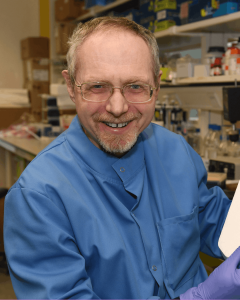
Professor Joseph Boyle, NHLI Professor of Chemical Systems Pathology, will be giving his inaugural lecture, Heart attacks and strokes: healing and light, on 30 September 2026.
In advance of this landmark moment in his career, we spoke to Professor Boyle about his life and research.
Could you give us a brief overview of what you will discuss in your upcoming inaugural lecture?
I will be focusing on my work on macrophages – large white blood cells that are designed to destroy, for example, bacteria and dead cells – and their surprising restorative properties.
When fatty deposits become lodged in key blood vessels, sometimes macrophages eat them up, and in doing so, repair the vessel. But other times, the macrophages are triggered to respond as they would to an infection, damaging the vessel and making it more vulnerable to becoming blocked, which is when heart attacks and strokes occur.
Over many years, I have been investigating how to encourage macrophages’ restorative properties. My lecture will focus on how I have been able to investigate these biological processes and how we can leverage these pathways in ways that may be helpful to patients.
Could you tell us more about your journey to becoming a professor at Imperial?
I grew up in Glasgow, attending a state comprehensive school. I then went to Glasgow University, where I studied pharmacology and medicine, before heading to Cambridge University for my PhD on vascular molecular cell biology.
I also trained in histopathology and have worked as both a clinical and academic histopathologist. It was through my work in pathology and inflammation that I came to Imperial, first as an academic cardiovascular pathologist, in 2001.
What areas of your current research will those who attend your lecture be able to find out more about?
I often work alongside chemists; my partnership with Imperial’s Professor Nick Long from the Department of Chemistry has yielded the development of a fluorescence probe.
Fluorescence comes about when a molecule collects light at one wavelength and emits it at a longer (redder) wavelength. Professor Long and I used Förster resonance energy transfer – a physical process where energy moves from one excited fluorescent molecule to another without emitting light – to see whether a probe to measure haemolysis (the rupturing of red blood cells) could be possible.
This comes back to the translational science I referenced earlier. A probe of this kind would help people with diseases like sickle cell anaemia, and we think they could potentially own these for self-monitoring. It could also help to provide a biomarker for risk in coronary arteries and stroke in a range of patients. I’ll be discussing these discoveries in detail and talking about how this research might translate into a clinical setting.
How did you find the process of planning and writing your inaugural lecture?
I must admit, I did feel a sense of imposter syndrome! I wanted to strike the right balance between detail and accessibility, as I know that many people who come won’t be working in the same specialism as I do.
What helped was finding some relatable touchpoints, that would give people context to place the science in. For instance, I’m a keen skier, and I was recently thinking back to the awful crash that skier Lindsay Vonn had at this year’s Winter Olympics, where she almost lost her leg. It occurred to me that this may be an interesting avenue into discussing how macrophages can repair different parts of the body, including bone.
There’s also quite an interesting story about how interactions between macrophages and genes mirror what happens when yeast reacts with glucose in the champagne making process… but I don’t want to give too much away!
Professor Joseph Boyle’s inaugural lecture will be held on Wednesday 30 September at 17.30. It will take place in Lecture Theatre 200 in the City and Guilds Building, South Kensington Campus, and will also be live-streamed online. Find out more and register your place here.