Author: Sanjana Kakar

From Imperial to Accra: Building solutions for urban heat
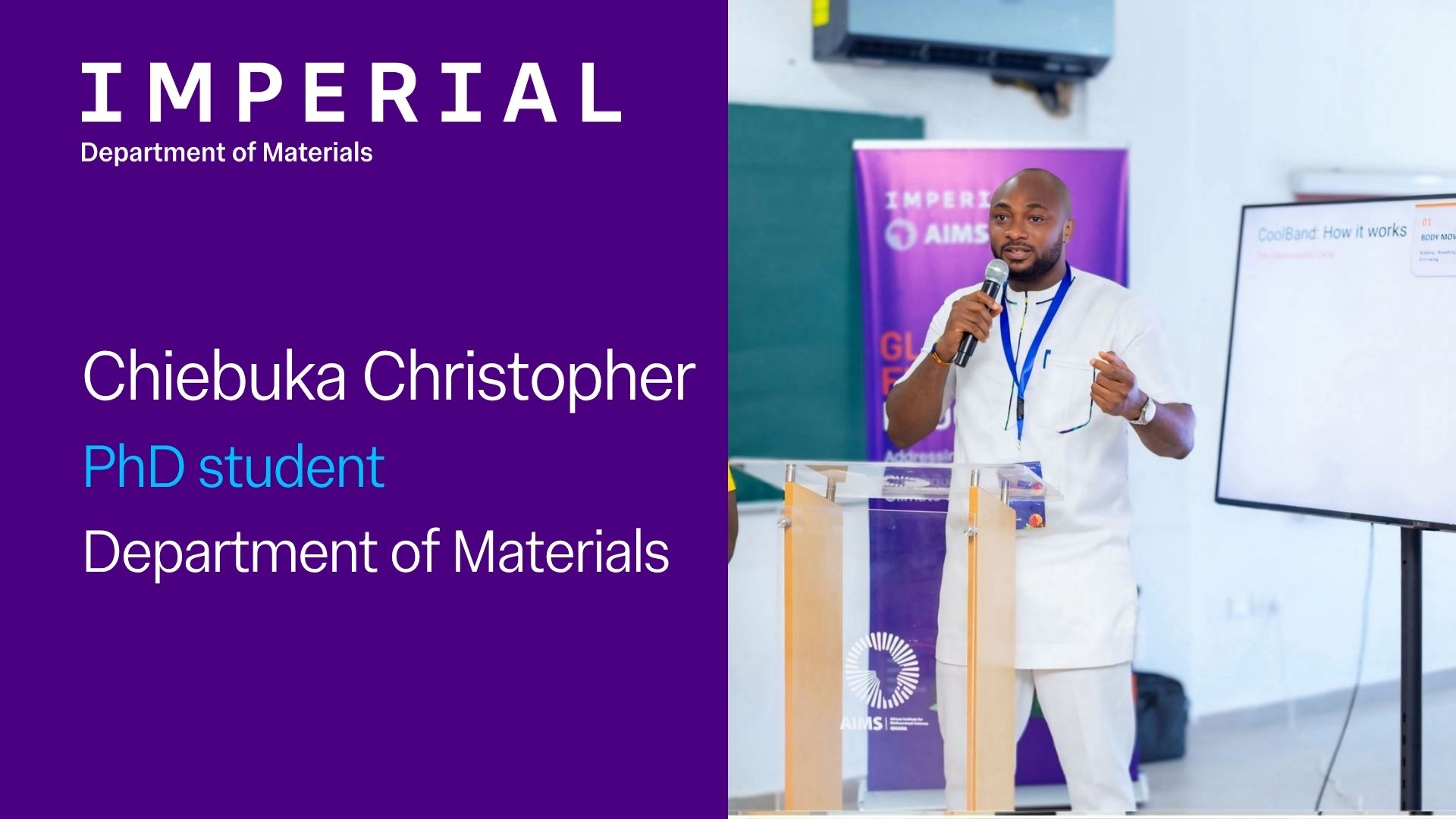
Chiebuka Christopher is a PhD student in the Department of Materials at Imperial. His research focuses on Nitinol-based mechanical metamaterials, where shape-memory alloys are used to create structures that are both strong and capable of large, reversible shape change.

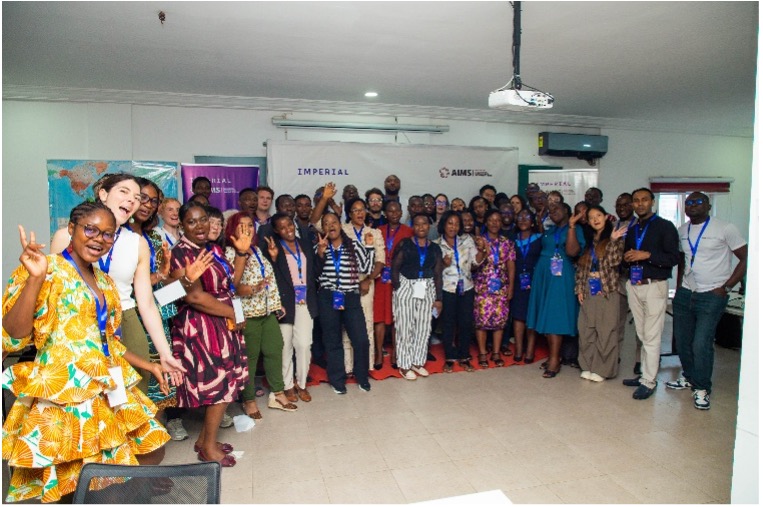
Alongside his doctoral work, Christopher recently took part in the Imperial–AIMS Global Fellows Programme, where interdisciplinary teams developed solutions to address extreme urban heat in cities such as Accra. His team went on to win the programme with a set of scalable ideas spanning early warning systems, passive cooling infrastructure, and wearable cooling technology.

We spoke to Christopher about his PhD research, his experience on the Global Fellows Programme, and how materials science can be used to tackle real-world climate challenges.


To start with, could you briefly introduce yourself and your PhD research at Imperial?

I’m a doctoral researcher in the Department of Materials at Imperial College London, working on Nitinol, a nickel-titanium shape-memory alloy, incorporated into mechanical metamaterials, both wire-based lattices, such as octet trusses, and kirigami-cut sheets. The lattices are hand-wired, and the kirigami sheets are laser-cut from commercially available, prefabricated Nitinol wire and sheet rather than 3D-printed, since 3D printing of Nitinol still struggles to preserve its shape-memory behaviour, largely due to compositional inhomogeneity, residual stress, and porosity introduced during printing. The motivation behind this is a long-standing trade-off in mechanical metamaterials: structures designed to morph, like origami or kirigami designs and bistable structures, tend to rely on soft, compliant materials that can’t bear much load, while structures designed to be stiff and load-bearing, like octet-truss lattices, typically can’t morph without permanently deforming. Nitinol lets us get around that because its reversible martensite-to-austenite phase transformation allows it to recover strains of 8 to 10 per cent and exert real force while doing so, combining high strength with large, recoverable shape change. My project specifically examines multiscale phase-transforming metallic mechanical metamaterials and how intrinsic microscale phase transformation within the Nitinol itself can trigger a macroscale phase transformation in the structure’s geometry. The broader aim is a new class of lightweight, high-strength structures that can sense their environment and adapt their own mechanical properties on demand, with potential applications in aerospace, deployable space structures, and soft robotics.

What first got you interested in this area of research, and how has your PhD work been developing so far?

I was drawn to shape memory alloys because they’re one of the few material systems where you get genuinely “smart” behaviour for free; the material remembers a shape and snaps back to it without any electronics or actuators (thanks to my supervisor for proposing this area to me). That felt like a different category of engineering problem: instead of designing a mechanism to do something, you’re designing the material itself to do it. The PhD has progressed to full characterisation of the alloy, including tensile testing, Vickers hardness, DSC, SEM/EDX, and XRD, alongside compression testing of the lattices themselves to experimentally capture the inverted scaling law. We’re now moving into finite element modelling in Abaqus, which we haven’t started yet, to confirm those experimental findings computationally.
Could you tell us about the Imperial-AIMS Global Fellows Programme and what made you decide to apply?

The Global Fellows Programme is a joint Imperial-AIMS initiative bringing together fellows from Imperial and AIMS centres across Africa for an intensive, collaborative accelerator week. This year’s topic was “Addressing heat-driven consequences of climate change in cities”. I applied because it offered something my PhD doesn’t always give me day-to-day: a chance to take the materials science understanding from the lab and ask what it could do for a real problem outside it. I also wanted the experience of working in a genuinely interdisciplinary, multinational team under accelerator-style time pressure, which is a very different muscle from academic research.
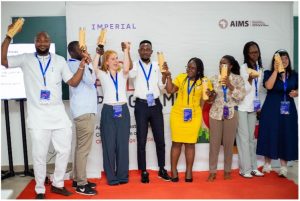
Can you walk us through your team project and the problem you were trying to solve?

Our team, PUM-CLID (Group 3), focused on extreme heat in Accra, where temperatures are projected to rise 1.5-2.5°C by 2050, and heat risk falls very unevenly across the population. Ghana already has an Early Warning for All roadmap in place, but the gap we identified is the one our deck opens with: warnings exist, but they don’t reliably translate into action, especially for people most exposed, like outdoor traders, older adults, and manual workers. So we developed three solutions. The first is an early-warning engine, built on satellite data and an LSTM model that forecasts heat stress 24-48 hours ahead, sending alerts directly to stakeholders such as Ghana’s Meteorological Agency, the Ministry of Health, and the Accra Metropolitan Assembly. The second is CoolShade, a solar-powered street shade with phase-change-material cooling for public spaces. The third is CoolBand, a wearable that uses Nitinol’s elastocaloric cooling at pulse points, the neck, wrist, and palm, to cool the body using nothing but the wearer’s own movement.

How did your team develop the idea during the programme?

It moved fast. We started from the EW4All framework’s four pillars, risk knowledge, monitoring and forecasting, dissemination, and response capability, and quickly realised most existing systems are strong on the first three and weak on the fourth, the actual response. From there, the team split into the early warning engine, CoolShade, and CoolBand. The early warning engine drew on the fact that we came from genuinely diverse backgrounds, public health, materials science, climate science, and data science, which meant we could build something that actually connected the forecasting side with the practicalities of getting a warning acted on. CoolShade was Stephen Nyaranga’s idea, drawing on his background in solar engineering and public infrastructure. CoolBand was mine, although the underlying concept was first introduced to me by my supervisor, Professor Minh-Son Pham, so credit there really belongs to him and to his postdoc, Dr Junyu Chen, who specialises in elastocaloric cooling and whose work shaped how we thought about applying it here. For me, it started as a fun scientific curiosity: that the same transformation behaviour we study for structural purposes could just as well be used to move heat. The workshop gave us the push to actually sell the idea to others.

What do you think made your idea stand out?

It’s hard to say for certain, since the other groups did so well too, so this is really just our own thought on it rather than a definitive claim. But a few things probably helped. It is novel: the solutions are globally scalable, and none of the three pieces requires grid electricity. CoolBand runs purely on the wearer’s own movement, no battery and no electricity, which matters for busy people moving through the city all day rather than sitting near a power source, and it’s estimated to be quite affordable to produce. CoolShade works on the same principle at the community scale: solar power during the day, with the phase-change material storing enough energy to keep it working through the night. And the early warning engine wasn’t just a slide concept; we had it running as a live dashboard with a QR code the judges and audience could actually scan and interact with. Among the three, we covered individuals, communities, and the forecasting layer that connects them all. I also think the team worked really well together throughout, and we answered the judges’ questions confidently, which probably mattered just as much as the idea itself.

How has this experience influenced your thinking going forward, both for your research and beyond Imperial?

It’s sharpened something I’d only half-articulated before: the same material science I study for my PhD objectives in the lab has a direct line to solving a real and totally different problem for someone moving in the heat, not just in Accra but globally. Being announced the winner on top of that was genuinely inspiring and encouraging; it made the idea feel less like a workshop exercise and more like something actually worth pursuing further. Going forward, I want to hold onto that translational thread, both in how I frame the PhD work itself, since the inverted scaling law isn’t just an academic curiosity but points toward tunable, adaptive structures with real applications, and in looking for opportunities to keep developing CoolBand-type ideas alongside the core research. In fact, we’re now thinking as a team about taking it further and exploring a start-up around it in the near future. More broadly, the week reinforced how much faster and better ideas get when you put people with genuinely different expertise and lived context in a room together under a tight deadline, which is a working style I’d like to find more excuses to repeat.
Student spotlight: Exploring climate entrepreneurship at Imperial

At Imperial’s Department of Materials, students are encouraged to apply their learning to real-world challenges, including climate change and sustainability. Through initiatives like the Climate Entrepreneurs Club (CEC), students gain hands-on experience in developing ideas and pitching solutions. First-year Materials student Aarna Chugh shares her experience of participating in the Climate Pre-Accelerator programme, organised by the Climate Entrepreneurs Club (CEC), where her team was awarded Runner’s Up in the Ideator stream.

This is Aarna Chugh (aarna.chugh25@imperial.ac.uk), a first-year UG student:

Recently, I participated in the Climate Pre-Accelerator programme, organised by Imperial’s Climate Entrepreneurs Club (CEC). This 8-week programme culminated in a final pitch day, where teams presented their ideas to a panel of judges. I am proud to share that my team was Runner’s Up in the Ideator stream for our company Ventera and its product ICE, a sustainable and cost-efficient cooling system.

Achieving a podium position has motivated us to explore this idea further and potentially develop it in the near future. The programme helped us hone our entrepreneurial skills and showed me that good ideas can start from ground zero. I would encourage anyone interested in entrepreneurship, particularly in climate, to join CEC and take part in the Pre-Accelerator.

Shoutout to my teammate Kavish Khemka from Mechanical Engineering.


The programme was organised by the Climate Entrepreneurs Club (CEC). Materials students Li Zhen Ong and Annabel Tenagne Kassa, both in Year 2, are part of the organising committee.

The Climate Pre-Accelerator is an 8-week programme supporting students in developing climate tech ideas through workshops, mentorship and a final pitch event held at the Royal Institution. The latest cohort concluded in March 2026.

Undergraduate Spotlight: Vanessa Ussalim awarded Rank Prize Undergraduate Vacation Grant

From discovering the opportunity through “many Google searches” to preparing for a summer of hands-on research, Vanessa Ussalim is set to begin an exciting new chapter in her academic journey. The undergraduate Materials student has been awarded the Rank Prize Undergraduate Vacation Grant for Optoelectronics, which will support her 8-week UROP project under the supervision of Professor Mark Oxborrow. We spoke to Vanessa about applying for the grant, the challenges of writing her personal statement, and why she “can’t wait” to get started on the project this summer.

Question 1. What is the studentship you’ve been awarded, and what does the project broadly involve?

I was awarded the Rank Prize’s Undergrad Vacation Grant for Optoelectronics, which will provide funding support for my UROP under Professor Mark Oxborrow for 8 weeks. My UROP will focus on optimising the optical pumping system for the development of an extremely high co-operativity room-temperature maser. Specifically, I will be modelling and determining the best possible refractive index and geometry of the invasive optical injector.
When in the process of filling out the Imperial UROP Bursary application, my UROP supervisor urged me to look at external funding options and to not solely rely on the college’s bursary outcome given its competitive nature. Many Google searches later, I was incredibly lucky to stumble upon the Rank Prize grant webpage. After finding out that the deadline was still a few weeks away and that I was eligible (as I’m in my penultimate year and my UROP was optoelectronics-related so it falls within the grant’s scope), I told my supervisor about it and he was very willing to support my application.
The application comprises 2 sections: one to be completed by the supervisor and one by the student. For my section, I had to submit my CV and a personal statement on how the studentship would help me achieve my career ambitions. I would say the personal statement was the most challenging as the word limit means that I have to be very selective and effective with what I write. Overall, the process was very straightforward as there were no interviews nor additional stages after submitting the application form.
I was incredibly happy and also very relieved as it meant that I could still partake in the UROP, since I found out about it a few days after my unsuccessful outcome from the college’s bursary scheme.
I hope to gain a more realistic perspective on what research work is like through immersion (e.g. delivering presentations, contributing to writing a research paper), which could guide me on my career decision as I will be graduating soon. I also hope to understand how to turn theory into practice and learn new design skills in microwave electronics and optical waveguides that are beyond the scope of my Materials degree. I feel excited and can’t wait to spend my summer working on this project!
I highly encourage students who are planning to undertake a UROP to consider applying to Rank Prize’s Undergrad Vacation grant.

Dr Yongqiang Wen leads Team Great Britain to Gold at the International AI Winter Olympiad 2026

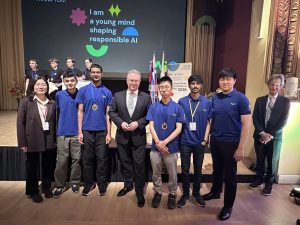
Dr Yongqiang Wen, a researcher in Imperial College London’s Department of Materials, led Team Great Britain at the International AI Winter Olympiad (IAIO) 2026 in Ljubljana, Slovenia. Under his guidance, team members Anango Prabhat and Xingzhi Lu earned gold medals for their overall performance in both scientific and practical rounds, with Anango finishing 1st and Xingzhi 7th overall. This placed Team Great Britain among the top-performing nations at the competition, alongside Team China.

The following Q&A explores Dr Wen’s experience as team leader and mentor, the journey of Team Great Britain, and insights into the International AI Winter Olympiad itself.

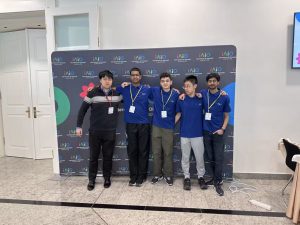
Team Great Britain at the International AI Winter Olympiad (IAIO) 2026 in Ljubljana, Slovenia

Question 1: Can you give us an overview of the International AI Winter Olympiad 2026?

International AI Winter Olympiad (IAIO) 2026 is organized by IRCAI in collaboration with ACM Slovenia, IAIO 2026 challenges participants in both theoretical and practical AI knowledge while developing solutions for environmental and social challenges for young people under 20. It is a global platform for educating, developing, and supporting the next generation of responsible AI creators. The IAIO is an international AI competition for team contestants from various invited countries.

Team Great Britain was selected through the UK’s official IAIO process, organised by Cambridge Dream, which is the only UK’s qualified national delegation for the Olympiad.

Question 2: What was the team like to work with during the Olympiad?

The students chosen for Team Great Britain distinguished themselves through their consistently high performance across those stages. Our team members are hardworking and smart. Beyond that, they were thoughtful, supportive of one another, and showed real maturity under the pressure of an international competition.

Question 3: What was your role as team leader and mentor?

The Team Leader is chosen on the basis of a strong background in AI, mathematics and computing. The deputy team leader was from the UK’s organiser and was primarily responsible for the team’s hospitality and welfare.

As team leader, my role was broader. I took part in the General Assembly with team leaders from other national delegations and the IAIO committee, where we discussed all aspects of the competition. I also supported our team members throughout the process by helping with preparation, providing technical and academic guidance, offering emotional support before and after the competition, and defending the team’s scores where necessary.

Team Great Britain at the International AI Winter Olympiad (IAIO) 2026 in Ljubljana, Slovenia

Question 4: Were there any key moments during the competition that stood out for you?

Question 5: How has Imperial College London influenced your journey leading up to this event?

As a researcher at Imperial, I have been able to develop my career and experience in these fields and extend that work into outreach through international competitions and national delegations. The Olympiad also gave me an opportunity to connect my research and Imperial more broadly with other national teams and team leaders.

Question 6: What was the biggest challenge you faced as team leader?

Question 7: How did it feel when your team won the medals?

I felt very proud as team leader, and very proud of our team members for all the hard work, talent and resilience they showed throughout the competition.

Question 8: What advice would you give to future teams preparing for the IAIO?

PostDoc Spotlight: Tamas Zagyva, NSAN Postgraduate of the Year Finalist

Understanding how materials used in nuclear environments react to extreme conditions is key to their safe use.

Meet Tamas Zagyva, Research Associate at the Department of Materials, Imperial College London. His research looks at how neutron shielding materials behave under radiation and heat, and he was recently named a finalist for the National Skills Academy for NuclearPostgraduate of the Year Award.

We asked Tamas a few questions about his journey – read on to find out more.

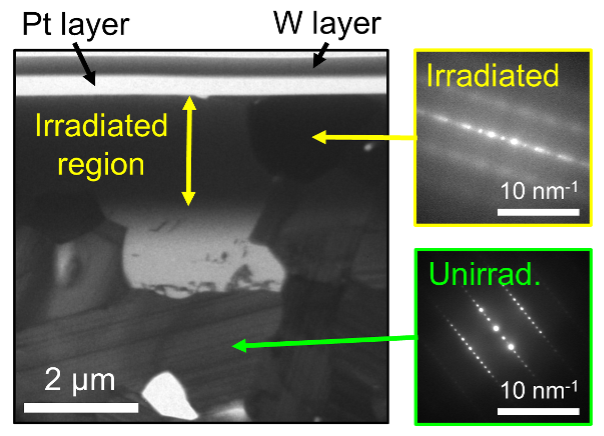
Cross-section of an ion-irradiated tungsten boride shielding material (bright-field transmission electron microscope image, left). The ion-damaged region is limited to the top ~2 µm of the surface. The corresponding diffraction patterns (right) indicate significant radiation-induced microstrain and displacement damage in the crystal structure.

  • Can you tell us a bit about your background and what led you to pursue your postgraduate studies in Materials/Nuclear?

I did my undergraduate studies in Earth Science with a geology specialisation. I realised quite early on that mineralogy and crystallography were the fields I was most interested in, but I also found that I could learn much more about material structures and properties by continuing with a master’s degree in materials science. After that, I continued with a PhD focusing on radiation effects in nuclear waste materials, which felt like an obvious choice given the strong links to both geology and materials science. My PhD and postdoctoral research are quite similar, as both focus on understanding how materials behave under radiation.

  • How would you describe your research in a few sentences for someone outside your field?

At Imperial, I study how the structure of neutron shielding materials changes under extreme conditions. These materials are used to protect radiation-sensitive components in nuclear reactors from neutron damage, but they also need to remain stable at high temperatures and under intense radiation. In our group, we simulate these conditions by bombarding materials with ions at different temperatures. The information we get from these experiments helps us choose the most promising shielding materials and improve them further.

Cross-section of an ion-irradiated tungsten boride shielding material (bright-field transmission electron microscope image, left). The ion-damaged region is limited to the top ~2 µm of the surface. The corresponding diffraction patterns (right) indicate significant radiation-induced microstrain and displacement damage in the crystal structure.
  • What’s the most exciting part of your work?

The most exciting part for me is analysing materials after irradiation experiments. Every material behaves differently, and often in unexpected ways. It’s fascinating that, using advanced techniques, we can observe how materials change at the atomic scale after radiation exposure.

  • Have there been any unexpected findings or challenges along the way?

The biggest challenge is that ion irradiation only damages a very thin surface layer of the material. This damaged region is usually only about 1–2 micrometres thick, which is roughly 50 times thinner than a human hair. To analyse this layer, we need to handle the samples very carefully and use advanced sample-preparation and characterisation techniques, such as grazing-incidence X-ray diffraction and transmission electron microscopy.

  • Do you have any advice for other postgraduates aiming to make an impact in their field?

My main advice would be to work on something you’re genuinely passionate about. It makes a huge difference. I’d also encourage people to step outside their comfort zone. For me, that included approaching senior researchers at conferences, taking part in competitions, and getting involved in outreach activities. These experiences were challenging at times, but they were very rewarding and helped me move forward in my career.

  • Who has been the biggest influence or mentor in your journey so far?

I’ve been lucky to be surrounded by many great mentors, so it’s hard to name just one. During my undergraduate studies in Hungary, I conducted research under the supervision of Gabriella B. Kiss, which I enjoyed so much that it significantly influenced my decision to pursue an academic career. I later wrote my undergraduate thesis under István Dódony’s supervision, who encouraged me to choose a topic I was genuinely interested in and further strengthened my passion for crystallography. During my master’s research, supervised by Katalin Balázsi and Csaba Balázsi on bioceramic materials, I enjoyed both the work and the research environment so much that I decided to continue in materials science.

  • How did you feel when you found out you were selected as a finalist? What does this recognition mean to you personally and professionally? 

Being a finalist feels great because it shows that the work I’ve done at Imperial over the past few years has made an impact and is being recognised by the industry. More importantly, it reflects how well our team works together under Sam Humphry-Baker’s supervision. Designing and coordinating ion irradiation experiments is complex, but doing this at a high level was only possible because of the support I received from Sam and the excellent work of the students involved in these campaigns.

Racing into Engineering: Ellie’s Summer at Alpine F1

This week on our Imperial Materials blog, we’re featuring Ellie Abel, our MEng student who spent her summer as a Stress/Structures Intern with Alpine Formula One Racing. She shares her experiences working on high-performance car components, performing simulations, testing, and even developing tools to streamline engineering processes.

Over the summer, I had the opportunity to join Alpine Formula One Racing as a Stress/Structures Intern. It was an incredible experience through which I had some exciting opportunities: contributing to both the 2025 and 2026 cars, working alongside incredibly kind and talented engineers, meeting the drivers, and exploring the beautiful scenery the Cotswolds had to offer. Although the environment was fast-paced, demanding and the results weren’t always perfect, the team’s work ethic and motivation stood out to me. It really reaffirmed why I’m pursuing my material science and engineering degree.
In my role, I predominantly carried out finite element analysis on a variety of components, ranging from brackets & tailpipes to hydraulic pumps. I performed linear static, buckling, and frequency analysis and produced documentation for FIA approval, design iterations, and stress validation. I had the chance to oversee component testing, including the nose impact test and various rear wing and wheel hub fatigue tests (all mandatory tests the FIA request). Seeing first-hand how subjects I learned in my first two years, such as fatigue, fracture mechanics, structures and composites manifest in real-world high-performance components was incredibly exciting. Overall, it was a fantastic opportunity to develop my knowledge of vehicle dynamics, simulation and structures.
Another key responsibility I took on was overload identification. Using specialised software, I analysed both cable and telemetry data to detect peak overloads and reported them to technical directors. By the end of my internship, I managed to build upon a previous intern’s work to develop a demo app that enabled multi-parameter selection and automated reporting for specific overloads or full-season summaries.
I also worked on fastener stress sign-offs, where I interpreted load-displacement data to extract UTS values and assess whether components met required thresholds. To streamline this process, I created a Python application that automated data handling and even drafted scenario-dependent email templates.
Overall, this was an incredible experience that allowed me to work with brilliant people and grow into a more well-rounded engineer. Specifically it gave me the chance to further develop my coding, simulation and structural/material engineering skills. It reinforced my passion for Formula One and structural analysis.
To close they’re a hard-working team, so 2026 better watch out!

MatSoc autumn highlights: bake sale, clothes swap, and what’s coming next

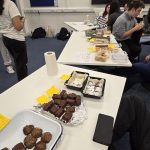
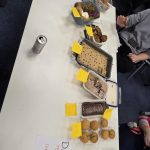
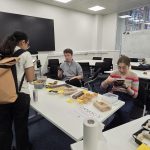
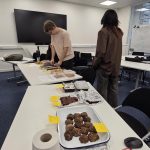
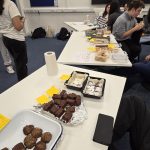
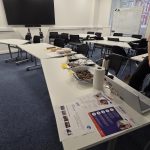
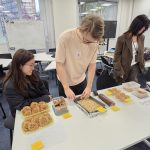
It’s been a lively start to the term in the Department of Materials, and one of the highlights has definitely been the student-led events organised by MatSoc (Materials Society). On Friday 14th November, the Departmental Wellbeing Representative Catherine Saat organised a Bake Sale for the department.

A big thank you to everyone across the department who joined in, contributing an amazing variety of baked goods; from all kinds of brownies to creative cookies and even an incredible cake. It was wonderful to see students stopping by to chat, share, and enjoy the treats, turning the Bake Sale into as much a celebration of community as of delicious food.

Thanks to the generosity of students and staff, the Bake Sale raised £348, which has been donated to student-chosen charities: CentrepointOne UmmahTeenage Cancer Trust, and Baluchi. It was a lovely example of how the Materials community can come together for a good cause while having fun at the same time.

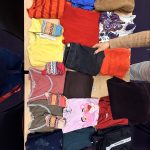
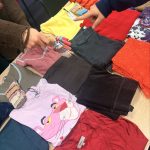
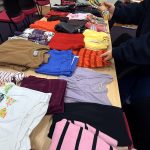
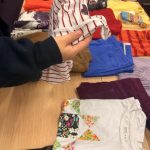
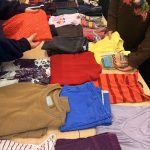
Following this, on 17 November, MatSoc hosted a Clothes Swap, providing a relaxed and sustainable way for students to refresh their wardrobes. This event was well-received, giving students a chance to connect across year groups in a friendly, casual setting.

These activities reflect the spirit of MatSoc as a student-led society and the close-knit community within the Department.

Looking Ahead

There’s still plenty more to come this term. MatSoc has a few festive and social events lined up that we’re excited about:

  • End-of-Term Ceilidh (11 December)
  • MatSoc Dinner (19 January)

Please get in touchwit MatSoc if you have any questions: mtsoc@ic.ac.uk

Inside the lab: Internship reflections on experimental casting by Céline Bourquin

Céline Bourquin, UG student, Department of Materials

Céline Bourquin, an undergraduate student in the Department of Materials, shares her experience interning at Safran Tech, the research and technology branch of Safran, where she worked in the experimental casting lab for advanced turbine blades.

Safran is a French aerospace company that designs and produces engines for aircraft, helicopters and rockets, and aeronautical and military equipment. My one-month internship took place in the laboratory for experimental casting of advanced turbine blades, on the Safran Aircraft Engines site.

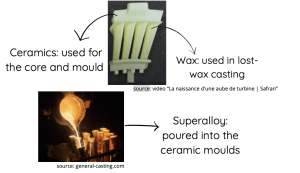
The lab team works on characterising materials such as metals, wax, ceramics or superalloys and analyse their interactions, with the objective to improve their properties under extreme conditions such as high temperatures and high stress. While some of their projects focus on finding the microstructures necessary for ideal mechanical properties, others concentrate on elaborating programmes such as heat treatment methods.

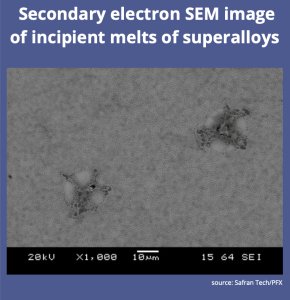
Secondary electron StEM image of incipient melts of superalloys
Secondary electron Scanning Electron Microscope image of incipient melts of superalloys

During this internship, I contributed to the sample preparations for the analysis of heat-treated superalloys. Heat treatment is a process that involves heating and cooling materials to achieve desired properties. The process begins by heating the material to a specific temperature, which allows for changes in its microstructure. After reaching the desired temperature, the material is cooled at a controlled rate. In my work, I observed the samples under the microscope to check at which temperatures incipient melts start to appear after cutting, mounting and polishing. The incipient melts indicate chemical segregation, or non-homogeneous composition, which would lead to a decrease in desired mechanical properties and ultimately to reduced engine efficiency. These analyses are necessary to identify which heat-treatment programmes are more adapted to the alloy, and what changes are needed to improve the programmes.

This was my first industrial work experience. I was positively surprised and relieved to discover that what we had learnt in the first year courses was used and referred to regularly in this laboratory. I felt reassured that I wasn’t completely out of place, and that I could perhaps contribute at least a little to their projects. The internship also gave me the opportunity to learn more about large corporations, their processes and culture. In particular, due to the nature of the work carried out in the lab, there was great emphasis placed on safety and security. I was very grateful to the team who made me feel welcome and useful. Everyone was very positive which made going to work enjoyable and I learnt that team dynamics really influence workplace ambiance. Nonetheless, I must admit I was exhausted at the end of each day, but it was a kind of tiredness that comes from doing something new and rewarding. Looking back, I finished each day feeling a little more confident and excited about the path I’d chosen.


PhD Spotlight: Vincent Chung on unlocking new possibilities in data-driven materials discovery

Vincent Chung, Department of Materials
Vincent Chung, PhD student, Department of Materials

In our PhD Spotlight series, we speak with research students in the Department of Materials to learn more about their work, inspirations, and experiences during their PhD journey.

This time, we caught up with Vincent Chung, who is exploring how data-driven approaches can help identify synthesizable materials and improve the efficiency of experimental validation. Vincent recently celebrated a major milestone by passing his Phd viva. In this spotlight, he shares what inspired him to pursue this path, talks about his research, and reflects on the challenges and insights gained along the way.

1. What inspired you to study for a PhD?

I have been interested in materials discovery since secondary school, where I was fascinated by books that describe a better future with technologies based on new materials (e.g. Michio Kaku’s “Physics of the Future”). The major reason that I decide to study for a PhD is my Master Project, which was to discover a new material for photocatalytic applications using machine learning. In the end of the project, the identified hypothetical material could not be synthesised, which got me interested in finding ways to identify materials that can be synthesised.

2. How would you explain your research to someone outside the field?

With the data I curated manually, I train machine learning models to predict whether hypothetical inorganic materials can be synthesised using solid-state reactions, which is one of the simplest and oldest synthesis method (sometimes referred to as the shake-and-bake, where you mix the starting chemicals the heat them, kind of like baking a cake!). Afterwards, I train different models to predict the synthesis conditions for the solid-state reactions and compare the use of different training and testing data. The comparison highlights the impact of the training data on the models’ performances.

3. Why did you study this area and why is it important?

There are more and more people who are interested in using data-driven approaches (e.g. large language model is the most recent trend) every year, but not enough attention in whether the data used for training these models is sufficient in terms of quality and variety. This could lead to misinterpretation or misuse of models when they are deployed in real world environment like laboratories.

4. What difference do you hope your research will make?

I hope my research will convince researchers the importance of having better quality and variety of data as opposed to simply implementing the latest and more sophisticated models. New machine learning models are constantly being developed and would sometimes overshadow previous ones, but high-quality data will always be useful.

5. What do you enjoy most about what you do?

I enjoy finding insights and reaching conclusions from analysing data and training models. It is exciting when you learn something new from data that is overlooked by others. It is also fun to look for new ways that the data you curated can be used.

6. What’s something your colleagues would be surprised to learn about you?

I used to play Muay Thai as a hobby and enjoy reading Chinese novels, especially the Xianxia and Wuxia genres.

7. What’s been the biggest challenge so far in your PhD journey?

The biggest challenges I faced during my PhD were problems not related to my research (which would have surprised myself from the past), but several health and family problems. I had to make compromises and changes to my research plan and life during the journey.

8. What advice would you give someone thinking about starting a PhD?

The advice that I would give to someone planning to start a PhD is to really understand the expectation and commitment of a PhD candidate. The best way to do so is to communicate or work with current PhD candidates or postdoctoral fellow (e.g. through the undergraduate research opportunity programme at Imperial, which was what I did), preferably ones whose research aligns with your interest.


Vincent’s work highlights the growing role of data-driven methods in materials discovery, and we’re excited to follow the progress of his research in the years ahead.