Loneliness is usually experienced as something intensely personal. Public health, however, has to ask a broader question: What if loneliness is shaped not only by individuals, but also by the places, relationships and systems surrounding them?
The first published paper in a series to report the findings of the Measuring Loneliness in England (INTERACT) Study, led by Imperial College London’s Self-Care Academic Research Unit (SCARU), provides an important starting point. More than 135,000 adults aged 16 and over participated. Among them, 16.5% reported feeling lonely “often or always”, while around one in five frequently reported lacking companionship, feeling left out or feeling isolated from others.
These findings are striking, but they require careful interpretation. INTERACT recruited a volunteer, non-probability sample, so the results describe the people who participated rather than providing a precise estimate of loneliness prevalence across England.
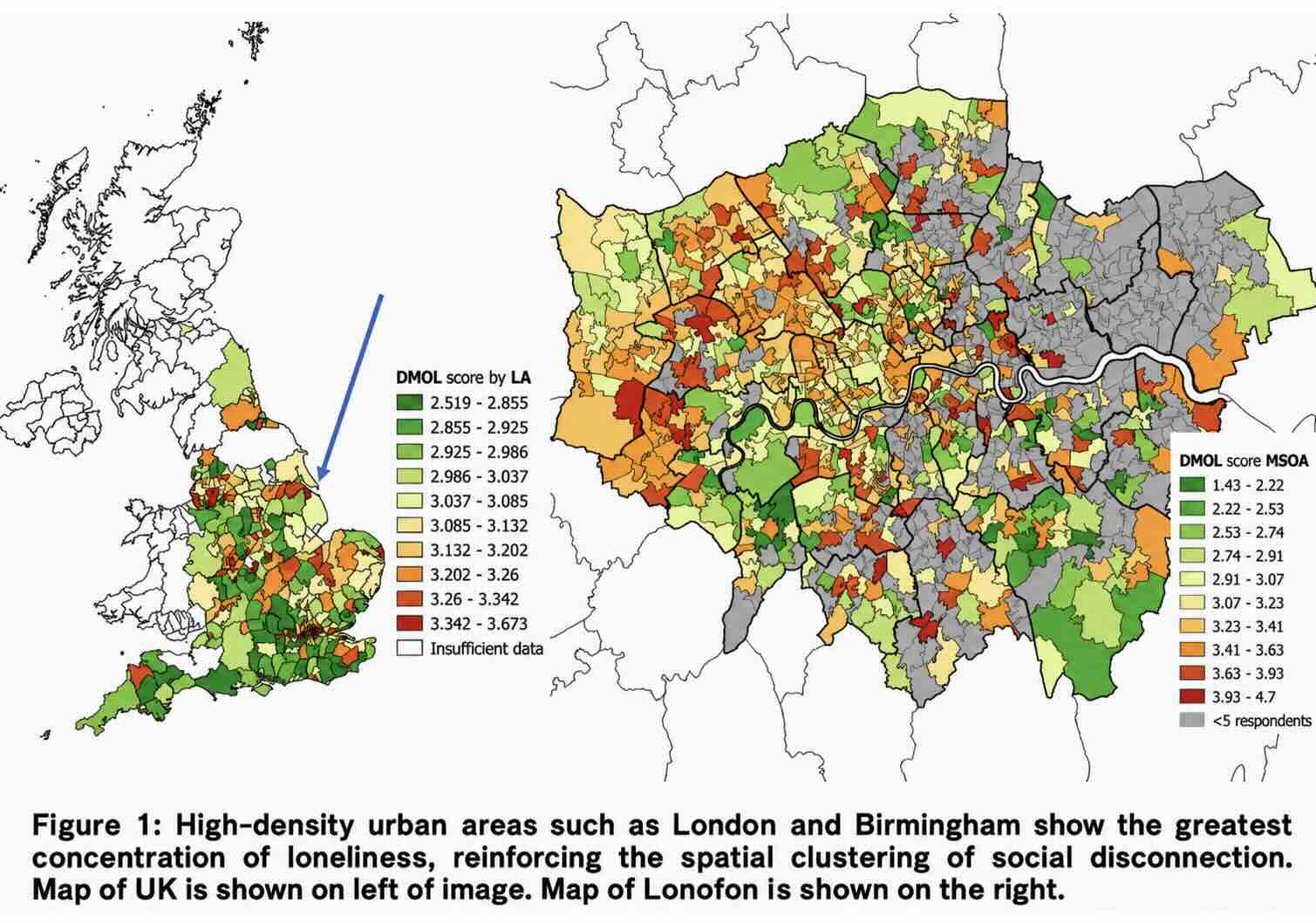
Its particular value lies elsewhere: in combining scale with geographical and social detail. INTERACT examines loneliness alongside social connection, neighbourhood trust, cohesion, health and socioeconomic circumstances. By linking responses anonymously to geographical areas, we can begin to move beyond asking simply: “How many people are lonely?” towards: “Where does loneliness appear to concentrate, among whom, and within what social and neighbourhood contexts?” For prevention, that distinction matters.
A map is not an intervention
Mapping loneliness can help identify patterns and generate hypotheses. But describing a problem is not the same as changing it. The real challenge is how evidence can inform decisions about where attention is needed, which community assets already exist, where gaps remain and which approaches should be tested. That is why SCARU has been working closely with the public-health teams serving Westminster and Kensington and Chelsea, alongside voluntary and community organisations, health partners and local networks. The aim is not simply to collect data about communities, but to develop research with the organisations and people who understand them.
Westminster’s Building a more connected Westminster Loneliness Action Plan creates an important opportunity to take this further. Rather than treating loneliness as the responsibility of a single service, the Action Plan seeks to bring together public services, communities and local organisations in a more coordinated response.
From INTERACT to LAP-IMPACT
This creates the next scientific question: Can a coordinated, place-based approach actually reduce loneliness and strengthen social connection? That is the thinking behind LAP-IMPACT, the research programme we are developing with our local partners. Subject to competitive funding, governance and the necessary approvals, the aim would be to move from mapping loneliness towards rigorously evaluating the response. The questions are practical and important. Who does a Loneliness Action Plan reach? Which components appear most promising? Are benefits distributed equitably? How does implementation vary between neighbourhoods and organisations? What role do community assets play? And what can other local authorities learn from the experience? These questions matter because an Action Plan should not be judged simply by whether activities happened. The more important question is whether the local system changed in ways that were meaningful for residents.
Prevention is not telling people to be less lonely
There is also a danger in framing loneliness only as an individual problem. Advice such as joining a group, volunteering or taking part in community activities may help some people. But it can obscure a more fundamental issue: Were meaningful opportunities for connection accessible in the first place?
A person cannot participate in an activity they cannot reach. Signposting has limited value if services have no capacity. Community assets cannot fulfil their potential if they remain disconnected from wider local systems. This is why loneliness prevention must include the infrastructure of connection: the services, organisations, neighbourhood assets and relationships that make social participation possible. For SCARU, this also reflects a broader principle of self-care research. People exercise agency within environments that can either expand or constrain their options. Social wellbeing is no different.
From knowing where loneliness is to knowing what works
INTERACT has given us an unusually large window into loneliness and social connection in England. The next question is what we do with that knowledge.
Can local intelligence help communities organise prevention differently? Can services become better connected? Can existing community assets be strengthened? Can people be reached before loneliness becomes entrenched? And can we demonstrate which approaches work, for whom and under what conditions?
That is where loneliness research now needs to go. The INTERACT Study helps us understand the landscape. LAP-IMPACT is about understanding how that landscape might be changed. That is the Prevention Lab model in practice: moving from evidence, to action, to evaluation.