Blog posts

Self-Care Week 2026: What Happens When the Posters Come Down?

This year, National Self-Care Week runs from 16-22 November, with the theme “Mind & Body”. It is an opportunity to celebrate the everyday work of looking after ourselves and one another, and the people who help make that possible.

Here is my provocation: every organisation promoting self-care this week should name one barrier it is prepared to remove.

Because “take better care of yourself” is an easy message to deliver. The harder question is whether we have made that advice possible to follow. Consider what we are asking. Eat well – but on what budget? (see our preprints from the Seven Pillars of Self-Care Study with the International Self-Care Foundation exploring this topic: Paper 1 – Healthy eating as self-care & Paper 2 – Food Insecurity & Mental Wellbeing).

Or our advice to “be active”- but where, and around whose working hours? Prioritise sleep – but how, while juggling shifts and caring responsibilities? Use digital tools – but with whose equipment, connectivity and confidence?

Before offering another checklist, we should ask what stands between a person and the action we recommend.

Self-care deserves an ambitious place in prevention. People should have the knowledge, confidence and practical support to influence their own health. We should celebrate that agency: the person learning to manage a condition, the neighbour checking in, the pharmacist explaining a medicine, the community group creating space for connection.

We should also take the supporting conditions seriously. WHO’s framework places self-care within an environment of accessible services, appropriate information, social inclusion and an accountable health system. Professional support remains integral.

That should challenge how we judge success. A campaign can count how many leaflets it distributes. I would rather know how many people now understand what to do, can afford to do it, and know where to turn when they need help. A service can celebrate fewer appointments. I would ask whether people became healthier, felt more confident, or simply struggled elsewhere.

For Imperial SCARU & the Prevention Lab, the test of a self-care strategy is whether it expands people’s real choices….

This week, let us celebrate the organisations doing that work and invite every employer, council, health service and research institution to make one practical commitment. Make information easier to understand… Create time for health during the working day… Support affordable access to useful tools…. Strengthen the route from managing at home to getting professional help… Then measure whether that commitment made a difference, and for whom.

National Self-Care Week deserves enthusiasm. It also deserves an uncomfortable question: When the posters come down on 22 November, what will be easier for people on the 23rd?

Why measuring self-care is our single biggest research & development priority

At the inaugural London Self-Care Summit in 2023, we discussed that measurement should be the single biggest research and development priority for self-care. Measurement is the heart of science, but the principal reason why it is the single biggest R&D priority is its reach: better measurement could improve how we develop interventions, target support, assess outcomes and decide what deserves investment. A credible self-care agenda needs to show who benefits, under what conditions, at what cost, and who is being left behind.

That ambition follows from the breadth of WHO’s understanding of self-care, which encompasses the ability of individuals, families and communities to maintain health and manage illness, with or without professional support. Measuring such a broad field requires attention to everyday practices, personal capability and the environments in which people live.

Why measurement deserves first priority

Consider a self-care programme that reports more app downloads, product purchases or completed assessments. Those figures describe activity. To judge its value, we also need to know whether people can make better decisions, manage their health more safely and obtain appropriate help. A rise in confidence deserves a different interpretation from an improvement in capability; both deserve a different interpretation from a sustained health benefit.

This is why prioritizing measurement across the R&D portfolio is a critical next step. An educational programme, a community pharmacy service and a home-monitoring device each need measures suited to their purpose. A shared core of well-defined measures would help connect their findings, while allowing intervention-specific outcomes to remain visible. The aim should be cumulative learning across studies and settings.

Measurement also matters for accountability. Fewer consultations could reflect successful supported self-care, but could also reflect unmet need. An evaluation should therefore examine health outcomes, appropriate escalation and people’s experience before treating reduced service use as success.

Measure capability alongside the conditions for action

We should distinguish what people know, what they feel able to do, what they actually do and what their circumstances allow. Consider someone who understands healthy eating but cannot afford suitable food, or someone who owns a blood pressure monitor but cannot obtain advice about a concerning reading. A questionnaire focused only on individual behaviour could miss the support each person needs…

A useful measurement framework should therefore connect individual capability with access to trustworthy information, affordable products, supportive relationships and responsive services. WHO explicitly places self-care within an enabling environment, including support beyond the health sector. Our indicators should reflect that relationship and help identify where responsibility for improvement lies.

Where CAPITAN could contribute

The Self-Care Capability Assessment toolkit (CAPITAN) offers a relevant development pathway. This central Imperial SCARU workstream identifies it as a tool undergoing validation that brings together instruments and proxy measures of self-care. Its promise should be judged through that development and validation process.

The idea is to assess capability across the breadth of self-care. The International Self-Care Foundation’s Seven Pillars and the Self-Care Matrix provide a useful starting framework, spanning health literacy, mental wellbeing, physical activity, healthy eating, risk avoidance, hygiene and responsible use of products and services. CAPITAN could help develop a practical profile of where support is needed, with related dimensions such as digital literacy and social connectedness considered during development. A population questionnaire would also need to sit alongside separate measures of service quality and system readiness.

A global monitoring and evaluation dashboard

The next ambition should be a global self-care monitoring and evaluation dashboard, developed and maintained as a global public good. I envisage a shared resource through which countries, researchers and communities could examine progress, identify gaps and learn from implementation in different settings.

There are already foundations to build on. WHO’s implementation guidance covers monitoring and evaluation. The Self-Care Trailblazer Group has developed priority indicators for selected sexual and reproductive health interventions, while the Global Self-Care Federation’s Self-Care Readiness Index examines national conditions for self-care. These resources address different questions. The opportunity is to connect their contributions within a broader, coherent approach. A useful dashboard should bring five areas into view:

  • Capability and opportunity: what people can do, the support available to them, and the barriers they face.
  • Access and practice: who uses appropriate self-care interventions, who cannot access them, and how use changes over time.
  • Quality and safety: reliable information and products, adverse experiences, timely referral and continuity of care.
  • Outcomes and value: health, wellbeing, autonomy, household expenditure, unpaid care burden and health-system costs.
  • System support: policies, financing, workforce capability and implementation of supportive services.

Equity should run through every area, and where data permit, results should show differences by income, age, sex, disability, geography and other locally relevant characteristics. Each indicator should have a clear definition, denominator, source and reporting period. Missing data and uncertainty should remain visible, whereas monitoring trends can identify a problem; attributing change to an intervention requires an appropriate evaluation design.

Coordinated action needs clear responsibilities

To progress the self-care monitoring and evaluation workstream, I would like to see a coordinated programme involving academia, WHO, the International Self-Care Foundation, national governments, civil society and other relevant partners. WHO could help convene agreement on definitions, indicator standards and alignment with national health information systems. Academic teams could lead methodological development, validation, independent evaluation and open reporting.

ISF could contribute its Seven Pillars framework and international advocacy networks. The Self-Care Trailblazer Group, the Self-Care Forum and other professional bodies could bring implementation experience and existing resources. Governments and national statistical agencies would be essential to integrating feasible measures into routine systems. People practising self-care and community organisations should have decision-making roles in choosing outcomes and interpreting results.

A practical first phase should agree a core measurement framework, map existing instruments and indicators, identify the gaps and test a modest dashboard across diverse settings. CAPITAN could contribute to the capability component as evidence on its measurement properties develops, whereas participating countries should help determine what is useful and feasible before wider expansion.

That is the case for making measurement our leading R&D priority… It gives the self-care community a means to test its claims, direct support towards unmet need and judge whether investment improves people’s lives. We should now develop and coordinate that work with the seriousness we expect of the interventions it is intended to evaluate.


Beyond the brand: what better OTC access should mean

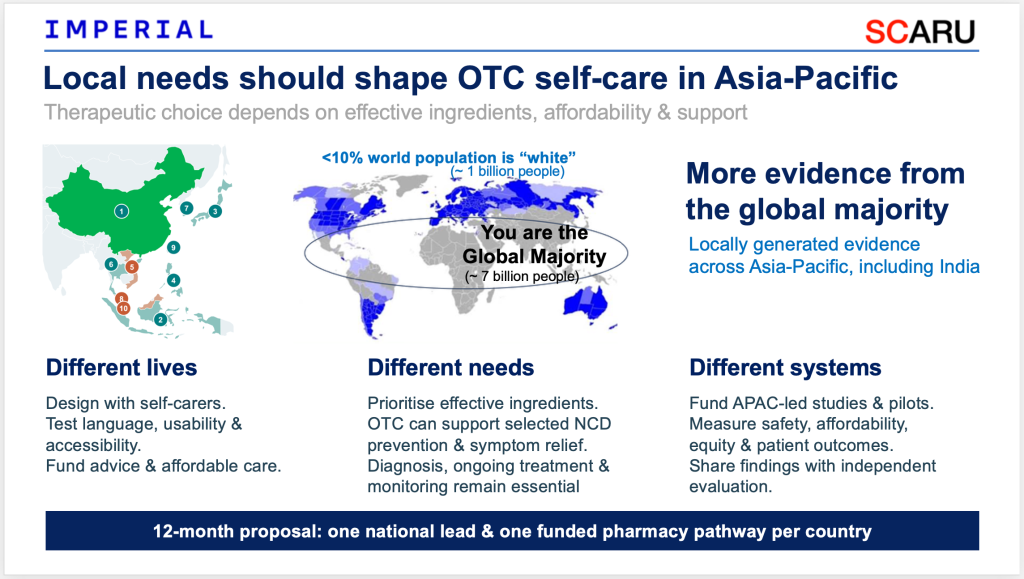
Reflecting on the Asia Pacific Self-Medication Industry (APSMI) meeting this week, I keep returning to a distinction that deserves more attention: the diversity of over-the-counter (OTC) brands should not be confused with the diversity of therapeutic options.

The conference theme, “Self-Care in Healthcare: Scaling Partnerships for Better Health Outcomes”, provided a useful starting point. In my presentation, I argued that appropriate OTC use should become an affordable, supported and accountable part of primary care. That requires us to look closely at what people can actually access and achieve.

The difference between ingredients and products is substantial. In testimony to the US Congress in April 2025, an industry representative described less than 350 active pharmaceutical ingredients used in over 100,000 products within the OTC monograph system. These figures concern one US regulatory pathway, but they illustrate why product counts and therapeutic diversity are different questions.

Different formulations, strengths and combinations can offer meaningful benefits. However, a brand name alone tells us little about a product’s suitability. The FDA cautions that similarly named products can contain different active ingredients. Understanding the ingredient, dose and intended use matters.

For policymakers, the question should therefore be: which effective ingredients can people access, in appropriate formulations, at what cost, and with what support?

Putting the self-carer at the centre

At the centre of this question is the self-carer: the person making health decisions in everyday life, often alongside family members or carers. Their circumstances, preferences and confidence should shape how services are designed. The Self-Care Matrix connects the self-carer to policy by linking everyday activities and behaviours with the resources, services and wider conditions that enable or constrain people’s ability to care for their health. It also recognises people as active participants in their health, supported by an enabling environment and connections to professional care.

This means involving self-carers in designing information, care pathways and the outcomes we measure. Can someone understand the options, afford the treatment, use it appropriately and recognise when to seek help? Greater responsibility must come with practical support. Affordability should include the whole journey, including advice, travel and follow-up.

OTC medicines are not designed to provide comprehensive NCD management, although few can support selected aspects of prevention and symptom relief alongside appropriate diagnosis, treatment and ongoing monitoring. Nicotine replacement therapy can support smoking cessation, addressing an important preventable risk factor… For knee osteoarthritis, NICE recommends topical non-steroidal anti-inflammatory drugs (NSAIDs) alongside measures such as therapeutic exercise…. These limited examples show how medicines can support prevention and symptom management within a broader approach to care, but local authorisations and conditions of supply must guide their use in each country.

Turning shared ambition into practical action

These considerations underpin my recommendations for policymakers:

  • Give OTC self-care a national lead and a defined place in health plans.
  • Make access and reclassification decisions transparent and proportionate to risk.
  • Fund pharmacist advice alongside affordable access to appropriate medicines.
  • Involve self-carers in designing services and testing labels and information.
  • Set standards for trustworthy digital access, including privacy and routes to human help.
  • Generate local evidence on safety, appropriate use, equity and patient outcomes.

The Bangkok Joint Initiative already identifies health literacy, digital technology, partnerships, equity and governance as priorities for collective action. My recommendation is to give those priorities practical expression through funded care pathways.

I proposed a concrete commitment for the next 12 months: each participating country could nominate a national lead, fund one pharmacist-supported OTC care pathway and agree a small common set of measures. Regional partners could share the findings, with independent evaluation and transparent governance from the outset.

Those evaluations should show who benefited, who remained excluded and whether self-carers felt better supported. Locally grounded studies across Asia-Pacific/APAC would help countries decide which approaches could work in their own settings.

Strengthening the evidence base from the global majority

Meaningful OTC progress should be judged by people’s ability to obtain effective, affordable treatment and use it appropriately, with professional support within reach. We need to also broaden the evidence base beyond high-income Western settings and invest in locally generated studies across Asia-Pacific, including India, so that OTC self-care policy better reflects the needs and realities of the global majority.

I am grateful to APSMI and the organising committee for facilitating this valuable exchange of knowledge and perspectives, and for bringing partners together. I look forward to seeing how partners across the region respond to this challenge and translate our shared ambition into practical, measurable improvements for self-carers.

We have counted loneliness. Now we need to change it.

Our new research examines loneliness and social capital in more than 135,000 adults. The challenge now is to turn those findings into better questions – and interventions worth investing in.

A loneliness score can tell us something important about someone’s life, but it cannot tell us what would make that life less lonely. That gap is where I believe the next chapter of loneliness research belongs. In our new paper in BMC Global and Public Health, we analysed data from 135,725 adults participating in the INTERACT study in England. We examined factors associated with loneliness using two established measures, alongside a separate analysis of social capital: people’s perceptions of neighbourhood trust, cohesion and reciprocity.

Among respondents, younger age, being single, unemployment and disability were consistently associated with greater loneliness. Larger friendship networks were associated with lower loneliness. Older, married and retired respondents more frequently reported high social capital, while people with disability or long-term conditions had lower adjusted odds of reporting it. These findings give us questions to pursue but they do not give us a ready-made intervention.

That distinction should shape everything we do next. The study used a volunteer sample and measured people’s circumstances at one point in time. It cannot establish what causes loneliness, estimate how common it is across England, or tell us which intervention would work. A large sample does not remove those limitations.

For me, this is the starting point for a more demanding research agenda: what would we actually change, for whom, and how would we know it helped? Consider the association between friendship networks and loneliness. It would be tempting to translate it into a simple instruction: help people make more friends. But an association cannot tell us whether expanding someone’s network will reduce their loneliness, whether loneliness makes relationships harder to sustain, or how other circumstances influence both. “More friends” is also an outcome to aspire to, rather than a sufficiently specified intervention. Who makes the introduction? Where does the first meeting happen? What helps someone return? What makes an encounter develop into a relationship that matters? Those are intervention-development questions. They deserve the same intellectual attention as the statistical models that bring them into view.

Imagine, as a design exercise, a community programme offering weekly group activities. Before commissioning it, I would want to ask what problem it is intended to address. A shortage of opportunities to meet people? Difficulty entering unfamiliar social settings? The loss of a close relationship? Practical barriers to leaving home?

Each answer points towards a different proposition to test. For someone who wants to attend but cannot reach the venue, transport support could be a candidate component. For someone apprehensive about arriving alone, a familiar person accompanying them might be worth testing. For someone seeking a close, dependable relationship, attendance at a large group may be the wrong primary outcome. These are hypotheses, not findings from our study… but their value lies in making the proposed route to benefit explicit – and therefore open to challenge!

Social capital adds another set of questions. Our paper examined it as a separate outcome; it did not establish that increasing neighbourhood trust reduces loneliness. Nevertheless, I would argue that intervention development should ask what happens beyond the individual referral. What kind of community is someone being invited into? Who feels welcome there? Can participants influence what happens? Are there opportunities to contribute as well as receive support? What resources would a local organisation need to sustain relationships beyond a short funding period?

I want self-care to sit within that discussion. Any call for people to strengthen their own social connections should be accompanied by serious questions about the opportunities and support available to them. “Take action” is an incomplete offer unless we also examine what makes action possible.

The next step should be a programme of co-designed, explicitly testable interventions. People experiencing loneliness should help define the problem, choose outcomes that matter and identify features that make participation acceptable. Their involvement should extend to interpreting why an approach succeeds, disappoints or reaches only some of its intended participants. Evaluation then needs to follow the whole journey.

Counting invitations, referrals and attendance can describe delivery. To establish benefit, we need to examine changes in loneliness and wellbeing, whether those changes last, and how outcomes compare with what would have happened without the intervention. Randomised evaluations should be used where feasible, with credible alternatives where they are not. We should also examine who never takes up the offer, who leaves, and whose circumstances make participation difficult. I would want a commissioner to see those findings alongside the average outcome and the cost. An intervention’s reach is part of its practical value.

Our study also offers a reason to think carefully about measurement. Educational attainment showed different associations depending on which loneliness measure we used. That finding cautions against treating different instruments as interchangeable. Future evaluations should specify what they seek to change and combine appropriate measures with accounts of participants’ experiences.

None of this requires abandoning observational research. It requires giving its findings a purposeful next step.

For the Prevention Lab, my challenge is to researchers, funders and commissioners alike: make room for the difficult work between identifying a pattern and delivering a useful intervention. Fund development, refinement and rigorous evaluation. Specify the benefit being sought. Be willing to adapt or stop an approach when the evidence disappoints.

I want the next paper to answer a harder question: what did we change, who benefited, and was the difference worth sustaining? The people behind our data deserve that next chapter – and a meaningful role in writing it. Through our ongoing qualitative research, we are exploring personal stories and journeys to understand what connection, belonging and support mean in everyday life. These accounts will inform the co-production of interventions grounded in people’s experiences, ready to be tested for the difference they make to their lives.

The Future of Self-Care: Emerging technologies, public trust & personal autonomy

Who should be in control when technology becomes part of how we look after ourselves? That question belongs at the centre of the digital self-care agenda. In my view, emerging technologies should be judged by the understanding and practical capability people gain, and by the control they retain over decisions affecting their lives.

The World Health Organization’s account of self-care includes maintaining health and coping with illness, with or without professional support. For me, the purpose of innovation is to make those activities more manageable within the realities of people’s lives.

Emerging technologies offer different ways to access information and assistance. Virtual reality (VR) creates an immersive digital environment; augmented reality (AR) adds digital information to a view of the physical world. Smart glasses offer functions that vary by device, including cameras, audio and, in some models, visual displays. Brain–computer interfaces (BCIs) translate brain signals into commands for external devices. Because their mechanisms and risks differ, each needs evaluation suited to its purpose.

Starting with the self-carer’s goals

My starting point is the self-carer’s goal. They may want an explanation they can understand, support with a difficult task or a way to communicate their needs. The design question is whether a particular technology helps them pursue that goal, under conditions they find acceptable. Our work on Self-Driven Healthcare proposed connecting people’s own health information and monitoring tools with professional care. That vision depends on accessible support and integration with health services, with people able to influence decisions about their care.

Our BMJ Open study of spatial computing in health and self-care explored these issues with UK adults, including healthcare professionals. Respondents identified possible value for self-care and patient education alongside barriers involving cost, training and privacy. These findings reflect perceptions rather than evidence of clinical benefit.

Smart glasses illustrate both the promise and the open questions. Be My Eyes connects blind and low-vision users of supported Meta glasses with sighted volunteers who can view the camera feed and provide spoken assistance. Its value, however, should be assessed against users’ goals and the alternatives available to them. This is why we launched the SMART EYES study to examine public views on AI-enabled smart glasses, including privacy, accessibility and possible support for health and self-care. To be meaningful, evaluations must start with people’s experiences, concerns and expectations. They should also account for the time needed to learn a tool, maintain it and resolve problems. The practical test is whether the overall experience becomes easier for the person using it.

In an earlier Prevention Lab article on health literacy, I argued that people need to understand information, judge its relevance and decide what to do next. Digital assistance should support those capabilities. Our UK symptom-checker survey found that respondents wanted help understanding symptoms and deciding whether to seek care, alongside concerns about privacy and losing face-to-face consultations. At the same time, our 2023 systematic review of symptom checkers found variable diagnostic and triage accuracy in the studies available at that time.

Earning public trust

Public trust also needs to be framed with care. SCARU’s RADIANT Voices research on AI and software as a medical device (SaMD) examined trust in clinical decision-making. We found higher trust in AI-assisted decisions than in AI-only decisions, alongside strong support for disclosure and professional oversight. These findings describe preferences, not evidence of safety or effectiveness.

Trust in individual pieces of advice matters as well. Our Trust in AI-Generated Health Advice (TAIGHA) scale and its four-item short form, TAIGHA-S, focus on trust in a specific piece of advice. Initially validated with 385 UK adults in a symptom-assessment scenario, they measure trust and distrust as related but distinct dimensions.

Our PLOS Digital Health study of community perspectives on BCIs likewise found concerns about implantation risks and cost, with participants emphasising regulation and public education. Those concerns belong in the decisions that set research priorities. Public engagement should give people a meaningful opportunity to influence development, including the option to question whether an application is desirable.

Because public trust has to be earned through evidence and accountability, developers and health services should explain the evidence for a proposed use, its limitations and who is accountable when something goes wrong. People should also have a practical way to challenge advice or report harm. The WHO’s guidance on generative AI in health supports clear tasks, appropriate accuracy and reliability, and involvement of patients and other affected groups in development.

Regulation and intended purpose

SaMD refers to software intended to perform a medical purpose without being part of a hardware medical device. Its increasing pervasiveness makes the intended purpose especially important. The MHRA’s guidance emphasises specifying that purpose and matching it to supporting evidence. Whether an application is accessed through a phone, headset or glasses, assessment should address its intended users, clinical function and setting. Determining regulatory status therefore requires attention to the specific features and claims of health-related software.

The developer’s experience deserves attention too. Our study of medical-software developers’ experiences of regulation, available as a preprint, describes participants’ difficulties obtaining reliable advice and navigating requirements. Clear guidance, accessible expertise and proportionate evidence requirements should form part of responsible innovation.

Autonomy in everyday use

Personal autonomy also needs to be built into everyday use. Who chooses the goal behind a reminder or recommendation? Who can change it? People should understand the purpose of the support they receive and be able to pause or decline it. Commercial interests should be visible, especially where advice is connected to the sale of a product or service. Delegating a task should leave the individual able to influence the terms of that delegation.

For smart glasses, autonomy also concerns the relationship between the wearer and people nearby. Using a camera to assist with a task, retaining a recording and sharing it are distinct activities. Each deserves a clear explanation and an appropriate decision about permission.

That discussion should also respect the dignity of people using assistive technology. Someone should not have to disclose a diagnosis to justify their device to a stranger. Equally, the people around them should have meaningful ways to understand and influence what happens to their information. Good safeguards need to address both concerns in practice.

Equity and shared responsibility

Equitable access should be considered from the outset and meaningful evaluations need to address affordability, language, disability-related requirements and the support needed to use a technology. People should retain an accessible route to care if a device is unsuitable or they choose not to use it. A service should also plan for interruptions, software changes and the point at which a product is no longer supported.

Health systems and wider society retain responsibilities of their own. A self-care strategy needs accessible professional advice and practical support, alongside attention to housing, working conditions and other constraints on daily choices. Digital tools should be assessed within that context and should not become a justification for transferring responsibilities to people without considering the resources available to them.

Evaluating what matters

For researchers and commissioners, this calls for evaluation beyond stated willingness to adopt a product. Relevant outcomes include understanding, appropriate action, wellbeing and harms, with results examined across different groups. We should measure the work expected of users and carers, compare realistic alternatives and study use over time. A successful demonstration is only the starting point for that work. Ultimately, the future of self-care must be shaped with the people expected to use these technologies. They should help define the problems worth solving, the evidence that matters and the boundaries they want respected. The measure of progress should be whether people have more meaningful choices, stronger capabilities and dependable support in looking after their health. These principles guide our work in practice. Through our patient and public involvement and engagement PPIE activities, self-carers regularly share their feedback with us, and their insights shape our projects. Their perspectives keep our research grounded in the realities of looking after one’s health, and we are grateful for the time and candour they bring. We will continue to build our work with them, rather than for them.

Building the future together

In my next blog, I will reflect on the importance of PPIE and adopting a team science approach in driving our work, and on what bringing together lived experience and diverse expertise contributes to research on self-care.

A home for the science of self-care: launching the International Academy for Self-Care Research

Bangkok, 10 September 2026

Self-care is everywhere. It is present in the decisions people make each morning about what to eat, how to move, when to rest and how to manage their health. It is present when somebody recognises a symptom, takes a medicine, monitors a long-term condition, seeks advice from a pharmacist, uses a digital health tool, supports a family member, or decides that professional care is needed. It is also increasingly visible in health policy. Yet something important has been missing: an academic home devoted specifically to the science of self-care.

Today in Bangkok, we are taking a significant step towards changing that with the launch of the International Academy of Self-Care Research (IASCR).

IASCR was conceived as an independent academic institution dedicated to defining and advancing self-care as a distinct field of scientific enquiry. Its purpose is not to promote a particular intervention, profession, product or model of healthcare. It is to strengthen the scientific foundations upon which our understanding of self-care rests.
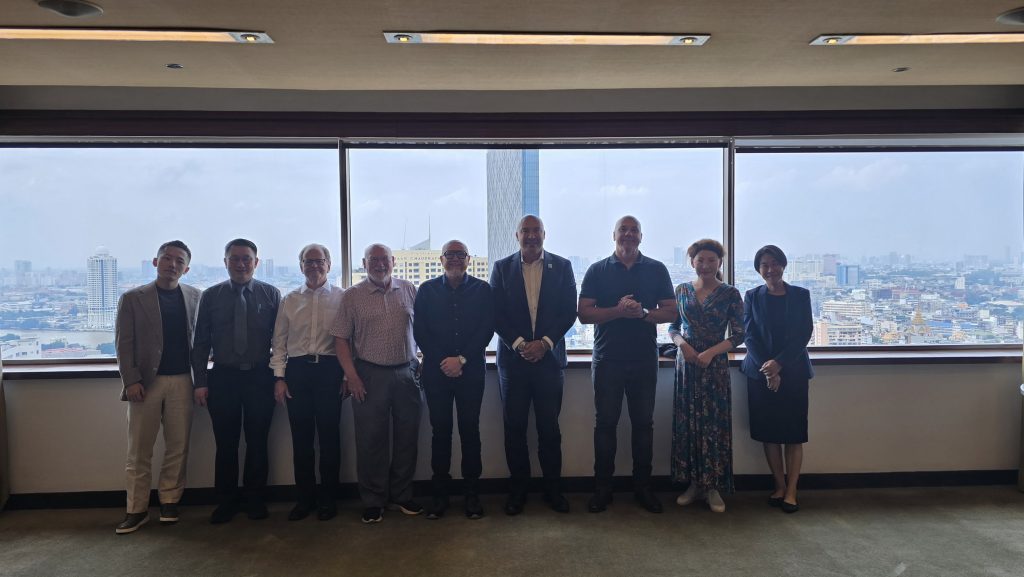
The launch of the International Academy of Self-Care Research (IASCR), Bangkok, Thailand, 10 September 2026. IASCR was established to provide a global academic home for the development of self-care as a distinct field of scientific enquiry.

Why does self-care need an Academy?

Self-care has an unusual problem. Its importance is widely acknowledged, but its evidence base remains dispersed. Researchers studying medication use may rarely interact with researchers studying health literacy. Digital self-management may sit in one literature, informal caregiving in another, lifestyle behaviours somewhere else, and traditional or complementary approaches in yet another. Public health, primary care, behavioural science, nursing, pharmacy, psychology, sociology, digital health and health economics can all be examining parts of the same phenomenon without necessarily recognising that they are contributing to a common field. The result is an evidence landscape that remains fragmented across disciplines, inconsistently defined and comparatively poorly supported by dedicated research infrastructure.

That fragmentation matters. Without common concepts, measures and methodological standards, it becomes difficult to accumulate knowledge across studies. Without stronger research networks, we repeatedly answer small parts of large questions. And without a clearly identifiable scientific field, self-care risks remaining peripheral to mainstream research funding even while governments and health systems increasingly expect individuals, families and communities to assume greater responsibility for maintaining health.  IASCR has been created to address this structural gap.

Self-care as a field of enquiry

One of the founding propositions of the Academy is deceptively simple: Self-care should be studied in its own right. Too often, self-care appears in research as an adjunct to something else: adherence to a clinical intervention, management of a particular disease, uptake of a digital technology, or modification of a specific behaviour.  Those are important questions, but they do not capture the whole phenomenon.

Self-care unfolds across the life course. It is shaped by capability, confidence, culture, family, community, commercial environments, technology, inequality, access to information and access to professional care. It may involve prevention, health maintenance, symptom recognition, self-management, self-medication, rehabilitation and decisions about when not to self-manage.

“The ambition is not simply to conduct more studies about self-care. It is to develop the science of self-care”

The founding documents of IASCR therefore deliberately position self-care as a complex phenomenon requiring behavioural, social, cultural, digital, traditional and equity-focused approaches.  That distinction is important. The ambition is not simply to conduct more studies about self-care. It is to develop the science of self-care.

What should that science look like?

IASCR’s emerging research agenda begins with some fundamental questions. What exactly constitutes self-care? Where are its conceptual boundaries? How should self-care capability, behaviour and outcomes be measured? Which aspects are universal, and which are culturally or contextually specific? How do poverty, education, gender, ageing, multimorbidity and digital exclusion alter people’s capacity to care for themselves? Where does responsible self-care end and professional healthcare need to begin? How are artificial intelligence, wearables, diagnostics and other technologies changing that boundary? And perhaps most importantly: who benefits from contemporary models of self-care, and who risks being left behind? These are no longer peripheral questions. They sit at the intersection of prevention, health-system sustainability, population ageing, digital transformation and health equity.

Building infrastructure, not simply another organisation

The Academy’s proposed programme therefore extends beyond conventional networking. Its remit includes identifying global research priorities and evidence gaps; developing conceptual and methodological tools; supporting early- and mid-career researchers; convening interdisciplinary research communities; encouraging high standards of transparent and reproducible research; and translating robust evidence responsibly into policy, practice and public understanding. Among the activities envisaged are a Global Self-Care Research Observatory, an annual international research forum, open-access research tools and resources, methodological guidance, thematic reviews, international capacity-building activities and collaborative multi-country research programmes.

There is also an explicit commitment to global representation. The Academy’s framework recognises that a credible science of self-care cannot simply export assumptions generated in high-income settings to the rest of the world. Participation across regions, disciplines, cultures and lived experiences — including stronger representation from low- and middle-income countries — is therefore intended to be built into its development.

Why Bangkok matters

It feels appropriate that this next chapter begins in Bangkok. The Academy is being launched alongside colleagues working across Thailand, ASEAN, Australia, Canada, China, Brazil and the United Kingdom, bringing together perspectives on self-care that emerge from very different health systems and cultural contexts. The programme surrounding the launch deliberately moves between the global and the local: from the international state of self-care to healthy ageing, national public-health strategy, urban communities and the future of self-care within Thai society. That is precisely the intellectual territory that IASCR must occupy. A global science of self-care cannot be constructed from a single healthcare system, profession or worldview.

The next phase

Launching an Academy is the easy part. Building a field is harder. It requires researchers willing to cross disciplinary boundaries. It requires funders prepared to support questions that do not fit neatly within traditional disease silos. It requires methodological development, international datasets, stronger theory, reproducibility, genuine engagement with communities and much greater investment in research capacity.  It also requires intellectual humility. Some of the most important questions ab out self-care remain unanswered — and some have not yet been adequately formulated.

IASCR therefore begins not with the claim that the field is complete, but with the recognition that considerable scientific work remains to be done. Its founding purpose captures the ambition succinctly: to define, strengthen and coordinate self-care research globally, while building the conceptual coherence, methodological development, visibility and international collaboration needed for cumulative science.

A new academic home

For decades, self-care has existed simultaneously everywhere and nowhere in academia: embedded across countless disciplines but rarely possessing an institutional centre of gravity of its own. Today we begin to create one. The International Academy of Self-Care Research represents a proposition that we believe is increasingly difficult to ignore: Self-care is too important to health, society and the future of healthcare to remain scientifically fragmented.

If prevention is to move upstream, if people are to be meaningfully empowered rather than simply handed greater responsibility, and if health systems increasingly depend upon what happens outside clinics and hospitals, then we need a much deeper understanding of the science that underpins those activities. That is the work ahead.

And today, in Bangkok, that work acquires a new home.

Health Literacy is the Operating System of Self-Care

Imagine receiving a blood pressure monitor without understanding the readings. A medicine without clear instructions. Or advice to “live more healthily” without knowing where to begin.

These examples raise a question that should sit at the centre of prevention: what does someone need to turn health information into a decision they can use?

Every year, on International Literacy Day celebrated the world over on 8 September, is an opportunity to reinforce health literacy as the operating system of self-care: the capability that helps people interpret information, judge its relevance and decide what to do next.

What is health literacy? 

WHO describes health literacy as the ability to find, understand, critically assess and use health information and services. It also recognises that these abilities depend on how organisations communicate and what resources people can access. Health literacy therefore involves both individual capability and the conditions in which people make decisions.

The operating system metaphor helps explain why this matters. We can think of self-care practices – taking medicines, preparing food, being physically active or monitoring symptoms -as applications. Health literacy helps connect those activities to understanding: Why am I doing this? What should I expect? How do I know whether it is helping? When should I seek support?

WHO also explicitly identifies health literacy as a foundation for people’s active participation in their own health. Its account of self-care includes everyday health practices and the use of medicines, devices and tests, within an environment that provides appropriate support and access to professional care.

This has an important implication for how we judge successful self-care. We should indeed value someone recognising their limits and asking for help just as much as their ability to manage independently. A useful question for any self-care intervention is whether people understand both what they can do themselves and when they need someone else.

Consider a hypothetical heatwave. A person might understand the advice to keep their home cool yet have little control over an overheated rented flat. They might know they should reduce exertion but work outdoors. They might recognise concerning symptoms yet be uncertain where to seek advice. We should distinguish these problems. Understanding, practical opportunity and access to support each deserve attention. A leaflet cannot change a tenancy agreement or a working condition

Delimiting self-care

That is also where the operating system metaphor reaches its limit. People need resources, relationships and services alongside knowledge. Any prevention strategy built around self-care should ask what makes the recommended action feasible.

There is a corresponding responsibility for organisations. WHO emphasises that health literacy is shaped by social conditions and that information providers should make trustworthy information understandable and actionable.

For the Prevention Lab, I would translate this into a practical design principle: every recommendation should come with a usable route to action. “Be more active” should open a conversation about an achievable starting point. A monitoring device should come with an explanation of its readings and a clear route to advice. A digital service should make it easy to find help when its instructions are unclear. We should also make room for critical judgement. When someone encounters a compelling health claim, useful questions include: Who produced it? What evidence supports it? What are they selling? What remains uncertain? Does this apply to my circumstances?

It is arguable that asking these questions is itself a form of self-care and our evaluation methods should reflect that ambition. Alongside counting views, downloads or leaflets distributed, we should examine whether people can explain the next step, assess a claim, use a tool appropriately and obtain support. We should ask whose needs the intervention meets and who still faces barriers.

Evey year, International Literacy Day offers an opportunity to put these questions into the prevention agenda. The proposal is simple: treat health literacy as a core requirement whenever we ask people to take an active role in their health. And given that health literacy is the operating system of self-care, building it belongs in the design of every self-care intervention.

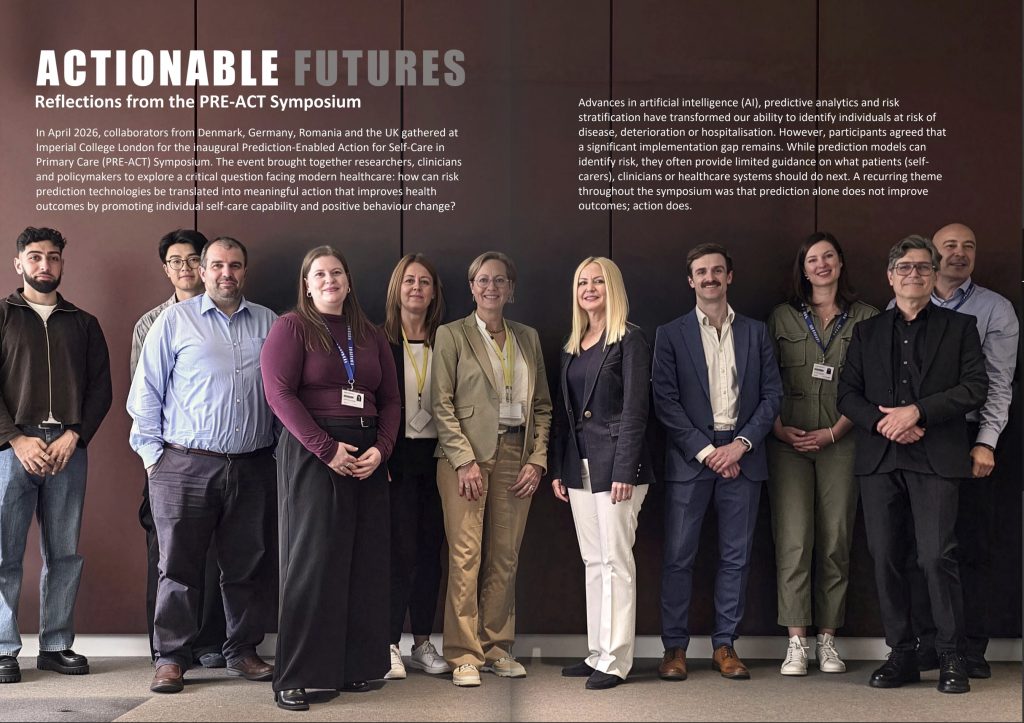
PRE-ACT: From prediction to prevention & making risk intelligence actionable in primary care

Health systems are becoming increasingly good at predicting risk. Routinely collected health data, machine learning, clinical risk scores, remote monitoring and digital technologies can identify people who may be at increased risk of disease or adverse health outcomes – sometimes well before those outcomes occur.

But prediction is not prevention.

Knowing that someone is at increased risk only creates value if that information can be translated into an appropriate response: something understandable to the person, clinically meaningful to professionals, feasible within routine care, and capable of supporting action. This is the problem that the Prediction-Enabled Action for Self-care in Primary Care (PRE-ACT) consortium sets out to address.

The PRE-ACT consortium is a collaboration between Imperial College London Self-Care Academic Research Unit (SCARU) and the Research Unit OPEN, University of Southern Denmark, bringing together researchers, clinicians and implementation partners with expertise spanning primary care, public health, risk prediction, digital health, behavioural science and self-care.

Closing the gap between risk and action

Much of the innovation in predictive healthcare has understandably concentrated on improving model performance: identifying the right variables, improving discrimination and calibration, and determining whether an algorithm can accurately classify risk. These are necessary questions. But they are not sufficient:

Between a risk estimate and an improved health outcome lies an important translational pathway. Risk must be interpreted. It must be communicated appropriately. Decisions need to follow. Patients may need support to act. Primary care teams need workable pathways through which to respond. And all of this must occur without widening existing inequalities.

PRE-ACT starts from the proposition that prediction should be viewed as the beginning of a preventive pathway, rather than its endpoint.

The initiative therefore brings together predictive analytics, decision support, primary care and self-care within a single translational framework. Its focus is not simply on whether we can identify risk, but on what should happen next.

Why self-care matters

This question is particularly important as healthcare moves towards earlier intervention and greater participation by patients in managing their own health.

The 2018 Declaration of Astana on Primary Health Care provides an important foundation. It renewed the global commitment to primary health care as a route to universal health coverage and emphasised, among other principles, the importance of prevention and health promotion, empowering individuals and communities, and enabling people to acquire the knowledge, skills and resources required to maintain their health.

PRE-ACT takes this principle into an increasingly data-driven healthcare environment. If predictive technologies can identify an opportunity to prevent deterioration, then we should also ask how individuals can be meaningfully supported to respond. That may involve self-monitoring, behavioural change, appropriate use of digital tools, supported self-management, or timely engagement with healthcare services.

Self-care in this context does not mean shifting responsibility from health systems to individuals. It means designing systems in which people are equipped and supported to participate in prevention, with appropriate professional oversight and clear routes into care.


Prediction-enabled prevention must also be responsible

There are important safeguards. A technically sophisticated predictive system may still have limited value if clinicians cannot interpret its output, patients do not understand what the result means, actionable services are unavailable, or those with lower digital access are systematically disadvantaged. PRE-ACT therefore places issues such as equity, human oversight, transparency, evidence, privacy, clinical governance and implementation readiness alongside predictive performance.

These considerations matter because the future of prevention will increasingly involve interactions between people, professionals, health systems and intelligent technologies. Success cannot be judged solely by the accuracy of an algorithm. We also need to ask whether an intervention is understandable, actionable, acceptable, equitable and capable of being integrated into real-world care.

From predicting risk to changing outcomes

One way of expressing the PRE-ACT pathway is: Prediction → Interpretation → Decision support → Activation → Self-care & clinical action → Outcomes

Each transition matters. A failure at any point can break the chain between recognising risk and preventing harm. Conversely, designing these elements together creates an opportunity to move predictive technologies away from passive risk stratification and towards genuinely preventive healthcare. This is the broader ambition of PRE-ACT: to help define what responsible, human-centred and actionable prediction should look like in primary care.

As predictive technologies become more powerful, the central question may therefore become less “How accurately can we predict what happens next?” and more: “What can we enable people and health systems to do differently because we know?” That is the point at which prediction becomes prevention.

From Measuring Loneliness to Preventing It

Loneliness is usually experienced as something intensely personal. Public health, however, has to ask a broader question: What if loneliness is shaped not only by individuals, but also by the places, relationships and systems surrounding them?

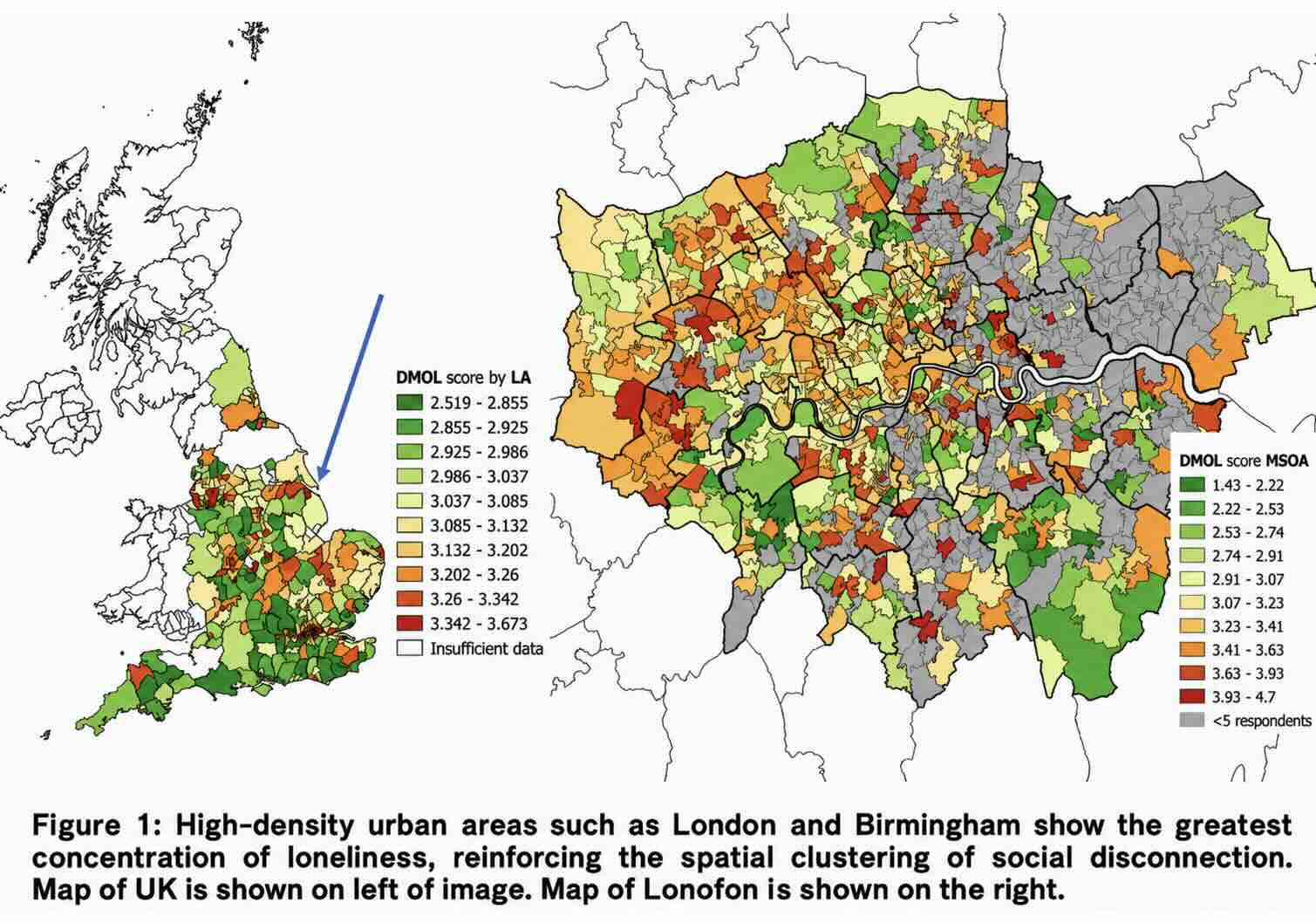
The first published paper in a series to report the findings of the Measuring Loneliness in England (INTERACT) Study, led by Imperial College London’s Self-Care Academic Research Unit (SCARU), provides an important starting point. More than 135,000 adults aged 16 and over participated. Among them, 16.5% reported feeling lonely “often or always”, while around one in five frequently reported lacking companionship, feeling left out or feeling isolated from others.

These findings are striking, but they require careful interpretation. INTERACT recruited a volunteer, non-probability sample, so the results describe the people who participated rather than providing a precise estimate of loneliness prevalence across England.

Its particular value lies elsewhere: in combining scale with geographical and social detail. INTERACT examines loneliness alongside social connection, neighbourhood trust, cohesion, health and socioeconomic circumstances. By linking responses anonymously to geographical areas, we can begin to move beyond asking simply: “How many people are lonely?” towards: “Where does loneliness appear to concentrate, among whom, and within what social and neighbourhood contexts?” For prevention, that distinction matters.

A map is not an intervention

Mapping loneliness can help identify patterns and generate hypotheses. But describing a problem is not the same as changing it. The real challenge is how evidence can inform decisions about where attention is needed, which community assets already exist, where gaps remain and which approaches should be tested. That is why SCARU has been working closely with the public-health teams serving Westminster and Kensington and Chelsea, alongside voluntary and community organisations, health partners and local networks. The aim is not simply to collect data about communities, but to develop research with the organisations and people who understand them.

Westminster’s Building a more connected Westminster Loneliness Action Plan creates an important opportunity to take this further. Rather than treating loneliness as the responsibility of a single service, the Action Plan seeks to bring together public services, communities and local organisations in a more coordinated response.

From INTERACT to LAP-IMPACT

This creates the next scientific question: Can a coordinated, place-based approach actually reduce loneliness and strengthen social connection? That is the thinking behind LAP-IMPACT, the research programme we are developing with our local partners. Subject to competitive funding, governance and the necessary approvals, the aim would be to move from mapping loneliness towards rigorously evaluating the response. The questions are practical and important. Who does a Loneliness Action Plan reach? Which components appear most promising? Are benefits distributed equitably? How does implementation vary between neighbourhoods and organisations? What role do community assets play? And what can other local authorities learn from the experience? These questions matter because an Action Plan should not be judged simply by whether activities happened. The more important question is whether the local system changed in ways that were meaningful for residents.

Prevention is not telling people to be less lonely

There is also a danger in framing loneliness only as an individual problem. Advice such as joining a group, volunteering or taking part in community activities may help some people. But it can obscure a more fundamental issue: Were meaningful opportunities for connection accessible in the first place?

A person cannot participate in an activity they cannot reach. Signposting has limited value if services have no capacity. Community assets cannot fulfil their potential if they remain disconnected from wider local systems.  This is why loneliness prevention must include the infrastructure of connection: the services, organisations, neighbourhood assets and relationships that make social participation possible. For SCARU, this also reflects a broader principle of self-care research. People exercise agency within environments that can either expand or constrain their options. Social wellbeing is no different.

From knowing where loneliness is to knowing what works

INTERACT has given us an unusually large window into loneliness and social connection in England. The next question is what we do with that knowledge.

Can local intelligence help communities organise prevention differently? Can services become better connected? Can existing community assets be strengthened? Can people be reached before loneliness becomes entrenched? And can we demonstrate which approaches work, for whom and under what conditions?

That is where loneliness research now needs to go. The INTERACT Study helps us understand the landscape. LAP-IMPACT is about understanding how that landscape might be changed. That is the Prevention Lab model in practice: moving from evidence, to action, to evaluation.

When Does Prevention Become Medicine? Trust, legitimacy & the future of lifestyle medicine

At what point does something we do every day become medicine? Eating. Moving. Sleeping. Managing stress. Connecting with other people are among the most ordinary acts of human life. They happen largely beyond hospitals, clinics and consultation rooms. Yet they are also intimately connected with health.

And therein lies an intriguing tension: we readily accept that medicines prescribed for hypertension, diabetes or depression belong within healthcare. But what happens when the therapeutic proposition is not principally a tablet, procedure or device, but a different way of living? Who should deliver that intervention? What qualifications should they possess? Who do people trust? And perhaps most importantly: what makes an approach feel sufficiently legitimate to belong within medicine at all? These questions sit at the heart of our recently published study in BMJ Open, Legitimacy, trust and readiness for implementing lifestyle medicine in England.

The paradox of the unfamiliar familiar

One of the most striking findings was a paradox; most people were not particularly familiar with the term lifestyle medicine. Among 733 participants, only 26% of the overall sample had previously heard of it. Among healthcare professionals, awareness was considerably higher, at 62%. And yet, when we moved beyond the label, people largely recognised its substance. Nutrition. Physical activity. Sleep. Stress management. These were readily understood as legitimate components of health. In other words, lifestyle medicine appears to suffer from an unusual problem: its constituent ideas may be more familiar than the discipline that brings them together.

This matters, because public health frequently assumes that if an intervention is evidence-informed, useful and available, people will engage with it. But healthcare does not operate through evidence alone. It also operates through meaning, expectation, professional authority and trust. Before a person asks, “Does this work?”, another question may already be operating beneath the surface: “Is this really medicine?”

Legitimacy is not an abstract concept

Our findings suggest that this question has practical consequences. Perceived legitimacy was strongly associated with participants’ stated intention to use a lifestyle medicine service delivered through the NHS. Nearly half of participants said they would use such a service if it were available through the NHS, rising to around two-thirds of healthcare professionals. Because the study was cross-sectional, we cannot conclude that perceiving lifestyle medicine as legitimate causes people to use it. But the association raises an important implementation question. Perhaps prevention cannot simply be offered, but must instead also be socially and institutionally authorised.

That distinction is more important than it first appears. The same advice (eat differently, move more, sleep better, reduce harmful exposures, strengthen social connection) can be interpreted very differently depending on who gives it, where it is given and the institutional framework surrounding it.

Advice from a friend is advice. Advice from an influencer is content. Advice from a clinician may be interpreted as healthcare. The behaviour being discussed may be identical, but meaning attached to it is not.

Trust follows more than knowledge

Our findings make this particularly visible. Participants reported high levels of trust in lifestyle advice delivered by clinicians who had formal lifestyle medicine training: 73% expressed high trust. Trust was substantially lower for non-medical professionals, at 42%, even when those professionals possessed lifestyle medicine qualifications. This presents a difficult but important question for prevention.

What exactly are people trusting?

Is it knowledge? Credentials? Professional regulation?  Clinical accountability? The symbolic authority of medicine? Or some combination of all four? There is no simple answer in our data. Nor should these findings be interpreted as evidence that one professional group necessarily provides better lifestyle support than another. But they reveal something that implementation science cannot afford to ignore: the credibility of an intervention and the credibility of its messenger may be inseparable in the minds of those being asked to act upon it.

For lifestyle medicine to scale, therefore, the challenge is not merely to identify effective interventions. It is to develop trusted systems through which those interventions can be delivered.

The prevention paradox inside healthcare

There was another tension in the findings in that healthcare professionals appeared interested in lifestyle medicine, yet the infrastructure surrounding them appeared much less mature.

Among the 58 healthcare professionals surveyed, 48% reported providing lifestyle-related advice to patients, while only 21% reported having received formal training in lifestyle medicine. Almost two-thirds wanted additional training or resources. The principal barriers they identified included patient readiness, limited time and insufficient training. Most strikingly, only 3% thought that the NHS currently supported lifestyle-based approaches “very well”. Because the healthcare professional subgroup was small, these estimates require appropriate caution, but they do generate questions that require further investigation.

We increasingly ask healthcare professionals to practise prevention while maintaining systems historically structured around the identification, treatment and management of established disease. We tell clinicians that lifestyle matters and encourage conversations about physical activity, food, sleep, stress and social connection. But if those conversations are to become a meaningful part of healthcare rather than an optional addition to it, clinicians also require time, competencies, referral pathways, professional standards and services to which patients can actually be directed. A health system cannot become preventive simply by asking its workforce to talk more about prevention. Prevention needs infrastructure.

Perhaps the question is larger than lifestyle medicine

This is where our study findings lead to a broader philosophical question. Modern medicine has become extraordinarily sophisticated at intervening once pathology is visible. We can image increasingly subtle abnormalities, quantify biological risk, stratify populations algorithmically and develop treatments targeted at increasingly specific molecular pathways. Yet many of the actions through which health is created or lost remain remarkably ordinary. They happen in supermarkets and kitchens, on pavements and playing fields, in workplaces and bedrooms, within families, friendships and communities. The future of prevention may therefore depend partly on whether healthcare can become more comfortable operating at the boundary between the clinical and the everyday.

Lifestyle medicine occupies precisely this boundary. Its proposition is not that ordinary life should become medicalised. Nor should structural determinants of health be reduced to individual responsibility. People do not make choices in a vacuum: income, housing, work, neighbourhoods, commercial environments, education and opportunity all constrain what is realistically possible. The more interesting proposition is that healthcare might take the conditions of everyday life more seriously without pretending that every determinant of health belongs inside the consultation room. That requires a different conception of prevention. Not prevention as instruction. Not prevention as telling people to “make better choices”.

But prevention as capability: that is, creating the knowledge, confidence, opportunities, professional support and environments that make healthier lives more achievable.

From lifestyle advice to prevention infrastructure

For that reason, the future of lifestyle medicine may depend less on defending the term and more on answering three practical questions: Can people trust it? Can professionals deliver it competently? Can health systems support it consistently and equitably?

Our findings suggest that these domains (legitimacy, capability and system readiness) are deeply interconnected. Awareness alone will not be enough. Enthusiasm alone will not be enough. Nor will simply adding another service to an already crowded healthcare landscape.

Training matters. Standards matter. Professional credibility matters. Institutional endorsement matters and implementation matters. There is also an important warning here for those of us interested in prevention and self-care. If lifestyle medicine becomes available primarily to people who already possess the resources, knowledge, confidence and time required to engage with it, it could reproduce rather than reduce existing inequalities. A credible model of lifestyle medicine must therefore be more than clinically plausible. It must also be accessible, trusted and equitable.

So when does prevention become medicine?

Perhaps there is no single moment… Perhaps prevention becomes medicine only when scientific evidence is translated into competent practice; when people trust the person delivering it; when health systems make room for it; and when individuals are given meaningful opportunities to participate in decisions about their own health.

The distinction between treatment and prevention may ultimately be less rigid than our institutions have made it appear.

After all, health is not produced only when we enter the healthcare system. It is being shaped long before we arrive. The challenge for the NHS and for health systems more broadly is therefore not simply to treat disease earlier. It is to decide how far upstream healthcare is prepared to travel. Lifestyle medicine offers one possible route.

Our study suggests that people may be more receptive to that journey than familiarity with the terminology alone would suggest. But for lifestyle medicine to move from an appealing idea to a credible component of prevention, it will have to earn something that cannot be manufactured through branding alone: trust.

And perhaps that is the larger lesson. The future of prevention will not be determined only by what we know can improve health. It will also depend on whether we can build institutions, professions and systems that people believe have the legitimacy to help them act on that knowledge.