Month: September 2026

The Future of Self-Care: Emerging technologies, public trust & personal autonomy

Who should be in control when technology becomes part of how we look after ourselves? That question belongs at the centre of the digital self-care agenda. In my view, emerging technologies should be judged by the understanding and practical capability people gain, and by the control they retain over decisions affecting their lives.

The World Health Organization’s account of self-care includes maintaining health and coping with illness, with or without professional support. For me, the purpose of innovation is to make those activities more manageable within the realities of people’s lives.

Emerging technologies offer different ways to access information and assistance. Virtual reality (VR) creates an immersive digital environment; augmented reality (AR) adds digital information to a view of the physical world. Smart glasses offer functions that vary by device, including cameras, audio and, in some models, visual displays. Brain–computer interfaces (BCIs) translate brain signals into commands for external devices. Because their mechanisms and risks differ, each needs evaluation suited to its purpose.

Starting with the self-carer’s goals

My starting point is the self-carer’s goal. They may want an explanation they can understand, support with a difficult task or a way to communicate their needs. The design question is whether a particular technology helps them pursue that goal, under conditions they find acceptable. Our work on Self-Driven Healthcare proposed connecting people’s own health information and monitoring tools with professional care. That vision depends on accessible support and integration with health services, with people able to influence decisions about their care.

Our BMJ Open study of spatial computing in health and self-care explored these issues with UK adults, including healthcare professionals. Respondents identified possible value for self-care and patient education alongside barriers involving cost, training and privacy. These findings reflect perceptions rather than evidence of clinical benefit.

Smart glasses illustrate both the promise and the open questions. Be My Eyes connects blind and low-vision users of supported Meta glasses with sighted volunteers who can view the camera feed and provide spoken assistance. Its value, however, should be assessed against users’ goals and the alternatives available to them. This is why we launched the SMART EYES study to examine public views on AI-enabled smart glasses, including privacy, accessibility and possible support for health and self-care. To be meaningful, evaluations must start with people’s experiences, concerns and expectations. They should also account for the time needed to learn a tool, maintain it and resolve problems. The practical test is whether the overall experience becomes easier for the person using it.

In an earlier Prevention Lab article on health literacy, I argued that people need to understand information, judge its relevance and decide what to do next. Digital assistance should support those capabilities. Our UK symptom-checker survey found that respondents wanted help understanding symptoms and deciding whether to seek care, alongside concerns about privacy and losing face-to-face consultations. At the same time, our 2023 systematic review of symptom checkers found variable diagnostic and triage accuracy in the studies available at that time.

Earning public trust

Public trust also needs to be framed with care. SCARU’s RADIANT Voices research on AI and software as a medical device (SaMD) examined trust in clinical decision-making. We found higher trust in AI-assisted decisions than in AI-only decisions, alongside strong support for disclosure and professional oversight. These findings describe preferences, not evidence of safety or effectiveness.

Trust in individual pieces of advice matters as well. Our Trust in AI-Generated Health Advice (TAIGHA) scale and its four-item short form, TAIGHA-S, focus on trust in a specific piece of advice. Initially validated with 385 UK adults in a symptom-assessment scenario, they measure trust and distrust as related but distinct dimensions.

Our PLOS Digital Health study of community perspectives on BCIs likewise found concerns about implantation risks and cost, with participants emphasising regulation and public education. Those concerns belong in the decisions that set research priorities. Public engagement should give people a meaningful opportunity to influence development, including the option to question whether an application is desirable.

Because public trust has to be earned through evidence and accountability, developers and health services should explain the evidence for a proposed use, its limitations and who is accountable when something goes wrong. People should also have a practical way to challenge advice or report harm. The WHO’s guidance on generative AI in health supports clear tasks, appropriate accuracy and reliability, and involvement of patients and other affected groups in development.

Regulation and intended purpose

SaMD refers to software intended to perform a medical purpose without being part of a hardware medical device. Its increasing pervasiveness makes the intended purpose especially important. The MHRA’s guidance emphasises specifying that purpose and matching it to supporting evidence. Whether an application is accessed through a phone, headset or glasses, assessment should address its intended users, clinical function and setting. Determining regulatory status therefore requires attention to the specific features and claims of health-related software.

The developer’s experience deserves attention too. Our study of medical-software developers’ experiences of regulation, available as a preprint, describes participants’ difficulties obtaining reliable advice and navigating requirements. Clear guidance, accessible expertise and proportionate evidence requirements should form part of responsible innovation.

Autonomy in everyday use

Personal autonomy also needs to be built into everyday use. Who chooses the goal behind a reminder or recommendation? Who can change it? People should understand the purpose of the support they receive and be able to pause or decline it. Commercial interests should be visible, especially where advice is connected to the sale of a product or service. Delegating a task should leave the individual able to influence the terms of that delegation.

For smart glasses, autonomy also concerns the relationship between the wearer and people nearby. Using a camera to assist with a task, retaining a recording and sharing it are distinct activities. Each deserves a clear explanation and an appropriate decision about permission.

That discussion should also respect the dignity of people using assistive technology. Someone should not have to disclose a diagnosis to justify their device to a stranger. Equally, the people around them should have meaningful ways to understand and influence what happens to their information. Good safeguards need to address both concerns in practice.

Equity and shared responsibility

Equitable access should be considered from the outset and meaningful evaluations need to address affordability, language, disability-related requirements and the support needed to use a technology. People should retain an accessible route to care if a device is unsuitable or they choose not to use it. A service should also plan for interruptions, software changes and the point at which a product is no longer supported.

Health systems and wider society retain responsibilities of their own. A self-care strategy needs accessible professional advice and practical support, alongside attention to housing, working conditions and other constraints on daily choices. Digital tools should be assessed within that context and should not become a justification for transferring responsibilities to people without considering the resources available to them.

Evaluating what matters

For researchers and commissioners, this calls for evaluation beyond stated willingness to adopt a product. Relevant outcomes include understanding, appropriate action, wellbeing and harms, with results examined across different groups. We should measure the work expected of users and carers, compare realistic alternatives and study use over time. A successful demonstration is only the starting point for that work. Ultimately, the future of self-care must be shaped with the people expected to use these technologies. They should help define the problems worth solving, the evidence that matters and the boundaries they want respected. The measure of progress should be whether people have more meaningful choices, stronger capabilities and dependable support in looking after their health. These principles guide our work in practice. Through our patient and public involvement and engagement PPIE activities, self-carers regularly share their feedback with us, and their insights shape our projects. Their perspectives keep our research grounded in the realities of looking after one’s health, and we are grateful for the time and candour they bring. We will continue to build our work with them, rather than for them.

Building the future together

In my next blog, I will reflect on the importance of PPIE and adopting a team science approach in driving our work, and on what bringing together lived experience and diverse expertise contributes to research on self-care.
A home for the science of self-care: launching the International Academy for Self-Care Research

Bangkok, 10 September 2026

Self-care is everywhere. It is present in the decisions people make each morning about what to eat, how to move, when to rest and how to manage their health. It is present when somebody recognises a symptom, takes a medicine, monitors a long-term condition, seeks advice from a pharmacist, uses a digital health tool, supports a family member, or decides that professional care is needed. It is also increasingly visible in health policy. Yet something important has been missing: an academic home devoted specifically to the science of self-care.

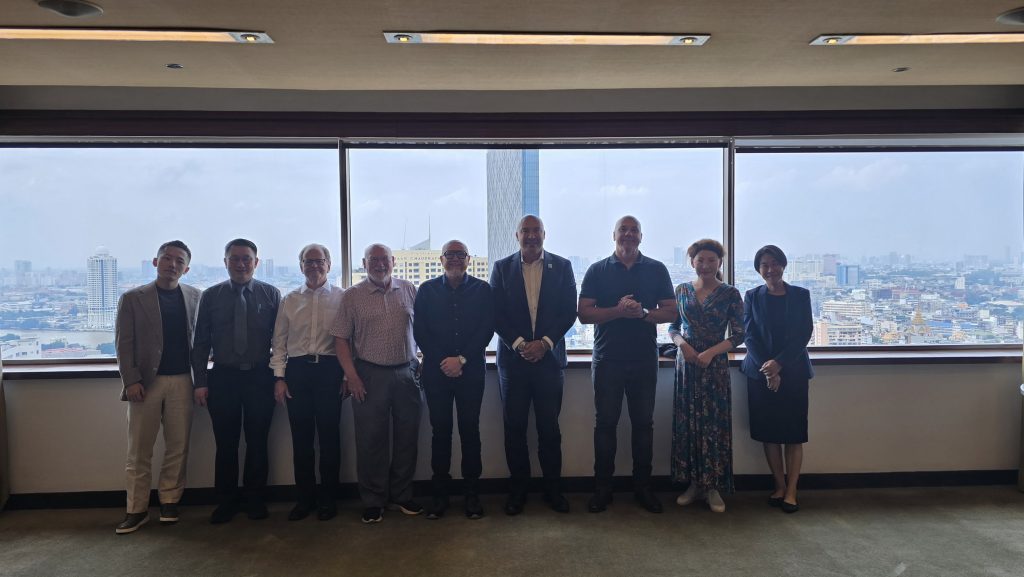
Today in Bangkok, we are taking a significant step towards changing that with the launch of the International Academy of Self-Care Research (IASCR).

IASCR was conceived as an independent academic institution dedicated to defining and advancing self-care as a distinct field of scientific enquiry. Its purpose is not to promote a particular intervention, profession, product or model of healthcare. It is to strengthen the scientific foundations upon which our understanding of self-care rests.

The launch of the International Academy of Self-Care Research (IASCR), Bangkok, Thailand, 10 September 2026. IASCR was established to provide a global academic home for the development of self-care as a distinct field of scientific enquiry.

Why does self-care need an Academy?

Self-care has an unusual problem. Its importance is widely acknowledged, but its evidence base remains dispersed. Researchers studying medication use may rarely interact with researchers studying health literacy. Digital self-management may sit in one literature, informal caregiving in another, lifestyle behaviours somewhere else, and traditional or complementary approaches in yet another. Public health, primary care, behavioural science, nursing, pharmacy, psychology, sociology, digital health and health economics can all be examining parts of the same phenomenon without necessarily recognising that they are contributing to a common field. The result is an evidence landscape that remains fragmented across disciplines, inconsistently defined and comparatively poorly supported by dedicated research infrastructure.

That fragmentation matters. Without common concepts, measures and methodological standards, it becomes difficult to accumulate knowledge across studies. Without stronger research networks, we repeatedly answer small parts of large questions. And without a clearly identifiable scientific field, self-care risks remaining peripheral to mainstream research funding even while governments and health systems increasingly expect individuals, families and communities to assume greater responsibility for maintaining health.  IASCR has been created to address this structural gap.

Self-care as a field of enquiry

One of the founding propositions of the Academy is deceptively simple: Self-care should be studied in its own right. Too often, self-care appears in research as an adjunct to something else: adherence to a clinical intervention, management of a particular disease, uptake of a digital technology, or modification of a specific behaviour.  Those are important questions, but they do not capture the whole phenomenon.

Self-care unfolds across the life course. It is shaped by capability, confidence, culture, family, community, commercial environments, technology, inequality, access to information and access to professional care. It may involve prevention, health maintenance, symptom recognition, self-management, self-medication, rehabilitation and decisions about when not to self-manage.

“The ambition is not simply to conduct more studies about self-care. It is to develop the science of self-care”

The founding documents of IASCR therefore deliberately position self-care as a complex phenomenon requiring behavioural, social, cultural, digital, traditional and equity-focused approaches.  That distinction is important. The ambition is not simply to conduct more studies about self-care. It is to develop the science of self-care.

What should that science look like?

IASCR’s emerging research agenda begins with some fundamental questions. What exactly constitutes self-care? Where are its conceptual boundaries? How should self-care capability, behaviour and outcomes be measured? Which aspects are universal, and which are culturally or contextually specific? How do poverty, education, gender, ageing, multimorbidity and digital exclusion alter people’s capacity to care for themselves? Where does responsible self-care end and professional healthcare need to begin? How are artificial intelligence, wearables, diagnostics and other technologies changing that boundary? And perhaps most importantly: who benefits from contemporary models of self-care, and who risks being left behind? These are no longer peripheral questions. They sit at the intersection of prevention, health-system sustainability, population ageing, digital transformation and health equity.

Building infrastructure, not simply another organisation

The Academy’s proposed programme therefore extends beyond conventional networking. Its remit includes identifying global research priorities and evidence gaps; developing conceptual and methodological tools; supporting early- and mid-career researchers; convening interdisciplinary research communities; encouraging high standards of transparent and reproducible research; and translating robust evidence responsibly into policy, practice and public understanding. Among the activities envisaged are a Global Self-Care Research Observatory, an annual international research forum, open-access research tools and resources, methodological guidance, thematic reviews, international capacity-building activities and collaborative multi-country research programmes.

There is also an explicit commitment to global representation. The Academy’s framework recognises that a credible science of self-care cannot simply export assumptions generated in high-income settings to the rest of the world. Participation across regions, disciplines, cultures and lived experiences — including stronger representation from low- and middle-income countries — is therefore intended to be built into its development.

Why Bangkok matters

It feels appropriate that this next chapter begins in Bangkok. The Academy is being launched alongside colleagues working across Thailand, ASEAN, Australia, Canada, China, Brazil and the United Kingdom, bringing together perspectives on self-care that emerge from very different health systems and cultural contexts. The programme surrounding the launch deliberately moves between the global and the local: from the international state of self-care to healthy ageing, national public-health strategy, urban communities and the future of self-care within Thai society. That is precisely the intellectual territory that IASCR must occupy. A global science of self-care cannot be constructed from a single healthcare system, profession or worldview.

The next phase

Launching an Academy is the easy part. Building a field is harder. It requires researchers willing to cross disciplinary boundaries. It requires funders prepared to support questions that do not fit neatly within traditional disease silos. It requires methodological development, international datasets, stronger theory, reproducibility, genuine engagement with communities and much greater investment in research capacity.  It also requires intellectual humility. Some of the most important questions ab out self-care remain unanswered — and some have not yet been adequately formulated.

IASCR therefore begins not with the claim that the field is complete, but with the recognition that considerable scientific work remains to be done. Its founding purpose captures the ambition succinctly: to define, strengthen and coordinate self-care research globally, while building the conceptual coherence, methodological development, visibility and international collaboration needed for cumulative science.

A new academic home

For decades, self-care has existed simultaneously everywhere and nowhere in academia: embedded across countless disciplines but rarely possessing an institutional centre of gravity of its own. Today we begin to create one. The International Academy of Self-Care Research represents a proposition that we believe is increasingly difficult to ignore: Self-care is too important to health, society and the future of healthcare to remain scientifically fragmented.

If prevention is to move upstream, if people are to be meaningfully empowered rather than simply handed greater responsibility, and if health systems increasingly depend upon what happens outside clinics and hospitals, then we need a much deeper understanding of the science that underpins those activities. That is the work ahead.

And today, in Bangkok, that work acquires a new home.

Health Literacy is the Operating System of Self-Care

Imagine receiving a blood pressure monitor without understanding the readings. A medicine without clear instructions. Or advice to “live more healthily” without knowing where to begin.

These examples raise a question that should sit at the centre of prevention: what does someone need to turn health information into a decision they can use?

Every year, on International Literacy Day celebrated the world over on 8 September, is an opportunity to reinforce health literacy as the operating system of self-care: the capability that helps people interpret information, judge its relevance and decide what to do next.

What is health literacy? 

WHO describes health literacy as the ability to find, understand, critically assess and use health information and services. It also recognises that these abilities depend on how organisations communicate and what resources people can access. Health literacy therefore involves both individual capability and the conditions in which people make decisions.

The operating system metaphor helps explain why this matters. We can think of self-care practices – taking medicines, preparing food, being physically active or monitoring symptoms -as applications. Health literacy helps connect those activities to understanding: Why am I doing this? What should I expect? How do I know whether it is helping? When should I seek support?

WHO also explicitly identifies health literacy as a foundation for people’s active participation in their own health. Its account of self-care includes everyday health practices and the use of medicines, devices and tests, within an environment that provides appropriate support and access to professional care.

This has an important implication for how we judge successful self-care. We should indeed value someone recognising their limits and asking for help just as much as their ability to manage independently. A useful question for any self-care intervention is whether people understand both what they can do themselves and when they need someone else.

Consider a hypothetical heatwave. A person might understand the advice to keep their home cool yet have little control over an overheated rented flat. They might know they should reduce exertion but work outdoors. They might recognise concerning symptoms yet be uncertain where to seek advice. We should distinguish these problems. Understanding, practical opportunity and access to support each deserve attention. A leaflet cannot change a tenancy agreement or a working condition

Delimiting self-care

That is also where the operating system metaphor reaches its limit. People need resources, relationships and services alongside knowledge. Any prevention strategy built around self-care should ask what makes the recommended action feasible.

There is a corresponding responsibility for organisations. WHO emphasises that health literacy is shaped by social conditions and that information providers should make trustworthy information understandable and actionable.

For the Prevention Lab, I would translate this into a practical design principle: every recommendation should come with a usable route to action. “Be more active” should open a conversation about an achievable starting point. A monitoring device should come with an explanation of its readings and a clear route to advice. A digital service should make it easy to find help when its instructions are unclear. We should also make room for critical judgement. When someone encounters a compelling health claim, useful questions include: Who produced it? What evidence supports it? What are they selling? What remains uncertain? Does this apply to my circumstances?

It is arguable that asking these questions is itself a form of self-care and our evaluation methods should reflect that ambition. Alongside counting views, downloads or leaflets distributed, we should examine whether people can explain the next step, assess a claim, use a tool appropriately and obtain support. We should ask whose needs the intervention meets and who still faces barriers.

Evey year, International Literacy Day offers an opportunity to put these questions into the prevention agenda. The proposal is simple: treat health literacy as a core requirement whenever we ask people to take an active role in their health. And given that health literacy is the operating system of self-care, building it belongs in the design of every self-care intervention.