Researcher Spotlight: Francesco Furlan | Exploring materials with a twist
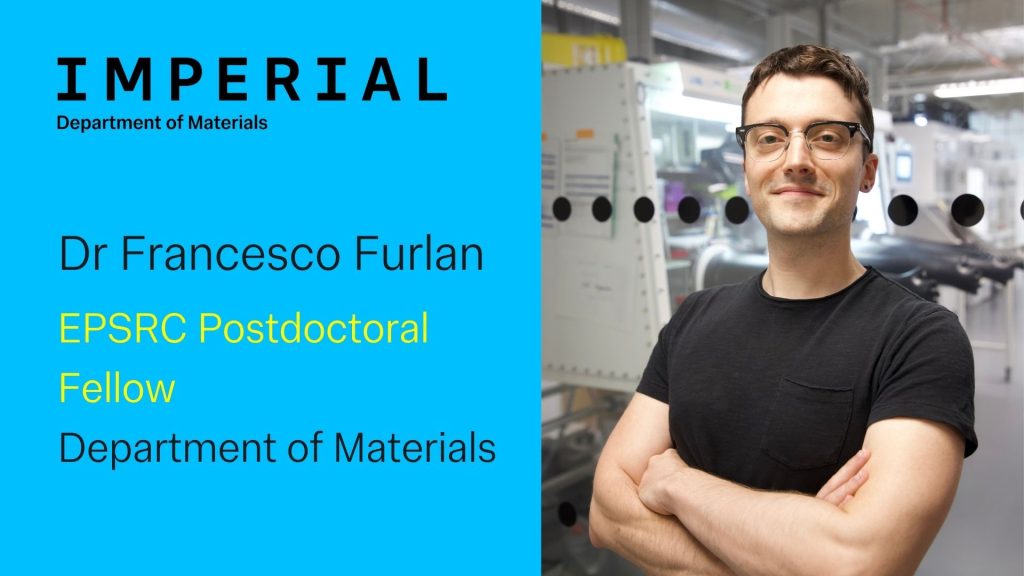
Meet Dr Francesco Furlan, EPSRC Postdoctoral Fellow in the Department of Materials.
Dr Francesco Furlan researches chiral materials and their interactions with light, charge and spin, with potential applications in energy-efficient electronics, photovoltaics and emerging quantum technologies. In this Q&A, Francesco talks about his journey into materials science, the research he is currently working on, his collaborations at Imperial and beyond, and what he enjoys about life in and outside the lab.
Question 1. What inspired you to become a Materials Scientist?
My journey into materials science began when my chemistry professor challenged our class to solve a century-old kitchen question: when should salt be added to pasta water to make it boil faster? He guided us through the calculations, testing the question scientifically rather than trusting tradition. Although, in principle, the timing makes almost no practical difference, he hinted at a deeper explanation involving surfaces and bubble formation, but left it as a mystery only materials scientists would uncover. Plus, I always enjoyed physics and chemistry, and I realised soon that being a materials scientist brings together everything that fascinates me: chemistry, physics, and the quantum properties that determine how materials behave.
Question 2. How would you explain your research to someone outside the field?
I am working with chiral materials, materials that, just like hands, are mirror images of each other, but not superimposable. Because of this, they have fascinating and unique interactions with charges and light. Once implemented in devices, they can make them better in many ways. For example, they have the potential to halve the power required by displays or make solar cells more efficient. At the same time, they offer innovative ways to initiate or read quantum states, without using energy-consuming magnetic fields.
Question 3. Why did you study this area and why is it important?
I chose to work in this area because I believe that advanced materials will play a central role in building a greener and more sustainable future. At the same time, I have always been fascinated by spin and the quantum properties of materials, and by how these fundamental behaviours can be harnessed in real devices. My research brings these interests together by exploring new materials that can improve photovoltaics, reduce the energy consumption of electronics and enable future spintronic and quantum technologies.
Question 4. How could this research make an impact?
Reaching net zero will require not only greater investment in renewable energy, but also cleaner, more efficient technologies for generating, storing and using energy. This research could contribute to more energy-efficient electronics, improved photovoltaic technologies and new ways of controlling light, charge and spin. By developing materials that work without external magnetic fields and with easy processability, it will help reduce both the energy consumption and environmental impact of future energy devices. In the longer term, these materials could support cleaner energy technologies while enabling more accessible and energy-efficient spintronic and quantum systems.
Question 5. Who do you collaborate with at Imperial and beyond?
My research is highly interdisciplinary, as it is at the interface between Materials, Chemistry, Physics and engineering. Here at Imperial, I collaborate with many academics in neighbouring fields, such as Martyn McLachlan, Jess Wade and Nicola Gasparini, and many people in the Centre of Processable Electronics.
Beyond Imperial, I have worked with collaborators in the UK (Oxford, Durham, St Andrews), Switzerland (EPFL), USA (NLR), Saudi Arabia (KAUST), Czech Republic (IOCB Prague), France (CNRS). I have also been part of a European network dedicated to the development of chiral organic materials for OLEDs, HEL4CHIROLED, which included many academics in the field and with whom I still carry out nice collaborations to this day.
If you are working in a closely related field and would like to understand chiral materials or how to implement them in devices, I am always looking forward to new collaborations!
Question 6. What do you enjoy most about what you do?
I enjoy being in the lab: there is no better feeling than discovering a new and interesting phenomenon that has never been observed before. I also enjoy the creativity that comes from working alongside motivated students and brilliant colleagues. Their energy and ideas make the lab an exciting place to be and often inspire new ways of thinking.
Question 7. What do you enjoy outside of research?
Outside of research, I have many passions. I play the piano and, sometimes, play with a band. I also enjoy travelling and cooking, particularly because I always like to discover new cultures and explore their cuisines. I also stay active by going regularly to the gym and practising sports. At the same time, I also have a distinctly nerdy and competitive side, so I often unwind by playing video games, especially team-based multiplayer video games, where strategy, communication and quick decision-making are all part of the challenge.
Question 8. What’s something your colleagues would be surprised to learn about you?
I am a third-dan black belt in traditional Shotokan Karate. I trained for many years, and the discipline, focus and perseverance it taught me have influenced far more than my time in the dojo. It is an important part of who I am and has shaped the way I approach challenges.