Author: Ata Rahman

5 steps to designing a usability test that gives you actionable insights 

by Cascade Waddell, Product Operations Analyst, ICT

Usability testing is the process of testing your product with customers to uncover key insights into user goals, behaviours, and pain points, offering a deeper understanding of how real users interact with your product.

It’s important for product teams to test their products qualitatively and quantitatively to see how a user interacts with a product, so you make product decisions based on facts rather than feelings.

The benefits of usability testing:

  • Helps product teams understand real user needs and pain points, leading to solutions that truly meet their needs.
  • It allows you to identify and resolve issues early, ensuring a smoother and more intuitive experience for users.
  • Provides actionable insights and data to guide design and development choices.
  • Encourages iterative development, keeping your product aligned with evolving user needs.
  • Offers concrete findings to support discussions and secure buy-in from stakeholders.

How to design a usability test

Step 1 – Creating the test

Define the test goal and ensure it aligns with your product, company, and organisation goals. Choose a prototype or existing website to test. Prepare a test script you can use to ensure you have a structure with around 4 tasks.

Step 2 – Recruit your participants

Find 5-8 participants you want to test with. Offering a reward such as gift vouchers can incentivise people to participate in the test. Start recruiting early and expect some cancellations. Build a pool of users you can rely on.

Step 3 – Plan sessions

Plan for a 60-minute session overall. A good format to follow is:

  • 10-minute introduction
  • 40 minutes of tasks for participants to complete
  • 10-minute summary and feedback session.

It’s important to keep an eye on the time to ensure there is sufficient time to summarise at the end.

Step 4 – Conduct the test

Before you start, ask for the test to be recorded.  Explain the purpose of the test, encouraging thinking aloud. Guide the participants through the tasks and observe.  Feel free to ask follow-up questions where necessary, but active listening is the most important skill you need to demonstrate during the test. Ask them how the test went after you’ve finished to improve for next time.

Step 5 – Analyse the data

Use an AI tool to analyse the transcript of the test looking for said pain points, mental models, positives, and negatives. Create a report with the key findings to be used to inform product leaders. This data will ultimately be used to inform the product roadmap.

Conclusion 

Usability testing is a vital step in creating products that truly meet user needs. By following these steps ensures that you are creating products based on evidence rather than on gut feel. 

Further reading

Usability (User) Testing 101 – NN/G

Just Enough Research: Hall, Erika [Amazon.co.uk]

If you’re interested in finding out more about this and other UX-related areas, join Imperial’s Digital Products UX Community of Practice Teams site. Sessions are run on areas of interest to the community.

Why discovery is essential for effective product operations: 5 insights from an analyst

by Cascade Waddell, Product Operations Analyst, ICT

Too often, product and product operations teams feel pressure to deliver quickly, only to realise later that their solutions do not truly address the real needs of those they serve.  

That is why dedicating time to understanding the problem and conducting thorough discovery of what users need from a product is so important. 

Why discovery matters 

Product operations carrying out discovery on their product teams ensures we build solutions based on what those people need, not just what we assume. Effective discovery should answer: 

  • What is the real problem? 
  • How does it connect an organisation’s goals? 
  • Who feels the pain the most? 
  • Which solutions fit best within our constraints? 
  • How can success be measured? 

By answering these questions, product operations colleagues can validate ideas early, reduce wasted effort, and focus on work that creates measurable impact. 

What drives successful discovery? 

Through my experience working with product teams at Imperial, I have learnt what makes discovery truly effective. 

  1. Define your goals

Start by clarifying the goal of your discovery work and ensuring it aligns with broader company objectives. For example, when creating the ICT Guide, a central resource for department and product information, we set clear goals to meet customer needs and justify our approach to senior stakeholders, all backed by discovery insights. 

  1. Use mixed research methods

Combine different research methods to ensure robust, well-rounded insights. For the ICT Guide, we used customer interviews, surveys, and usability tests. This mix provided quantitative and qualitative data, informing our strategy and helping us design better solutions. We have also applied this approach to our roadmap planning, using customer feedback to shape templates for initiatives and epics. 

  1. Pilot before scaling

Test proposed solutions with a small group before rolling them out widely. Piloting saves time and resources, allowing you to learn what works and what doesn’t. For example, we piloted our Now, Next, Later roadmaps and a feature ideas portal to select product lines. Through their frequent feedback that elements of the process were unclear and often led to incomplete or inconsistent inputs, we created contextual guidance to the form fields to improve the quality of user submissions.  

  1. Share insights visibly

Make discovery insights visible to build alignment and trust. When presenting solutions, we always referenced research sessions and highlighted common themes. This transparency helped shift our approach to be more product-led rather than stakeholder-led, introducing best practices such as hypothesis testing and defining success metrics. 

  1. Measure outcomes, not just delivery

Success is not just about delivering a solution; it’s about the impact it creates. As our Product Operations team has grown, we are exploring new ways to measure outcomes, both qualitatively and quantitatively, and sharing success stories as we become more product-led. 

Reflections

Making time for discovery in product operations is essential. When we take the time to deeply understand the challenges our teams face, we move beyond gut instinct and instead rely on evidence to guide our decisions. This not only leads to better outcomes, but also strengthens collaboration, promotes transparency and builds trust. Overall, it ensures we’re solving problems that truly meet our users’ needs. 

Spotlight on: Haneen Shariff, Digital Education Support Analyst

Haneen Shariff

I am committed to nurturing the next generation of female leaders in technology and facilitating pathways for their success.

As a Digital Education Support Analyst, I provide assistance and guidance to individuals using digital educational tools and platforms. This includes troubleshooting technical issues, offering training sessions, and developing resources to enhance the digital learning experience.

What do I love about my role?

The opportunity to empower others in their educational journey through the effective use of technology.

How did I get here?

My fascination with education technology began during my time at Carnegie Mellon University in Qatar, where I pursued a Bachelor’s degree in Information Systems with a minor in Business Administration, and a concentration in UI/UX design. Following my passion, I crossed continents and found myself at The Harvard Graduate School of Education, where I pursued a Master’s degree in Technology, Innovation & Education.

Over the course of my academic journey, I’ve been exposed to cutting-edge educational technologies and pedagogical approaches, broadening my perspectives on education and its intersection with technology. Alongside my educational endeavours, I gained experience in student services and worked as an Applications Analyst at Qatar Foundation. More recently, I was entrusted with establishing an ICT department for an upcoming school and university.

My future aspirations

Haneen ShariffI am driven to expand my role in mentoring and empowering young women within the tech industry. My experience as an alumni interviewer for Harvard has granted me a unique perspective, now finding myself on the opposite side of the table where I once sat. Moreover, being nominated for the ‘Everywoman’ awards in the Digital Star category has intensified my dedication to supporting and championing women in digital fields.

I am determined to advance my expertise in educational technology and pursue leadership roles in this domain. I am enthusiastic about exploring opportunities for advanced training and certifications, which will deepen my understanding and enable me to make a more significant impact in the realm of digital education.

I would also love to be involved in the creation of internship programs tailored specifically for young women. These initiatives aim to provide them with invaluable opportunities for learning and growth in a supportive environment. Such programs not only offer practical skills and experience, but also foster a collaborative community where both mentors and interns can learn from each other. I am committed to nurturing the next generation of female leaders in technology and facilitating pathways for their success.

My influences

My parents have been the most influential and inspiring figures in both my career and personal life. They have always been my pillars of support, giving me the wings to fly and encouraging me to dream big. From a young age, they instilled in me the belief that nothing academically was ever off-limits, regardless of my gender. Their unwavering support and encouragement propelled me to pursue my passions and strive for excellence in all endeavors.

One of the most valuable lessons they imparted to me was the importance of continuous learning and self improvement. They always encouraged me to up skill myself and pursue further education, knowing that knowledge is the key to unlocking new opportunities and achieving success. Their belief in my potential and their dedication to my personal and professional growth have been instrumental in shaping the person I am today.

Maintaining a work-life balance

Haneen ShariffCreating a work-life balance is crucial for my well-being, and I prioritise it by taking life outside work as seriously as in work. I plan my week and weekends in advance, ensuring I have events and activities to look forward to. One activity that fulfills and energises me is networking. Being new to London, I thoroughly enjoy meeting new people and exploring the vibrant restaurant scene in the city.
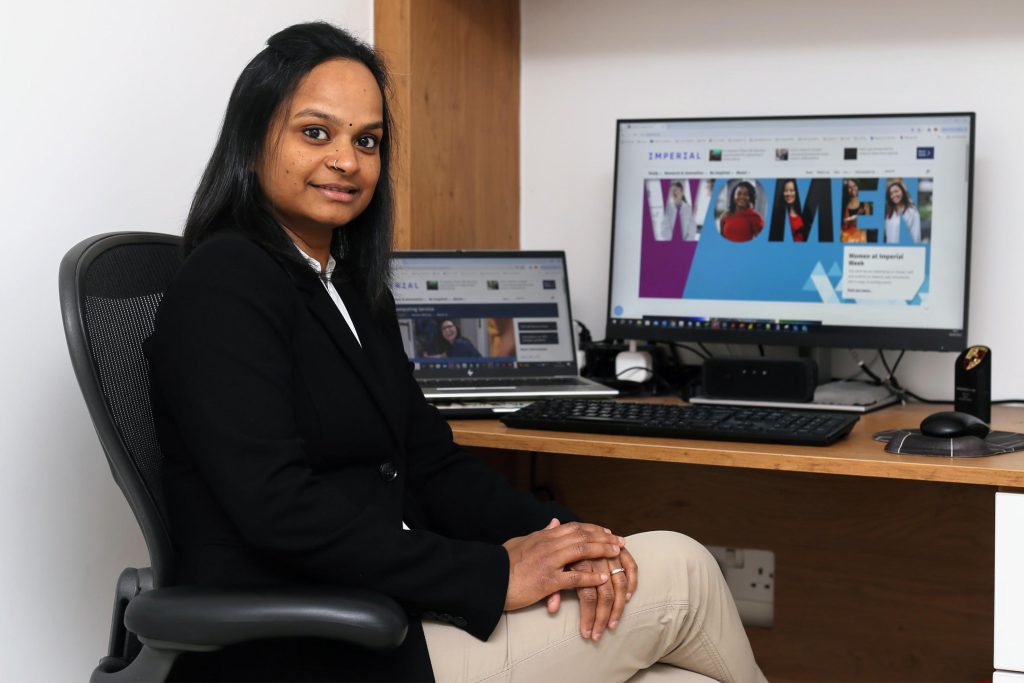

Whether it’s attending Harvard alumni socials or participating in Ramadan meetups, London offers a plethora of opportunities for social engagement. These networking events not only allow me to expand my professional circle but also enable me to immerse myself in the rich cultural diversity of the city. By engaging in activities that bring me joy and fulfillment, I find that I can recharge and maintain a healthy work-life balance.

My advice

One invaluable piece of advice for women entering the tech industry is to prioritise education, recognising that knowledge is a powerful asset that can’t be taken away. Give yourself due credit for your work, and don’t shy away from occupying the space you deserve in any room. Embrace the confidence to contribute your ideas and skills and when you do so, don’t forget to portray kindness and empathy to other women who were once in your shoes.

Bonus material

Haneen is a finalist in the Digital Star category at the 2024 everywoman in tech awards.

Want to join ICT?

We have some great and diverse roles in ICT, and we are always on the look out for the best tech talent.

If you want to join our team check out our current job vacancies.

Check out our Equality, Diversity and Inclusion pages and find out about or activities to remove barriers and create a great place to work.


Spotlight on: Lalitha Kambhammettu, Head of Research Management Applications

Lalitha Kambhammettu


I feel there is something new to learn every day and it can be from anyone we meet.

I am the Head of Research Management Applications. Along with my brilliant team (Chris Gibbs, Antonio Aliberti and Anthony Thomas), I look after the various applications that support the research lifecycle at Imperial.

What do I love about my role?

Our focus is to make the journey of a researcher (from idea to publication) smooth and world-class. What I love about my job is the variety of work that we get to do as part of this. One day we are debugging complex java/python code while another day we are with a researcher to understand their requirements to conduct secure research. The range of technologies that we work on makes everyday interesting.

How did I get here?

I finished my Master’s degree in Computer Applications in 2005 when I started my career with Oracle as an Oracle Applications Technical consultant. I grabbed opportunities to progress my career as they came along and had the honour of working with prestigious companies like ADT Security Services, Hewlett-Packard. I finally made my way to Imperial in 2014.

My future aspirations

I want to build a team which is resilient and has each others’ back. I strongly believe that the success of a manager comes from making their team successful.

My influences

Lalitha with her husband and two sons posing in front of a birthday cakeIf I have learnt valuable life lessons from the most experienced people in my life, I was reminded about the basics of life by my younger son, who once said to me at 3 years old, when he noticed I was getting anxious because of an issue – “Mummy, take a deep breath and relax, you will be fine!”
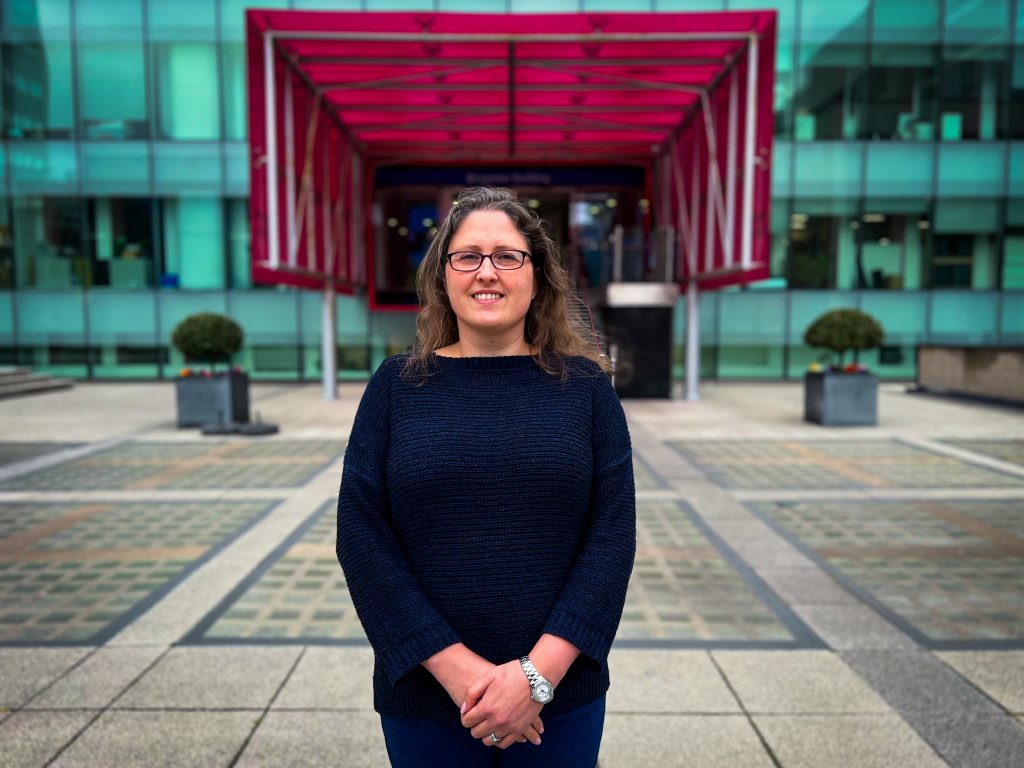

Managing a work-life balance

One of the most important aspects of my work-life balance is my strong family support – a loving and resilient husband, who always has my back and two adorable and co-operative children who understand that mummy may not be always able to cook them hot dinners, yet they’re still happy to just be by my side!

I enjoy early morning runs to maintain my physical and mental health. I also love cooking and hosting parties for family and friends.

My advice

My advice to aspiring women in tech is that if you have come this far, you will be great! There is nothing you can’t achieve if you commit to it. Just remember to prioritize your health and wellbeing too.

I feel there is something new to learn every day and it can be from anyone we meet. All my managers at Imperial have inspired me and a commonality among all of them was their passion for what they were doing and excellence in their work.

Want to join ICT?

We have some great and diverse roles in ICT, and we are always on the look out for the best tech talent.

If you want to join our team check out our current job vacancies.

Check out our Equality, Diversity and Inclusion pages and find out about or activities to remove barriers and create a great place to work.


Spotlight on: Caroline Westbrook, Product Owner

Caroline Westbrook


If you are interested in human behaviour and business technology, you can help design great IT systems.

I’m a product owner in the Student Lifecycle Product Line squad, co-ordinating and prioritising the work we are delivering to harmonise and improve students’ experiences of their Imperial journey.

How did I get here?

Caroline Westbrook talking with a stakeholderI came from a customer services background, having worked in and managed centres in various industries.  I was seconded to an ICT project and saw the work of a business analyst and realised I was fascinated by how business teams and ICT have to adapt to work together to achieve the right outcomes, and how hard that is to get right!

The step from BA to Product Owner seemed sensible especially as I learned more about Agile methods of delivery and it made a lot of sense to me.

My future aspirations

I don’t really think about much the future; I’m more drawn to what seems like the most interesting challenge.  That’s probably a terrible thing from an earnings perspective, but I’d rather be happy than rich!

My influences

My heroine is Alice in Wonderland.  There are lots of good analogies in those stories – both good and bad – for how business sometimes works!  But no matter what was going on around her, Alice was always curious and open to her next adventure (plus an everlasting tea party sounds great)!

Managing a work-life balance

Caroline WestbrookI’m interested in lots of things and as part of my midlife crisis I have recently taken a drawing class, tried stand-up comedy, joined a choir, and started doing fitness classes in quite a serious way.  When I’m on campus if I’m not in the office you’ll probably find me poking around in the Abdus Salam Library – it’s an amazing perk to have one within such easy reach.  So the same scattergun approach applies in both my personal life and career!

My advice

You really don’t need to have a technical background in coding and development to find a niche in ICT – I certainly don’t!  If you are interested in human behaviour and business technology, you can help design great IT systems.

Want to join ICT?

We have some great and diverse roles in ICT, and we are always on the look out for the best tech talent.

If you want to join our team check out our current job vacancies.

Check out our Equality, Diversity and Inclusion pages and find out about or activities to remove barriers and create a great place to work.

Spotlight on: Sara Concas, Junior Developer (Interim)

Sara Concas, Junior Developer.

“I believe that the most important thing is to be curious and open minded, and not be afraid of change, because it allows us to grow and improve.”

I’m currently on secondment with the ASK Development team as a Junior Developer after having completed the ServiceNow Bootcamp during summer 2023.

What do I love about my role?

I really enjoy working with and using the ServiceNow platform, and I hope to advance to an expert level.

How did I get here?

Sara Concas, Junior Developer. Holding a homemade cake

Years ago, my background was more focused in arts and crafts. I used to have a cake shop in Sardinia before moving to the UK about 11 years ago. After working as a cake designer for four years in London, I decided to change my career path to concentrate on IT.

I began as a junior first line analyst in an investment bank before being given the chance to work in asset management. This gave me the opportunity to get a job at Imperial in a similar position. Alongside this, I resumed my academic studies to obtain a BA degree, which I completed during the pandemic.

My influences

My younger sister and one of my friends motivated me to change careers. They both helped me to realise that I did not have to limit myself and to think outside the box.

Managing a work-life balance

I love starting new activities and some of my favourite hobbies are knitting and crocheting and studying new languages.

My advice

If you’re interested in technology, start with the basics and figure out which area you want to specialise in. It is such a broad field that you will be able to pick a path that aligns with your goals.

I believe that the most important thing is to be curious, open minded, and not be afraid of change, because it allows us to grow and improve.

Want to join ICT?

We have some great and diverse roles in ICT, and we are always on the look out for the best tech talent.

If you want to join our team check out our current job vacancies.

Check out our Equality, Diversity and Inclusion pages and find out about or activities to remove barriers and create a great place to work.

Spotlight on: Jenna Kempton, IT Service Management Lead (Interim)

Jenna Kempton, IT Service Management Lead

As women in technology we should use our strengths relating to engagement and multi-tasking to deliver great solutions. You have a voice – use it! Don’t be embarrassed to ask about areas that you feel need more focus and never be afraid to ask follow-up questions.

I joined Imperial in December 2021 as the Change and Release Lead. This means I track planned changes within our environment to ensure they have been planned and tested via release management and then considered by their peers through the change management process.

For the last nine months I have also been covering the IT Service Management (ITSM) Lead role which has meant as well as dealing with change and release Management I have had to oversee the processes, procedures and work related to the service we provide. This covers a broad range of areas including advice, solution development and service improvement.

What do I love about my role?

One of the best things about this role is the variety of areas that you get to engage with. This ensures you are always ready and able to learn about other areas being worked on and allows you to consider it from all sides including the technical, user and customer journeys, as well as any impacts relating to downtime, communications, users and any simultaneous conflicting activities or changes

In my role as the ITSM Lead, I really enjoy engaging with different business areas and finding ways we can improve how they deliver their services and the way they work, which all in turn improves user experience and customer satisfaction.

How did I get here?

Prior to joining Imperial, I worked in local government working for Southwark Council for 18 years starting off as a personal assistant and moving into project management. I dealt with everything from business reviews to headquarter fitouts. I was focussed more on the customer side with an external IT Service provider where we needed to manage their service delivery and engagement to ensure any required changes to take place were planned into the schedule.Jenna Kempton, IT Service Management Lead

I worked as the equivalent of a Product Owner for a number of the property management systems which were used to manage the council’s assets and deliver the housing, revenues and benefits services. I was able to get a well-rounded view of systems and services through third-party procurement process and on occasion having to transition these service back to an in-house provision.

Having initially trained in the Prince 2 project management style I have also completed a number of courses in human-centred design and the UK Government Digital Services’ design principles.

My future aspirations

In the future, I would like to get an in-depth understanding of every product we manage. I look forward to watching the development of the replacement for ICIS and SOV as part of the Great Service programme.

I enjoy seeing the pride and ownership we show in ICT in delivering the best we can for our students and customers. I am interested in moving into a product owner role as I like the idea of being able to deep dive into one section of services and doing all I can to ensure that we are getting the best outcomes and improvements for our users and customers.

My influences

I am grateful for my experience of powerful women who have demonstrated that through commitment and hard work, you can be proud of who you are and know that you have done the best that you can.

There is satisfaction to be found in a job well done and it is so important to do something you enjoy. I have a bad habit of working too much, but balance this with knowing that I will be able to hold my head up and know that I did all I could.

I have had a number of managers who always ensured they built their staff up and supported them in progressing and developing even if that would mean they moved on. I ensure I take the same approach with my team and that my staff know exactly what they are expected to undertake and ensure they are appropriately challenged and have opportunities to learn and develop. I believe that by providing a safe and supportive team environment, you can inspire staff to take ownership and initiative of the work they do and they will then model this behaviour in their engagement with others.

Managing a work-life balance

Jenna Kempton, IT Service Management LeadI find it hard to be idle so I enjoy a number of hobbies – some would say too many! I originally trained as a chef, and although having to cook for my husband and three children means it can feel more like a chore, I still love baking and find the routine and process relaxing,delicious and not at all disrupted by listening to true crime podcasts!

When I get some time to sit down and watch television, I am usually crocheting or working on a Sashiko project which help to address my creative side and I love that at the end you have something to show for your efforts.

My advice

Always try and avoid going into a situation with preconceived ideas and solutions.

Put yourself in the shoes of your customers, the agents and the technical side and ensure that you consider the entire user journey to identify where the issues are, so that any proposed solution is fit for purpose, delivers what you set out to achieve and improves the overall user experience.

As women in technology we should use our strengths relating to engagement and multi-tasking to deliver great solutions. You have a voice – use it! Don’t be embarrassed to ask about areas that you feel need more focus and never be afraid to ask follow-up questions.

Want to join ICT?

We have some great and diverse roles in ICT, and we are always on the look out for the best tech talent.

If you want to join our team check out our current job vacancies.

Check out our Equality, Diversity and Inclusion pages and find out about or activities to remove barriers and create a great place to work.