Torchlight is a co-produced digital mental health app designed to support young people facing long waits for care. In this blog, Olly Taylor, Mental Health Trainee from the Institute of Global Health Innovation and Dr Lindsay Dewa, Advanced Research Fellow from the School of Public Health, share insights from a recent public engagement event, highlighting how Torchlight is being shaped by lived experience, co-production, and a shared mission to ensure no young person feels alone while waiting for mental health treatment.
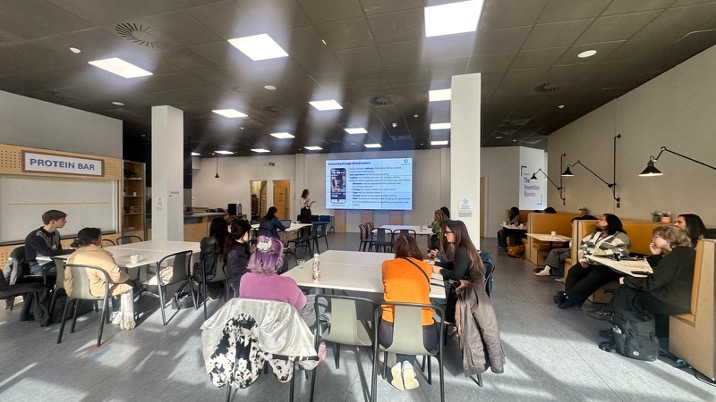
In March, our research team shared the latest developments of Torchlight – a digital mental health app designed to provide social and professional support for young people waiting for treatment – at the Invention Rooms in White City. The public engagement event was hosted by researchers Dr Lindsay Dewa, Ellie Mullins, and young co-researcher Nathan Jackson. As the newest member of the team and a Julia Anderson Mental Health Trainee, I reflected on how Torchlight continues to break ground in co-production strategies within digital mental health.
Playing the waiting game
Why does Torchlight exist? What can it do? And why is co-production so important? These questions shaped much of the discussion at the event. Spearheaded by Dr Lindsay Dewa, an Advanced Research Fellow and project lead, Torchlight is a co-produced project aiming to fill a crucial gap in mental health support for young people while they wait for mental health treatment.
The harsh reality is that delays in mental health care can have serious consequences. Referrals to services have skyrocketed, and waiting times are leaving many young people feeling neglected, unsupported and forgotten. During these waits, young people are suffering and their mental health can deteriorate – and in the most extreme cases, lack of timely support can lead to inpatient admissions, self-harm, or even suicide. Although new NHS guidelines aim for 75% of referrals to be seen within six weeks, and 95% within 18 weeks (NHS England, 2016), in reality, average wait times often exceed 10 months, and can even stretch up to two years (YoungMinds, 2025.
“… I would have really felt better with an online support system, or any kind of support really!”
– Yas, a co-researcher with lived experience of waiting for mental health treatment
“Torchlight: to feel more informed, understood and less alone”
Torchlight is now entering the next exciting stage of its development. To start off the event, Dr Lindsay Dewa outlined the journey so far, highlighting the design process and the importance of co-production. Torchlight has been built from the ground up with input from a diverse group: researchers, UX designers, developers, clinicians, charity organisations, community organisations, social prescribers and young people with lived experience. At every stage, this partnership has ensured the digital app meets the real needs of its users – it’s truly been made by young people, for young people.
The app focuses on content made by young people with lived experience of waiting, and professionals with lived experience of providing support to those waiting. Its goal is to embed social support for users who are waiting for treatment through videos, blog posts, live streams and interactive activities – helping users feel connected to others navigating similar challenges.
Attendees got a first look at a prototype, exploring the app’s design and functionality. The room buzzed with energy: young people with lived experience, researchers, and NHS staff all shared their perspectives, wearing different ‘hats’ to represent their diversity in life experience and their motivations to attend. Feedback highlighted:
- The app’s calming and appealing design
- It’s usefulness and uniqueness from a lived experience perspective
- The clear need for such a resource
“A warm, open and accessible event”
As the presentation ended, the floor opened up into a sea of activity and two-way interaction, where important conversations were happening in every corner of the room. One corner, hosted by Dr Ellie Mullins encouraged attendees to provide insights on Torchlight, for example how would you describe Torchlight in one word?
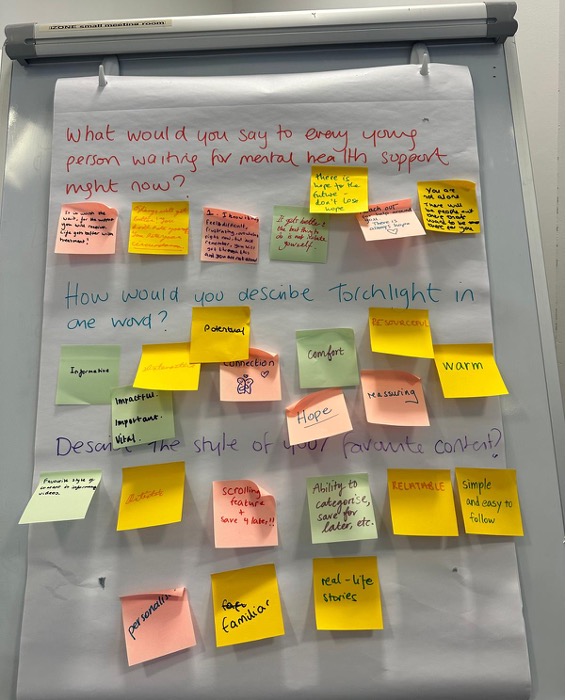
“Comfort, hope, connection, potential…”
Parallel to this, I facilitated a timeline activity which visualised the waiting period, helping identify where Torchlight could be most useful. Nathan Jackson also hosted a co-production exercise in which attendees matched quotes to either young people or professionals, exploring how power and influence are shared in the app’s design. Dr Lindsay Dewa took the helm of the final station, facilitating discussion on long-term engagement strategies, with attendees emphasising the importance of feeling heard and understood.
“People will want to go back [to Torchlight] if they have someone to talk to, who understands them, not dismisses them”
– Feedback from an event attendee in how to ensure long-term engagement
Looking forward
Following a refreshment break, the panel discussion offered a deeper dive into Torchlight’s journey. Lindsay and Nathan shared insights from co-production workshops and international events, demonstrating how every element of the app traces back to stakeholder input. Audience questions explored Torchlight’s history, lessons learned, and the ongoing impact of co-production. It was fascinating to hear more about Torchlight’s story, which has taken the team across the world to events in Brazil, and to co-production workshops with young people where they have designed the app from the ground up.
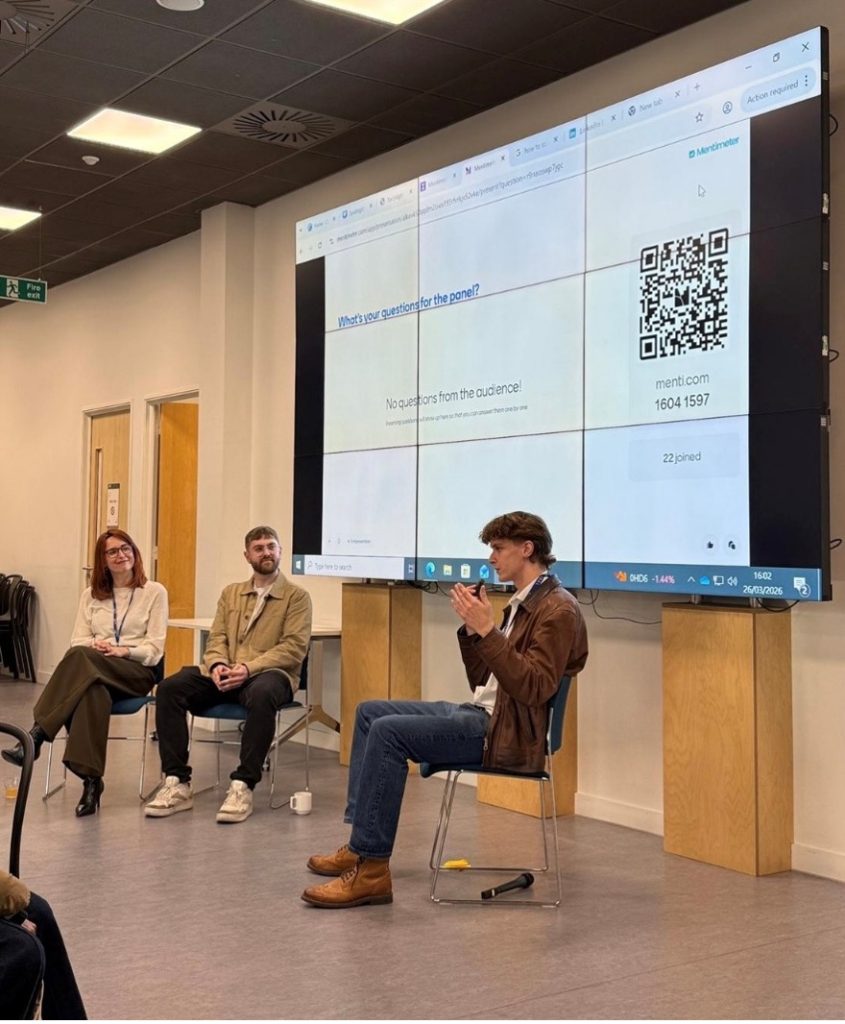
“If you are all about co-production in mental health at all, this is your case study. Every single touch of the app can be traced back to a discussion with stakeholders and Torchlight makes that clear.”
– Nathan Jackson, Co-researcher on the Torchlight Project
An important moment for me came from speaking with the event staff at the Invention Rooms. They recalled the very first Torchlight event which was hosted in the same space, and how it has been fascinating to see the journey that Torchlight has undertaken. I’m proud to be part of a team working to support and protect young people on waiting lists–and excited to see how Torchlight continues to shine a light in the months and years ahead.