
“In my role I represent care-experienced students and help organise events for new students from similar backgrounds, where we can talk about our experiences.”
Laurence is a fifth-year medical student and Student Lead for the Underrepresented Student Support Team, which looks after students from care-experienced (foster or adoptive care, children’s care home or kinship care) and estranged backgrounds, as well as young carers and forced migrants.
“In this role I represent care-experienced students and help organise events for new students from similar backgrounds. As well as highlighting the services available at Imperial, we create spaces where we can talk about our experiences and how your background can impact your journey through university.”
The Underrepresented Student Support Team works with both undergraduate and postgraduate students. It offers students the opportunity to have a named person as a dedicated point of contact at Imperial to assist with navigating support services, access to a peer community, and access to a special fund to help with extra costs related to studies such as co- and extra-curricular activities.
“Back when I was in first year, I was clueless about what was available, so we’re trying to reach as many students as possible who would benefit from extra support.”
Laurence is also an officer for Imperial College Union’s Estranged and Care-Experienced Students’ (EaCES) network, which is creating a community for care-experienced students and advocating for their needs in the university’s various policy platforms.
“A lot of what this network does is advocate for students at Imperial, as well as raising awareness with staff and the students’ union, to make sure there are services for Imperial’s disadvantaged students.”
Discovering a passion for medicine
Laurence’s experiences in early life have influenced him to support and advocate for students from underrepresented backgrounds.
His life changed radically when he was nine when he lost his mother to cancer, and the global financial crisis left his father struggling for stable work. The years that followed were marked by frequent moves, financial insecurity and a lack of formal education, and he spent time in care in two different countries.
Laurence worked to educate himself using free online resources. He said this helped him realise that his passion was in medicine, which began when he started reading about the Ebola epidemic in west Africa.
“I kept reading more about medicine and never stopped. I was trying to figure out if it was for me.”
Eventually, Laurence reconnected with his mother’s family in the UK.
“I was 17 and had no formal qualifications. I told my family I wanted to be a doctor, and they were stunned, but supported me. I had to fast track my GCSEs, and then do A-levels. I had to re-sit my Maths exam to get the grade, but fortunately Imperial kept my offer open.”
As well as Imperial’s reputation, Laurence was attracted to the South Kensington Campus. “The campus really reminded me of living in Singapore. I really like that modern feeling, but there’s also a lot of nature on the campus.”
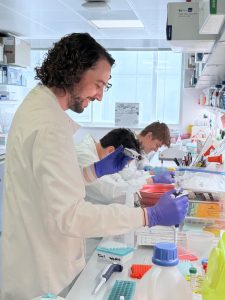
Following his interest in blood cancers, Laurence completed the Molecular and Translational Haematology as part of his medical degree. “I did a lab project with the Crump Lab who were so welcoming and got me involved with a blood cancer project, where we grew multiple myeloma cells to explore drug resistance. I actually managed to win two prizes that year, the Steadman Prize and the Hepburn Memorial Prize.”
Extracurricular activities

Outside of his studies, Laurence is really enjoying the sport on offer at Imperial. “I’ve tried ice hockey, rowing, water polo, grass hockey, lacrosse and probably a few others. It’s how I met some of my friends.”
Laurence is a volunteer for In2MedSchool which is a charity that helps people from disadvantaged backgrounds get in to medicine. “I’m responsible for the team getting students from disadvantaged backgrounds into care homes near them. So far, I’ve helped over 100 students do that.”
Read more
Learn more about the Underrepresented Student Support Team and how they are marking National Care Experienced History Month, which takes place each year in April.