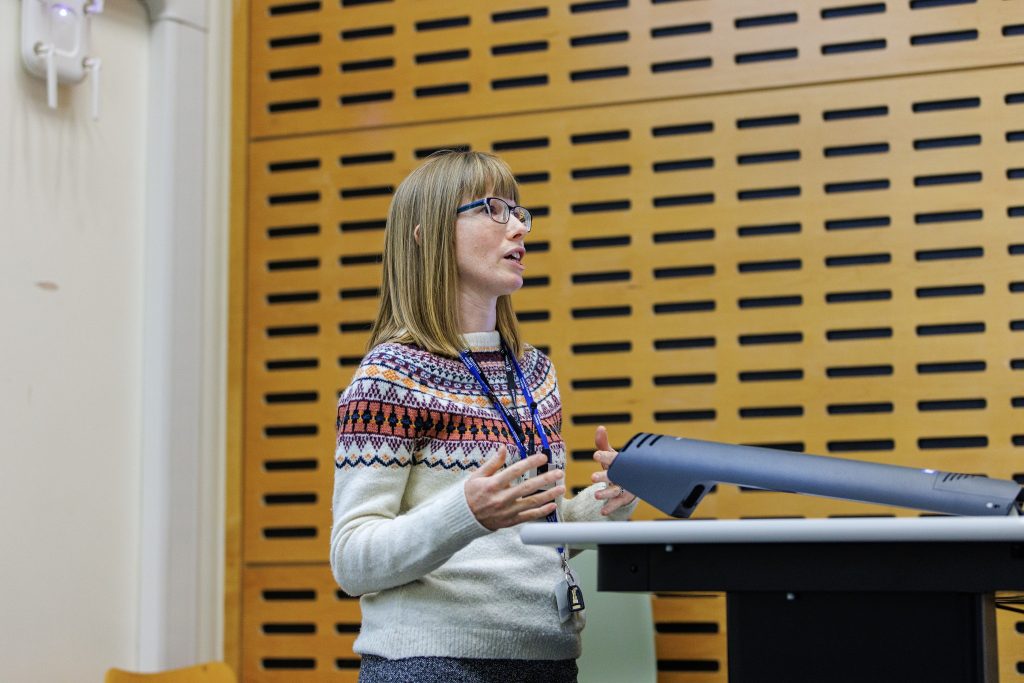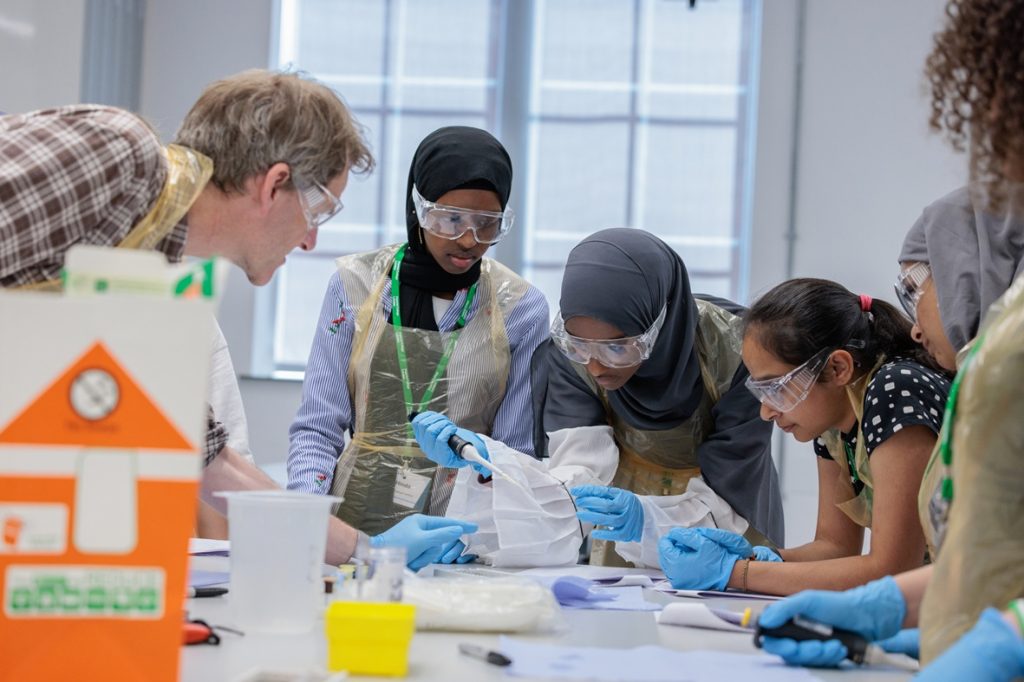
Ellie Cawthera explores the impact of Pathways to Medicine: Imperial College London’s widening participation programme for underrepresented young people interested in studying medicine. It includes activities that provide insight into the medical profession, support medical school applications and prepare young people for starting university.
The programme is delivered in partnership with the Sutton Trust and is coordinated by the Outreach Team with support from the School of Medicine, led by Professor Kevin Murphy who helped launch the programme in 2014. As an Admissions Tutor, Kevin’s role entails assessing applications and conducting interviews with prospective students hoping to take their first step in becoming a doctor. Earlier on in this role, one thing stood out to him: those applying to study medicine at Imperial didn’t reflect the diversity of the society medicine seeks to serve.
“It struck me that so many of them came from similar backgrounds. There were a lot of privately-schooled, upper-middle-class students. While these applicants were often well-prepared, I realised that the whole admissions process wasn’t set up for students from other backgrounds who faced more obstacles on the path to medicine. It just seemed harder for those from more ‘normal’ backgrounds. They didn’t have the same guidance, the same support.”
And so, in 2014, he launched Pathways to Medicine. Running for 12 years, the initiative supports young people from underrepresented backgrounds in applying to Medicine by offering mentorship, work experience opportunities and academic support. Taking place over two years, the programme includes masterclasses and exposure to life on campus as well as interview support for 60 students per cohort.
Dr Claire Sweetenham in Imperial’s Outreach team helps run the programme – coordinating all the activities, the recruitment and much more to make it happen. She also plays a key role in evaluating the programme. For her, the impact is clear. “From our data, we know that 91% of our tracked participants apply to top universities, compared to 20% of matched students from similar backgrounds. We also see approximately 50% of the cohort apply to Imperial.”
Imperial has one of the most competitive medical schools in the UK with only 8-11% of applicants successfully enrolling but for those who completed the Pathways programme, the rate is over 14%. So, from the 700 young people have been on the programme to date, 50 have joined Imperial to study medicine. “I find seeing students who’ve been through Pathways succeed in medicine deeply rewarding,” says Kevin. “When they come up to me later in medical school, I know it’s made a difference. You hear their stories, and it’s humbling – the challenges they’ve overcome, sometimes without a quiet place to study, sometimes without even a computer to work on. They’ve fought to be here.”
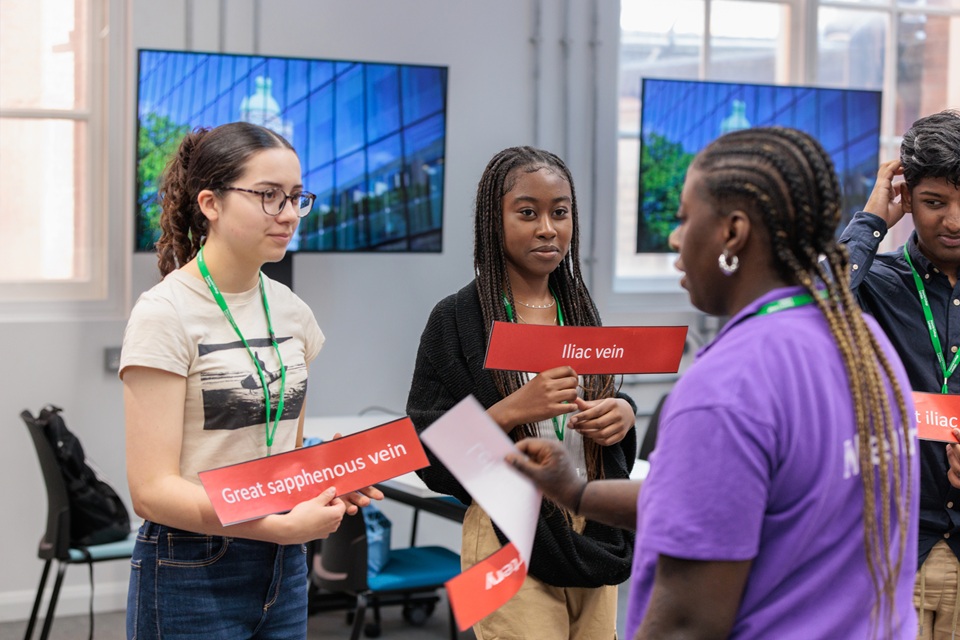
Amber’s story: Laying the foundation
Amber Awan is a fifth-year medical student at Imperial who took part in Pathways to Medicine in 2018-2020. She is also a Student Ambassador, helping deliver the programme for young people in her shoes. “In 2018, I was told by a teacher that applications to an outreach programme called Pathways to Medicine at Imperial College London had opened. Thinking of my dream to study medicine and the name of the programme, I eagerly applied. I was luckily chosen and I think that is where my true passion for outreach, and Imperial began. Through Pathways I was able to meet like-minded students to me from a similar background, who also came from schools like mine and wanted to study medicine but didn’t know where to start.”
Through the programme Amber attended taster sessions at Imperial, met world-class professors, and got to use cutting edge equipment. “I was also able to shadow doctors and other healthcare professionals on an Oncology placement to really gauge what being a doctor entails practically, and was given the privilege of speaking to patients which I may not have had the opportunity to do until much later on otherwise.”
For Amber, one of the highlights of the programme was the week-long summer school where she was in a group of six with a Student Ambassador as a mentor. “I really got to connect with my cohort. We were able to work on a problem-based learning case, similar to what we do in medical school, do some clinical skills, carry out practicals, and sit in the grass to enjoy lunch by the famous Queen’s Tower on campus.” She also had valuable online mentoring to support her through the application process.
“I think the programme was an amazing stepping stone for when I finally made it into medical school at Imperial and, in a way, it lay the foundation for me. I hold Pathways very close to my heart and my mentor from the summer school actually inspired me to look for the Outreach department when I first got to Imperial! This is my fifth year working as a Student Ambassador, and I absolutely love giving back to the programme, and helping to inspire the future doctors of tomorrow.”
Some of Amber’s mentees have even made it to Imperial themselves. “It’s so amazing having a mini community within the Imperial community!” she says.
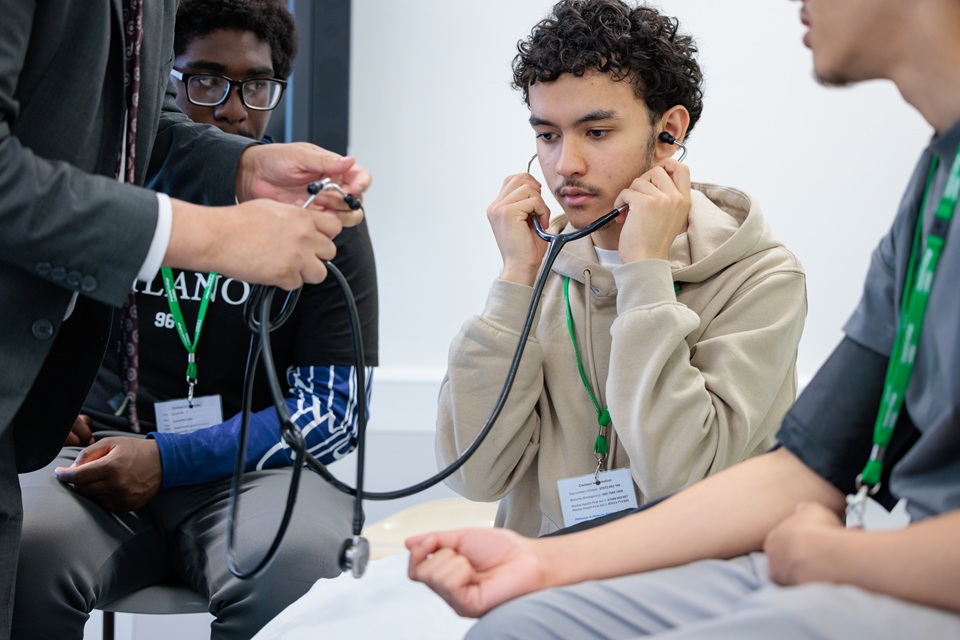
Shaping journeys
For Kevin, Pathways to Medicine is about more than just teaching skills. It’s about inspiring confidence and fostering a sense of belonging. Claire agrees. “As well as offering participants valuable insight into studying and working in medicine, the programme fosters a supportive environment where individuals feel valued, empowered to thrive, and able to see themselves as part of the medical community,” she says. “Participants tell us that through shared experiences with like-minded peers and meaningful engagement with our medical students and staff, they feel connected not only to the programme itself, but also to one another and to the wider university.”
But there is always more to do. “We get so many applications to this programme,” she says. In 2025, there were over 1000 applications for just 60 spaces. “We want to support as many young people who need it as possible, so we’ve been thinking creatively about how we can feasibly do that. One initiative we’ve launched this year is our Meet the Medic webinar series where young people have the chance to hear from a doctor and ask them questions about their career.”
For Amber, equal access to getting into medical school remains an issue but she’s hopeful for the future thanks to programmes like Pathways to Medicine. “I think programmes like this are really trying to bridge that gap. This was the one programme that really shaped my journey to medical school in a way that I simply cannot put into words for which I will forever be grateful, and I cannot wait to see it continue to grow and flourish!”