Blog posts

Think peach: the true symbol of breast cancer awareness

 Breast cancer awareness

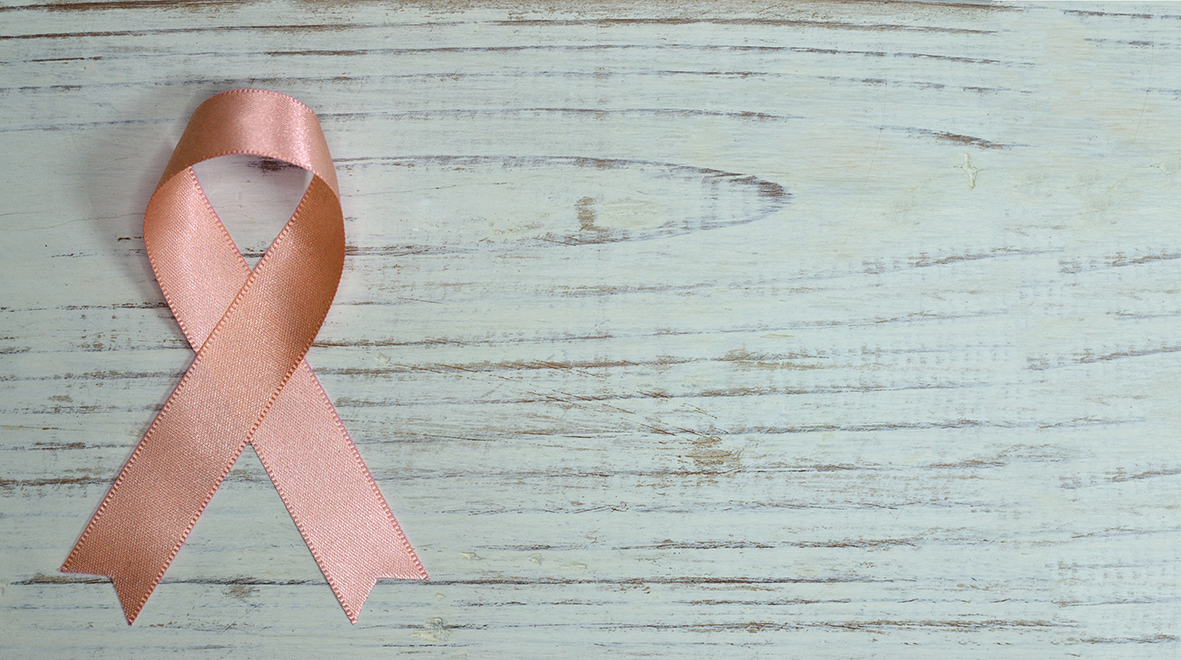
Breast cancer researcher, Dr Luca Magnani, looks beyond the pink ribbon campaign to find the true symbol of breast cancer awareness.


It’s that time of year once again: Instagram and Twitter will adopt a light shade of pink, companies will adorn their products with the ubiquitous pink ribbon, all to remind us of Breast Cancer Awareness Month. To a breast cancer scientist such as myself, October always brings out ambiguous emotions. On one side, it serves as a reminder of all the great research and results that we have achieved. Statistics show that things are getting better for many women, as mortality rates have halved in the last 20 years. October also prompts many of us to remember that there is nothing better than prevention when talking about breast cancer. Early screening measures have revolutionised outcomes for women; it’s very likely that almost 50% of the lives that were saved depended on catching the cancer earlier. (more…)

One small step in wearable tech: one giant leap in osteoarthritis detection and management

Dr Enrica Papi a post-doctoral research associate looks at how the rise of wearable tech could play a role in osteoarthritis detection and management.


When deciding what to do in life, it was clear that I wanted to help people live better, however becoming a doctor wasn’t for me. I found my way through studying biomedical engineering, which developed my passion for the biomechanics of human movement. I see this as a means to understanding the underlying mechanisms of musculoskeletal disease. Through detailed assessment of patients’ movement function we can understand the implications of disease progression and propose solutions to mitigate the developing disorders. To a curious mind like mine, this is a fascinating way to achieve my aspirations. The idea of being able to find explanations as to why things happen to our bodies is amazing and the fact that it can improve people’s quality of life makes it all the more satisfying. (more…)

Vaccines are vital


Originally published on the MRC Insight blog and reproduced under CC BY 4.0, here Peter Openshaw, Professor of Experimental Medicine at Imperial and President of the British Society for Immunology, says we cannot afford to be complacent about vaccines.


As a clinician working in research, I want to improve peoples’ health. The NHS was set up to focus on treating people with disease. But how much better would it be if we could prevent people from getting sick in the first place?

This is where vaccines come in. As vaccinologists, we use our scientific knowledge to design new or improved vaccines to stimulate the immune system. This creates natural protection against infections and prevents disease. (more…)

World Heart Day: Building new hearts at the BHF Regenerative Medicine Centre

Regenerative Medicine

On World Heart Day, Sian Harding Head of the BHF Centre of Regenerative Medicine looks at how the Centre’s cutting-edge science is working towards building new heart muscle. 


We are excited by the news that our BHF Regenerative Medicine Centre has been renewed for another four-year term from 1 October 2017! At Imperial we have been concentrating on the big challenge of producing new muscle for the damaged heart, along with our partners in the Universities of Nottingham, Glasgow, Hamburg and Westminster.

The heart has a very limited capacity to repair itself after a heart attack, or during the more insidious damage from high blood pressure, diabetes or chemotherapy. We have been looking at various kinds of stem cells to explore their power to become new cardiac muscle cells – one of the big successes of the current Centre. Pluripotent stem cells – those which have the capability of turning into any cell type in the body – can now be turned very efficiently into beating heart muscle in the laboratory dish, and made into strips of engineered heart tissue. Our partner, Professor Chris Denning, at the University of Nottingham has automated the process of making the cells and Professor Thomas Eschenhagen in Hamburg has contributed his technology for converting this into muscle. (more…)

World Rabies Day: Why vaccinating man’s best friend is man’s best hope

rabies vaccine

Today is World Rabies Day. Christl Donnelly explains why giving rabies vaccinations is the path to global eradication by 2030. 


The goal of this global day is enhanced awareness spurring further efforts to prevent rabies, a viral disease that kills tens of thousands of people each year mainly in Asia and Africa. Two years ago, international organisations – including the World Health Organization and the World Organization for Animal Health – agreed to an ambitious, but achievable common goal: to end human deaths due to canine rabies by 2030. In fact, ‘Rabies: Zero by 30’ is the theme of the 2017 World Rabies Day. (more…)

Blood Cancer Awareness Month: all roads lead to EVI1

PhD student Philippa May reflects on being a scientist in the field blood cancer, from working in a leukaemia diagnostic laboratory to a research laboratory. 


For the last 10 years I have been a clinical scientist in genetics working across various London NHS Trusts. Whilst I loved diagnostics, last year I left my job to complete my PhD. I worked in a part of life sciences called cytogenetics. This meant when a patient was diagnosed with blood cancer, I would analyse their chromosomes – the structures into which DNA is organised – from their blood or bone marrow to look for specific abnormalities. For some patients, this can lead to a definitive diagnosis. For others a refined prognosis, and in some, it’s simply a way of monitoring how well the patient’s leukaemia is responding to their treatment. (more…)

From bakery to benchside: a medical student’s journey in research

Here, Vinay Mandagere a medical student, reflects on his journey through medical school, from initial rejection to researching TB.


It was extremely challenging for me to stare back at the four rejections that faced me. Four rejections from four separate medical schools. Four independent reviewers telling me I was not to be a doctor. I had to endure seemingly unending encouragements and sympathies from friends and family. Their attempts were well-meaning, but often repetitive. My particular favourite was “I believe Edward Jenner didn’t get into medical school the first time round”. This, of course, was a complete fabrication. I think I always had this naïve cockiness about me, an artless assumption that I had the necessary experiences to stroll into medical school. Perhaps rejection had a subduing effect on my ego, though, I probably would presume most of those who know me would thoroughly disagree.

Nevertheless, it occurred to me that I had a year to convince the doctors of now that I could be a doctor of the future. But then I thought again. I had an entire year to do what I wanted. I found myself avoiding medical work of any sort, and take up a job in a bakery. I normally stop here when I want to impress people, to give the impression that I mastered the art of conjuring delicious, enticing pastries. In fact, it is due to my semi-duplicitous nature that many people still think of me as a great baker. But I’m not. In reality, my primary role was to serve customers, clean and wash up (as well as outline the difference between spelt bread and gluten-free bread: a distinction I still don’t understand to this day). It was an enjoyable job, and it provided me with some money to fuel some travelling later on. Moreover, I had the blessing of taking home two full bags of artisan breads untouched by the day’s customers — a perk which became more and more hedonistic as the year went on. (more…)

World Water Week: Tackling a neglected health crisis

schistosomiasis

For World Water Week, Dr Anna Phillips from the Schistosomiasis Control Initiative explains clean water is crucial to the elimination of schistosomiasis.

Can you imagine life without access to clean water? Unfortunately for 663 million people this is a reality. That’s nearly one in ten people worldwide living without a safe water supply close to home, spending hours queuing or trekking to distant sources and coping with the health impacts of using contaminated water. SIWI’s (Stockholm International Water Institute) World Water Week, is a pertinent time to reflect on important research carried out by the Schistosomiasis Control Initiative (SCI), a non-profit initiative based at Imperial College London, which highlights why access to clean water is so important to human health. (more…)

Why study frogs in the School of Public Health?

Rhacophorus moltrechti – a species of frog endemic to Taiwan. Photographed by Lin Chun-Fu.

Jennifer Shelton from the School of Public Health reflects on a recent field trip to Taiwan which involved studying amphibians.


Close your eyes and imagine the high-pitched shrieking of cicadas unified in a crescendo of noise from the treeline. Fireflies blinking their fluorescence through the undergrowth. Bats swooping silently overhead, rustling your hair with their wing beats. Trekking across steep hillsides of wasabi plants during a rainstorm. Not the average working week of a researcher in the School of Public Health, but just some of the sights and sounds I was fortunate to experience when I visited Taiwan in May as a National Geographic Young Explorer. (more…)