Only recently I remembered that I had a copy of an old 45rpm disc. It was called IC for sale Vol 2. It was given to me by Richard Woodhead (one of our students, who died in 2021) around about 1972 so that’s over 40 years ago now. What I had forgotten was that it contained some unique sounds of Imperial College. It has great recordings of the three college unions C&G, RSM and RCS chants plus the Imperial chant Hey Vivo which I can’t recall the last time I heard it. The 45rpm disc -or any tape recording of it- do not exist in the main Imperial College Archive, so I’ll be putting a CD of it in there soon. I have found a review and reference to the original first pressing of the disc in the searchable newspaper PDF archive of FELIX May 1965. See page two at the top called ‘Gateway to Industry’.
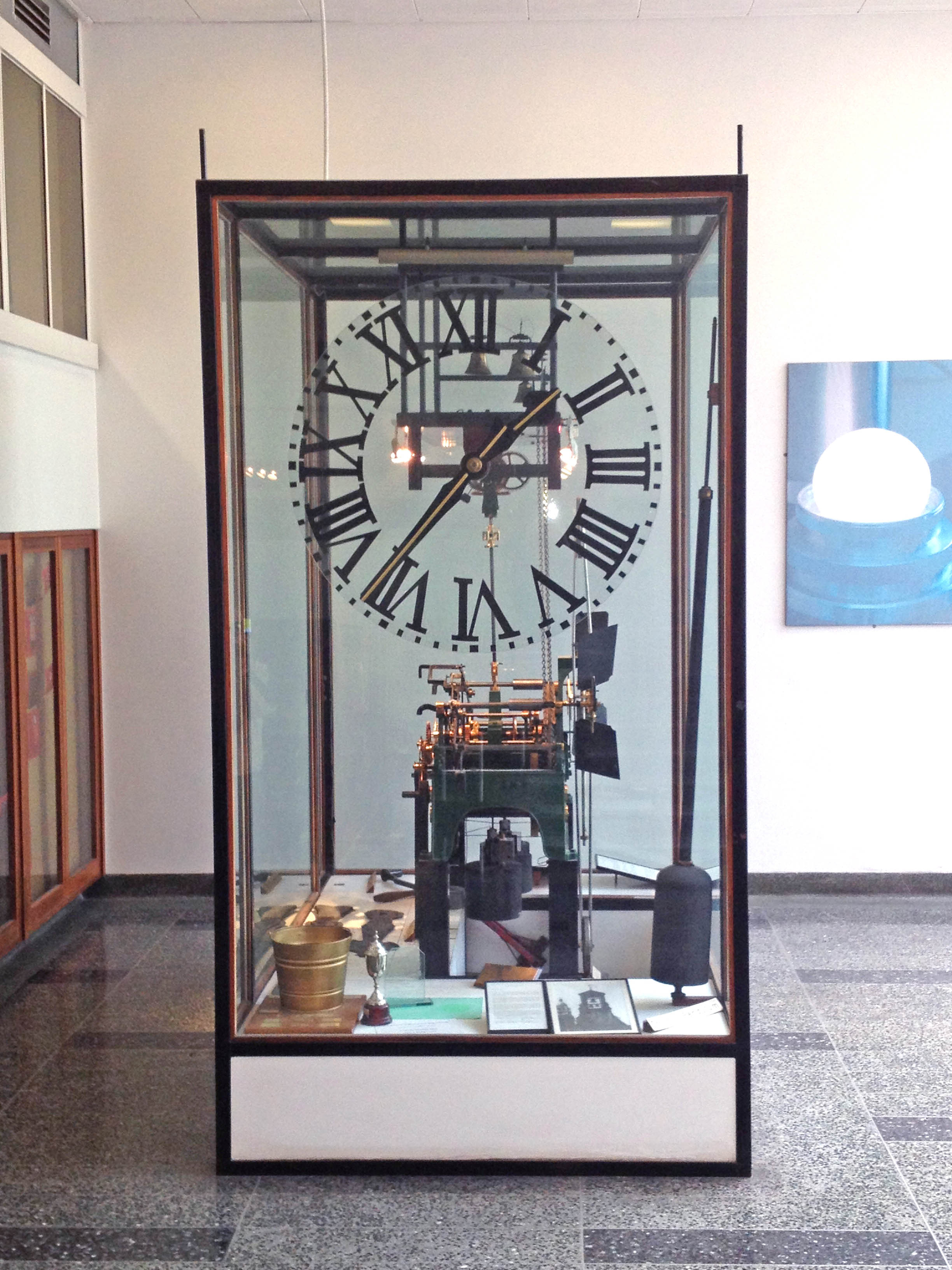
Also, if you know Imperial from far enough back you will remember the City and Guilds building clock and bells (photo on the left). Or if not, you will know that the clock mechanism relocated to the Mechanical Engineering Building foyer (photo at bottom) some time after the original buildings were starting to be pulled down in the late 1950’s.
The bells were moved (photo on the right) way up on top of the building overlooking, what was, the green Dalby Court area. This is now where the Faculty Building is located. The bells would ring the quarters, half and so on and could be heard throughout most of the college area. I gather that regular mechanical & electrical problems caused the demise of the chimes! But, these can once again be heard on the disc.
At the end of the disc on side two is Sinclair Goodlad well known at Imperial College for his ‘Speaking Technically’ courses. I think it’s best for me to quote directly from the disc itself to explain what you will hear. “Finally, a depthly epitaph to I.C. by Sinclair Goodlad of the Wireless Dept, aided by two W.C. echo chambers and the Mech Eng bell-ringers. Recorded ‘in situ’ at a late hour in Mooney’s, one can even hear the celebrated ‘Mooney Meatball’ beating time…” But the important thing are the bells, not heard for such a long time, they are at least captured here in all their glory! I hope you enjoy these flashbacks to Imperial past and what an archive joy it is that this record was made in the first place.
The clock mechanism in the Mech Eng Foyer
I hope you enjoyed listening to this recording, which I appreciate was a slight diversion from ‘video’, but worth making available here. It’s interesting the number of references there are to Victor Mooney, the then college catering manager who was featured in a previous post. If you have anything like this record in your collection at home, especially if it captures the sounds of Imperial past, then please do get in touch. If you appeared on the disc we’d also love to hear from you.
It’s not until you start to look at individual tapes in our archive that you realise how many different videos have, or could have, a link between them. In this latest blog I’ve found an example of that with two research videos made for the Electrical and Electronic Engineering Department ( Electrical Engineering Department as it was when these were made). We’ll also be seeing something of the actual department from the past. I should also point out that until 1976 were part of that department (a departmental facility) and as such located within the building. Our first location was on the 3rd floor moving to the main walkway level 2, where many of you may remember us.
In February 1981 Professor J.C Anderson (“Andy” Anderson 1922-2001) asked me to make a video showcasing the research in his Electrical Materials section within the department. I can’t recall the exact reason why we made the video, but am assuming it was to do with an open day, or similar, for Postgraduate research students, hence his references to getting PhD’s at the end of the video. The research going on at that time is shown and he makes reference to the work by Mino Green on Electrochromic Displays, but more on that in a moment.
Andy was very keen on the use of modern technologies for teaching, research and promotion and was the Chairman of the “Educational Technology Committee” (long since disbanded). It was his idea that I should be the only non-academic (although I was on the ‘academic related staff’) member of that committee to be able to update and advise on matters relating to the use of video within Imperial. He was not afraid to appear in front of the camera or, as in this case, record a voice-over as well. So here is the video we made with him: “Electrical Materials Research at Imperial College”
In the previous video, mention was made of the work by Professor Mino Green (1927-2022) (then Dr) on Electrochromic Displays. This work was already being carried out at the time of the previous recording. In fact the first video on Electrochromic Displays was made a year earlier in April 1980. We made some 7 videos on the subject with the last being in March 1993. I gather that Professor Green’s work has now moved away from such devices, but the concept was interesting and novel. The video itself is an example of how to show large numbers of people the research work being carried out by a small dedicated group. Even as long ago as 1980 we were having copies made into the American NTSC TV system to enable research work to be showcased in the USA, Mino Green’s was an example of this. Here is the video from 1993 on “Electrochromic Displays and Windows”.
Mino was an Emeritus Professor of the Science of Electrical Devices. His webpage described his work as “…The interplay of solid state physics and chemistry, particularly physical chemistry, has been an abiding interest. This has led through many areas, including semiconductor electrochemistry, chem- and physi-sorption on semiconductors, thermoelectric systems, solid state photo-and e-beam-decomposition, and transition metal oxide electrochromic systems. Now my main interests are in the larger end of nano-systems…”. In 1980 STOIC recorded an interview with Mino where he explains his area of research, you can see that video above.
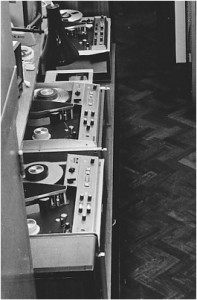
Ampex Video Recorders in use in TV Studio number 2
Finally for this particular blog I’ve pulled something out of the archive from 1978 and you’ll see that in just a moment. It was a video made to showcase the whole department rather than a particular division or research project. Again, I can’t recall the exact reason why we were asked to make the video, but assume it was either an open day or event with alumni for example. Open day is more likely as the video is dated June 1978. It was a major task to make too, as editing was primitive on our old Ampex open spool one-inch tape machines. Nothing was automatic and edit points were marked with white (‘chinagraph’) wax pencils onto the tapes directly, spooled back and then run up to speed for editing. Recently I re-discovered a tape, made in 1974, where we are showing what the studio could do. So, before we see that 1978 video, here I am in our original TV Studio number 1, showing briefly the Ampex recorder in use, which I can assure you was as heavy as it looked!
At this time, we had no real means to record outside of the studio. One option though was to link from a location back to the studio by cable. And, because we were located in the Electrical Engineering, the whole building had video cables running from the ground, to top floors. We then had the ability to run from a location point on each main floor, down to the studio and potentially elsewhere. In the end, cables were available to and from many different buildings around the South Kensington campus. However, by this time we had already gained the ability to record outside of the studio having just moved into colour operation on the U-matic tape format. Portable battery operation was then made possible. The video that follows is an example of this.
So back then to the video I made for Electrical Engineering . The video did require a voice-over, but could I get anyone to volunteer to record it for me? Well the answer was no and being at a stage of needing to start the editing I had to do it myself. That aside, the video is a unique record of the department showing its teaching and facilities. I was asked to make specific reference to the fact that every lecture room was equipped with an ‘overhead projector’, how times have changed! The department also had its own glassblower, electronics servicing and draftsman. Here then is a snapshot (in black and white) of the department as it was in the early summer of 1978.
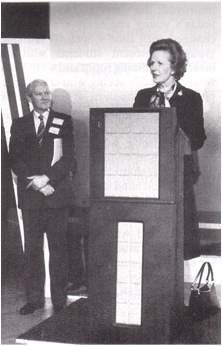
My involvement with the City and Guilds College (C&G) started during its centenary year in 1985. A week of celebrations were held (26 February – 1 March) and as part of that the Junior Common Room was transformed into an impressive exhibition called Tech2000. The exhibition was officially opened by the then Prime Minister Margaret Thatcher. Can you spot the famous handbag in the photo?
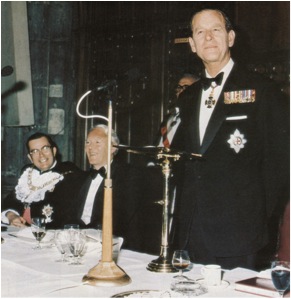
Besides making some 12 individual videos for various exhibits, an official video record of the week was also commissioned. This would capture the build-up, the opening and tour of the exhibits by the Prime Minister and the banquet held at the Guild Hall with the main speaker being HRH Prince Philip and this itself was not without its own problems. I was told in advance that we could not use too many lights when recording his speech because he didn’t like lights in his face.
Prince Philip at the Guild Hall
The problem was the size of the Guild Hall and the area we were trying to cover. Illumination within the hall was to be mostly from the candles on the tables, but this was far too low for our camera. A compromise was reached and we used a 2kw floodlight that would only be switched on moments before any one of the speeches started. Although this sounded good, we were located high up on a balcony some distance away, so the end result was better, but not great. It was also such a vast increase in light levels (compared to the candles) that actually switching the light on caused most of the people to turn around and look up at us! Although I’d requested a feed from the sound system to plug into our video recorder, I had not actually spoken with the engineers operating it on the night. Everything turned out OK and we received a cable with audio from the hall sound system. We were intending to video record most things, but our tapes would only run for 20 minutes at a time, so tape changes were going to have to be made. I was concerned that from an archives point-of-view we should not lose any of the speeches. I asked the engineer if he had been asked to make a sound recording of the whole evening, only to discover that no one had thought to do so! This was corrected and the tapes now reside in the college archive.
Let me just mention Prof Bruce Sayers (1928-2008) who was Dean of City and Guilds at the time. In fact he was Dean during the period 1984-1988 and again from 1991-1993. It was during his last period in office that Bruce commissioned the first video to be made showcasing City and Guilds – that was in 1993 with a second following in 1994 and a final in 1998. The 1993 video was more of an historical look-back at City and Guilds, with the further two looking more at the research work within the departments making up C&G. So, back to the C&G centenary and the video that covers the events making up the week. Hopefully it gives a flavour of what was happening within C&G and is also a wonderful snapshot of Imperial College life in 1985.
“City and Guilds, a celebration” was made in 1993. It was, as the title suggests, a celebration of C&G from its earliest times, right up to the date of making the video. We found some interesting photographs and film to help illustrate a commentary recorded by Bruce Sayers himself. We had previously discovered the film of the old City and Guilds building (1960), so we looked for more visuals that C&G alumni might remember. We achieved this with some film shot in 1928 of both “Sports Day” and “Morphy Day”. At that time, Sports Day was clearly still being held at the Stamford Bridge ground of Chelsea Football Club (this apparently being the case until the 1930’s). The film shows a lot more of sports day than we had time for in the video and this is something that I’ll feature in more detail in a later blog. You will see a couple of shots of the Queen’s Tower from a distance. These were from a hotel long since demolished. Located near Gloucester Road tube station the Forum Hotel had a number of floors almost equal to the Queen’s Tower in height. A simple phone call gained us access to their roof area and the result was some splendid views of London and the Queen’s Tower. Going back briefly to the 1960 film of the old guilds building it’s worth mentioning that this was an amazing discovery that was made after Sir Owen Saunders died in 1993. The 16mm colour film was found in his office drawer and passed to the college archivist who in turn asked me to see what it was! We’ll show that complete colour film in a later blog.
One person mentioned in that video was Herbert Cecil Booth (City and Guilds 1893) who invented the process of cleaning fabrics by sucking air through them. More can be seen on him in Tim Hunkin’s TV programme “The Secret Life of the Vacuum Cleaner“.
In 1994 we were asked to make a follow up which was to be called “City and Guilds College 1994 – an update”. This was very much a promotion for the research work being carried out within City and Guilds. It also included a section with Bob Schroter talking about the Old Centralian’s Trust fund, the charitable arm of the City & Guilds College Association. To give a flavour of the departments featured, research work was shown from Civil Engineering; Aeronautics; Electrical Engineering; Chemical Engineering to name but a few. Having just celebrated 10 years of operation, the Centre for Composite Materials showed their work relating to the aircraft industry, whilst Bio Mechanics demonstrated the work being carried out on knee joints. Again, this video’s audience was industry and alumni, particularly those overseas. Unlike the previous video, we commissioned a professional voice-over which was read by former BBC ‘Tomorrow’s World’ presenter Michael Rodd.
The final video made with Bruce Sayers for City and Guilds was in February 1998 and was entitled “City and Guilds: the challenges of tomorrow”. It makes reference that this was now 12 years into C&G’s second century and the fact that many changes were going on within Imperial College. In fact this video is a nice record of the South Kensington campus just a few years before major rebuilding works would change its appearance with: the new main entrance and Business School on Exhibition Road; Dalby Court and the (then) new Faculty Building.
For the very first time the City and Guilds Institute was mentioned and it’s connection with C&G explained. We went to their central London headquarters to get shots both outside and inside. Following on from this we shot at one of their lunches held each year at the college, which is attended by fellows of the C&G Institute and the Rector of Imperial. At the time of making the video the construction of the new Sir Alexander Fleming building was well into the completion stages and shots of both the initial building work and completed building were shown. Dame Julia Higgins, a former Dean of C&G, spoke about the many changes across the campus with the opening of the new SAF building and the intake of many new medical students.
The video ends by asking the question: “What would City and Guilds look like in 2025 and would those who know it now, recognise it then?”
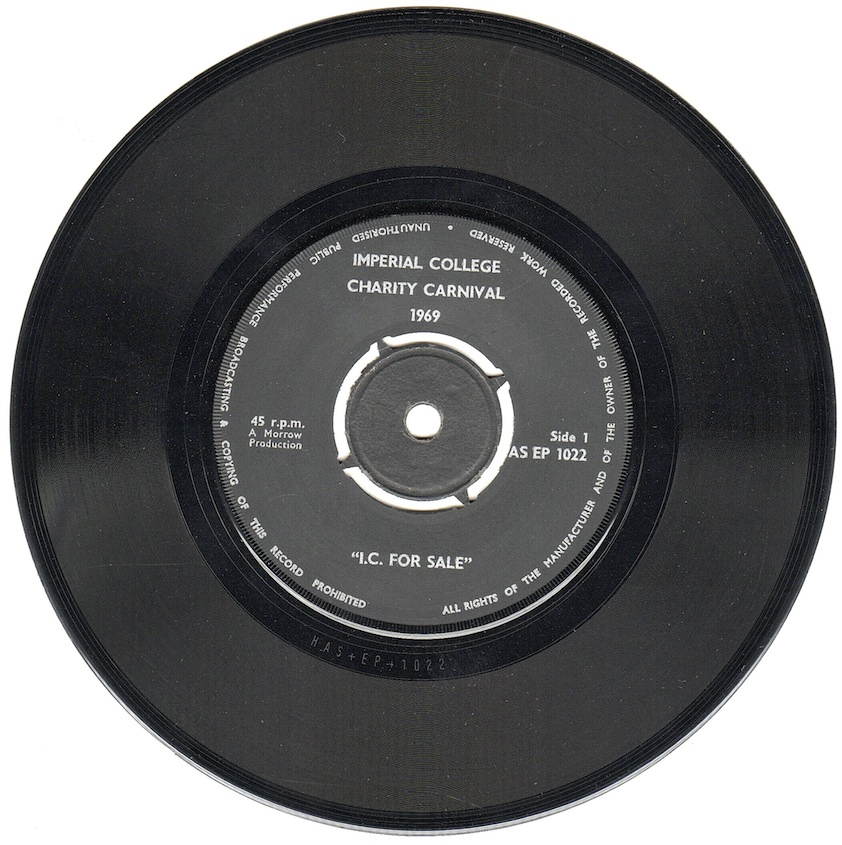 Only recently I remembered that I had a copy of an old 45rpm disc. It was called IC for sale Vol 2. It was given to me by Richard Woodhead (one of our students, who died in 2021) around about 1972 so that’s over 40 years ago now. What I had forgotten was that it contained some unique sounds of Imperial College. It has great recordings of the three college unions C&G, RSM and RCS chants plus the Imperial chant Hey Vivo which I can’t recall the last time I heard it. The 45rpm disc -or any tape recording of it- do not exist in the main Imperial College Archive, so I’ll be putting a CD of it in there soon. I have found a review and reference to the original first pressing of the disc in the searchable newspaper PDF archive of FELIX May 1965. See page two at the top called ‘Gateway to Industry’.
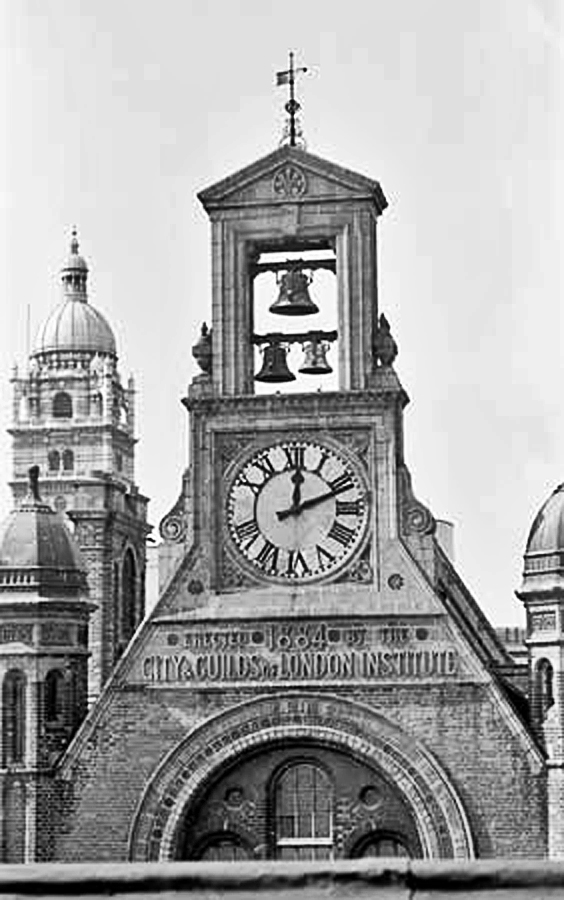 Also, if you know Imperial from far enough back you will remember the City and Guilds building clock and bells (photo on the left). Or if not, you will know that the clock mechanism relocated to the Mechanical Engineering Building foyer (photo at bottom) some time after the original buildings were starting to be pulled down in the late 1950’s.
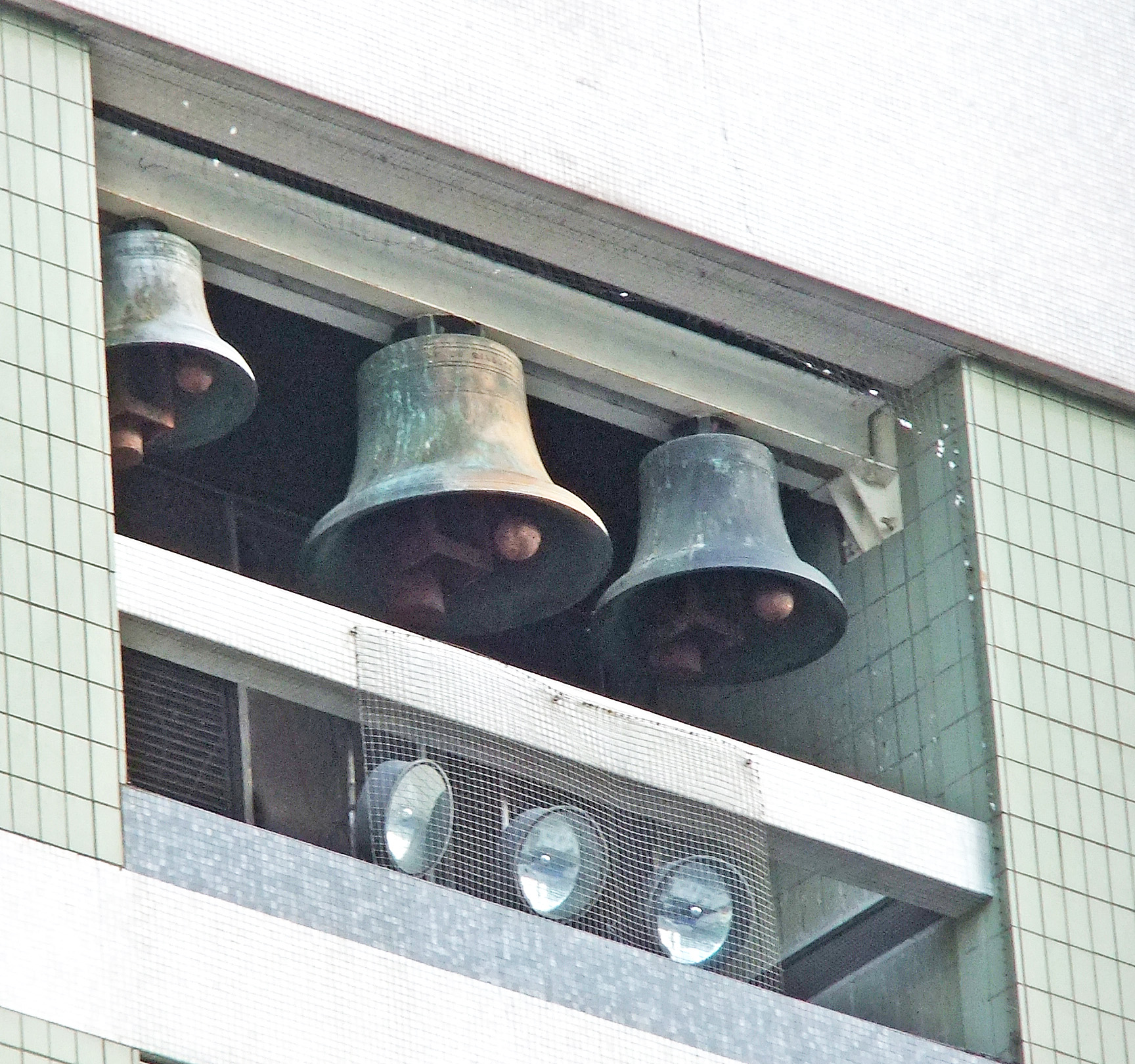 The bells were moved (photo on the right) way up on top of the building overlooking, what was, the green Dalby Court area. This is now where the Faculty Building is located. The bells would ring the quarters, half and so on and could be heard throughout most of the college area. I gather that regular mechanical & electrical problems caused the demise of the chimes! But, these can once again be heard on the disc.
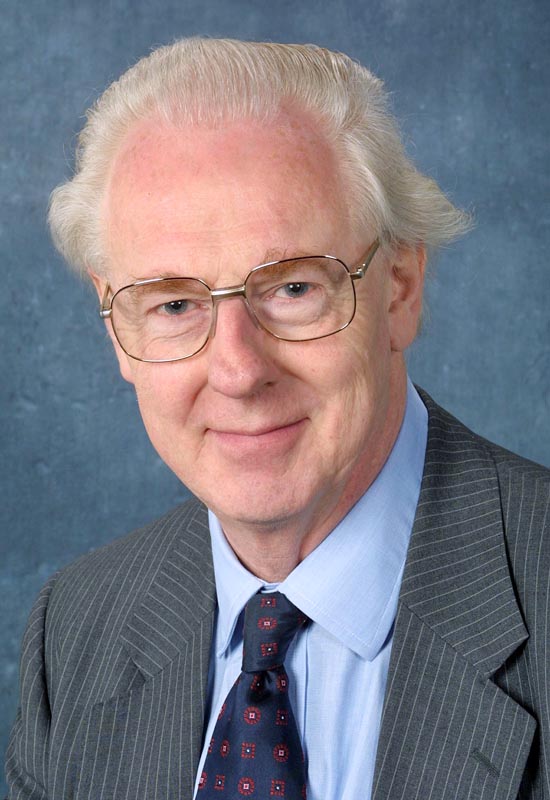 At the end of the disc on side two is Sinclair Goodlad well known at Imperial College for his ‘Speaking Technically’ courses. I think it’s best for me to quote directly from the disc itself to explain what you will hear. “Finally, a depthly epitaph to I.C. by Sinclair Goodlad of the Wireless Dept, aided by two W.C. echo chambers and the Mech Eng bell-ringers. Recorded ‘in situ’ at a late hour in Mooney’s, one can even hear the celebrated ‘Mooney Meatball’ beating time…” But the important thing are the bells, not heard for such a long time, they are at least captured here in all their glory! I hope you enjoy these flashbacks to Imperial past and what an archive joy it is that this record was made in the first place.